How to start a rewilding project at home in 2026: a simple guide for Irish families
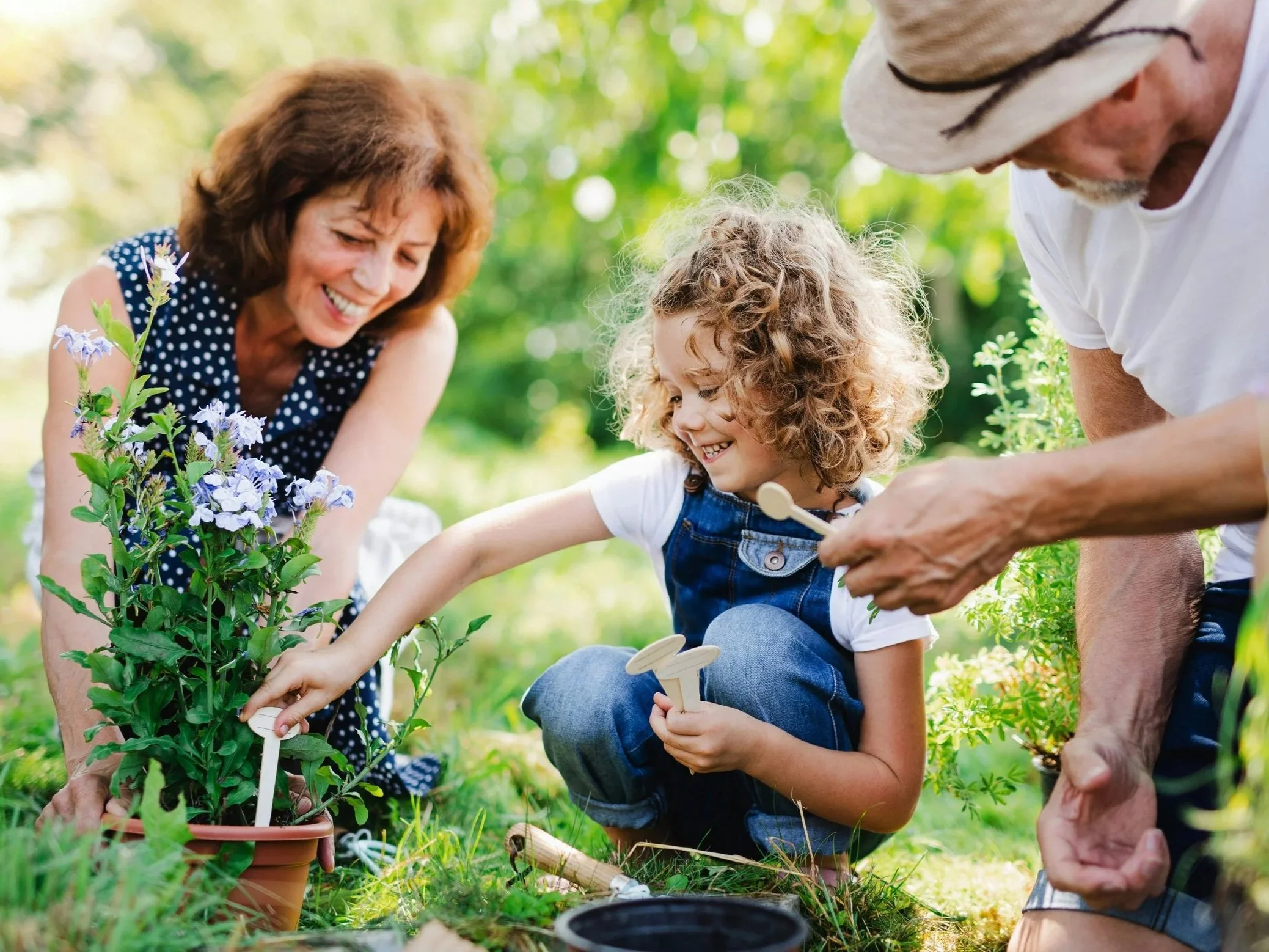
A family plants wildflowers together in a garden, illustrating how Irish households can begin rewilding at home. Small actions like planting pollinator-friendly plants help restore biodiversity, support insects and birds, and reconnect children with nature in everyday spaces.
The quiet return & what rewilding really means
Early light touches the garden and reveals how little remains, and how much is still possible.
The ground holds cold. Life pauses, listening. A bird lands and waits, as if the soil itself might reply.
A child notices — not the bird alone, but the waiting. In that moment, the garden stops being managed space and becomes shared ground again. This is where rewilding begins: not with action, but with attention, and the decision to let the land speak first.
Rewilding often arrives like this — quietly, without banners or slogans. Not as a grand solution to a planetary crisis, but as a subtle shift in attention. A change in how we stand in relation to the living world just beyond our doors.
In 2026, the language around nature is changing. The urgency remains — the loss of species, the thinning of habitats, the fraying of seasons — but the tone is different. Less about “saving the planet,” more about learning how to live with it again. Less abstraction, more daily practice. Less panic, more patience.
Rewilding at home matters now because it offers something rare: livable hope. Not hope deferred to future technologies or distant policies, but hope that can be touched with bare hands, noticed by children, shared between neighbours. Hope that grows slowly, at the pace life prefers.
This is not about heroics. It is about returning to relationship.
Understanding rewilding in practice
Rewilding has suffered from its own success. The word has stretched, thinned, been misheard. For some, it conjures images of abandonment: gardens surrendered to bramble and chaos, order replaced by neglect. For others, it feels like something imported — vast landscapes, large mammals, rural estates beyond reach.
But rewilding, at its heart, is simpler and more intimate than that.
Rewilding does not mean giving up on care.
It does not mean letting everything run wild without thought.
It does not mean turning your home into a statement.
Rewilding does mean restoring relationships.
It means allowing soil, water, plants, insects, birds, and people to begin speaking to each other again — sometimes hesitantly, sometimes all at once. It is less about control and more about conditions. Less about design and more about listening.
In Ireland, this matters deeply. Ours is a landscape shaped by closeness: small fields, shared boundaries, hedgerows stitched like old seams across the land. Beneath modern lawns and imported shrubs lies an ancient ecological memory — of wet ground, flowering edges, pollinators moving freely from ditch to ditch.
Myth-busting, briefly:
“It’ll look messy.”
Alive spaces often look different, not worse. They carry texture, movement, surprise.“It attracts pests.”
Healthy ecosystems attract balance — predators, pollinators, and natural regulation.“It’s only for rural landowners.”
Some of the most powerful rewilding happens in the smallest spaces.
Why Irish homes matter more than we think
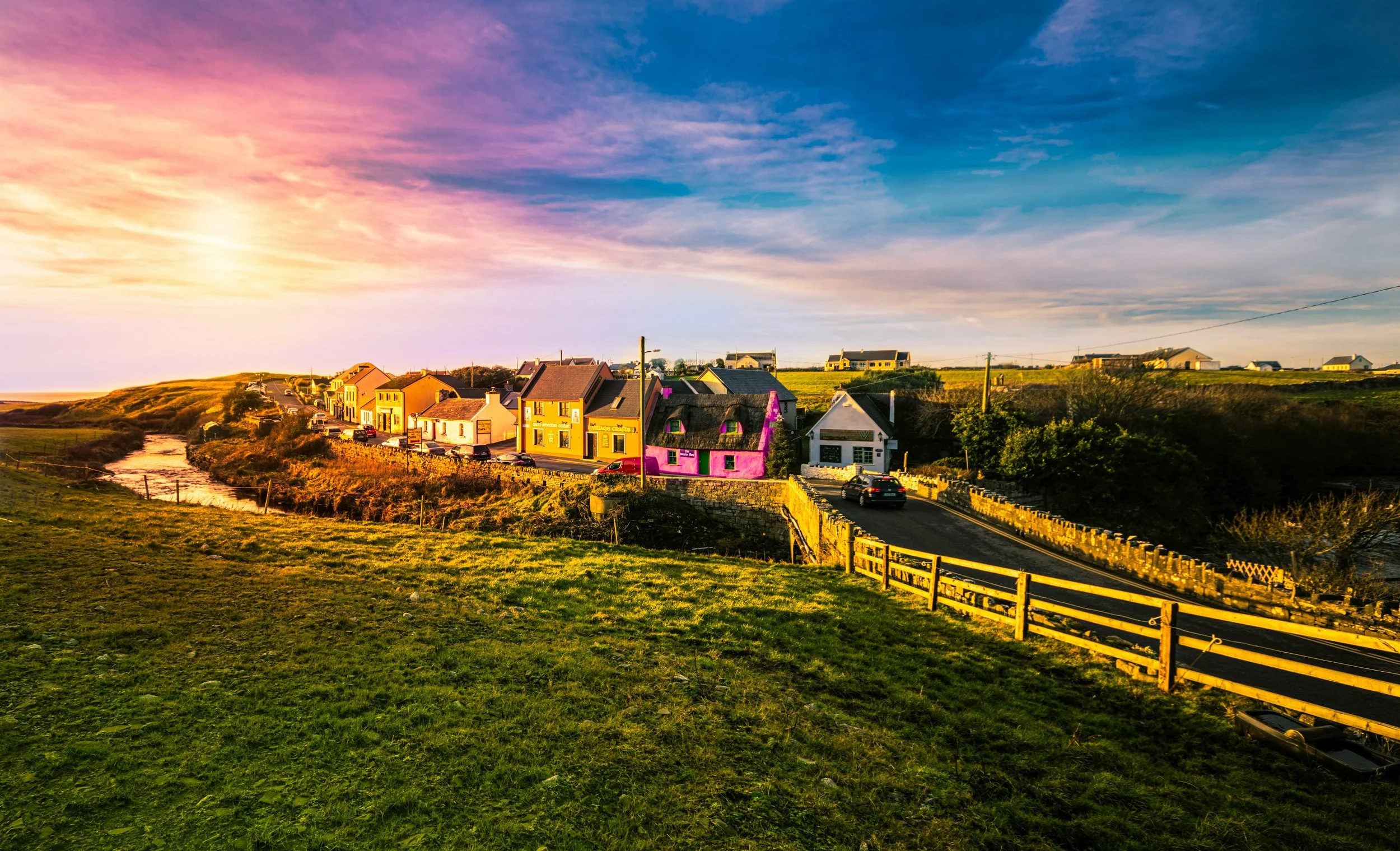
A countryside view of Irish homes surrounded by fields and hedgerows, representing how everyday domestic spaces contribute to biodiversity, habitat connection, and rewilding at a local scale.
Ireland’s biodiversity crisis is not only unfolding in forests and bogs. It is happening in the quiet gaps between places — in gardens, verges, balconies, housing estates, and suburban edges.
Our habitats are fragmented. Species are isolated. Pollinators struggle to move safely across landscapes broken into neat parcels. Yet within this fragmentation lies an unexpected opportunity.
Every garden is a potential corridor.
Every hedge a bridge.
Every balcony a resting place.
When thousands of small spaces soften at once — when mowing eases, flowers return, water is allowed to linger — landscapes begin to reconnect. Not dramatically, but persistently. Like threads slowly finding each other.
Rewilding does not begin in national parks.
It begins behind back doors.
And once it begins, it tends to spread — not invasively, but conversationally. A neighbour asks. A child points something out. A patch of green becomes, quietly, a place where life is allowed to stay.
Start where you are: a rewilding audit of your home
Before adding anything new, take stock of what is already trying to live with you. This is not an inspection, but an introduction. A way of saying: I see you.
Whether you have a back garden in Kildare, a shared green in Cork, a balcony in Dublin, or a narrow strip of verge by the road, the questions are the same.
What kind of light falls here?
Where does water gather after rain?
Which corners stay cool, damp, sheltered?
What already arrives without being invited?
Look for the small lives. Moss in cracks. Ant trails. A plant pushing through gravel. Birds that return at the same hour each day.
Children are especially good at this stage. They notice without agenda. Invite them into the pause before action.
The first three changes that matter most
Here are three changes that consistently matter more than almost anything else.
1. Stop over-tidying
Modern gardens are often cleared too thoroughly, too often. Leaves removed. Seed heads clipped. Dead stems erased as if failure.
But for wildlife, these are homes.
Leaving leaves through winter shelters insects. Hollow stems protect larvae. Seed heads feed birds when little else is available. What looks “untidy” is often survival.
Try leaving one area — even a small one — untouched until spring. Watch what happens.
2. Let something grow wild
This does not require surrendering the whole space.
Choose a corner. A strip along a fence. A single large pot. Let it grow without correction. Let grasses flower. Let plants arrive unplanned.
Wildness works in fragments. It does not demand total commitment — only permission.
In Ireland’s climate, life responds quickly when given room. You may be surprised by what appears.
3. Slow down intervention
Fewer chemicals.
Fewer cuts.
Fewer rules.
Many well-intentioned gardens fail not because of neglect, but because of too much help. Nature is remarkably competent when we stop interrupting every process.
Restraint can feel like inaction, but it is often the most powerful form of care.
Planting for life: native choices that work in Ireland
Planting, when it comes, should feel less like decoration and more like an introduction.
In recent years, “bee-friendly” labels have multiplied, often detached from place. But pollinators respond best not to generic kindness, but to familiarity. Native plants carry timing, chemistry, and memory shaped alongside local insects and birds.
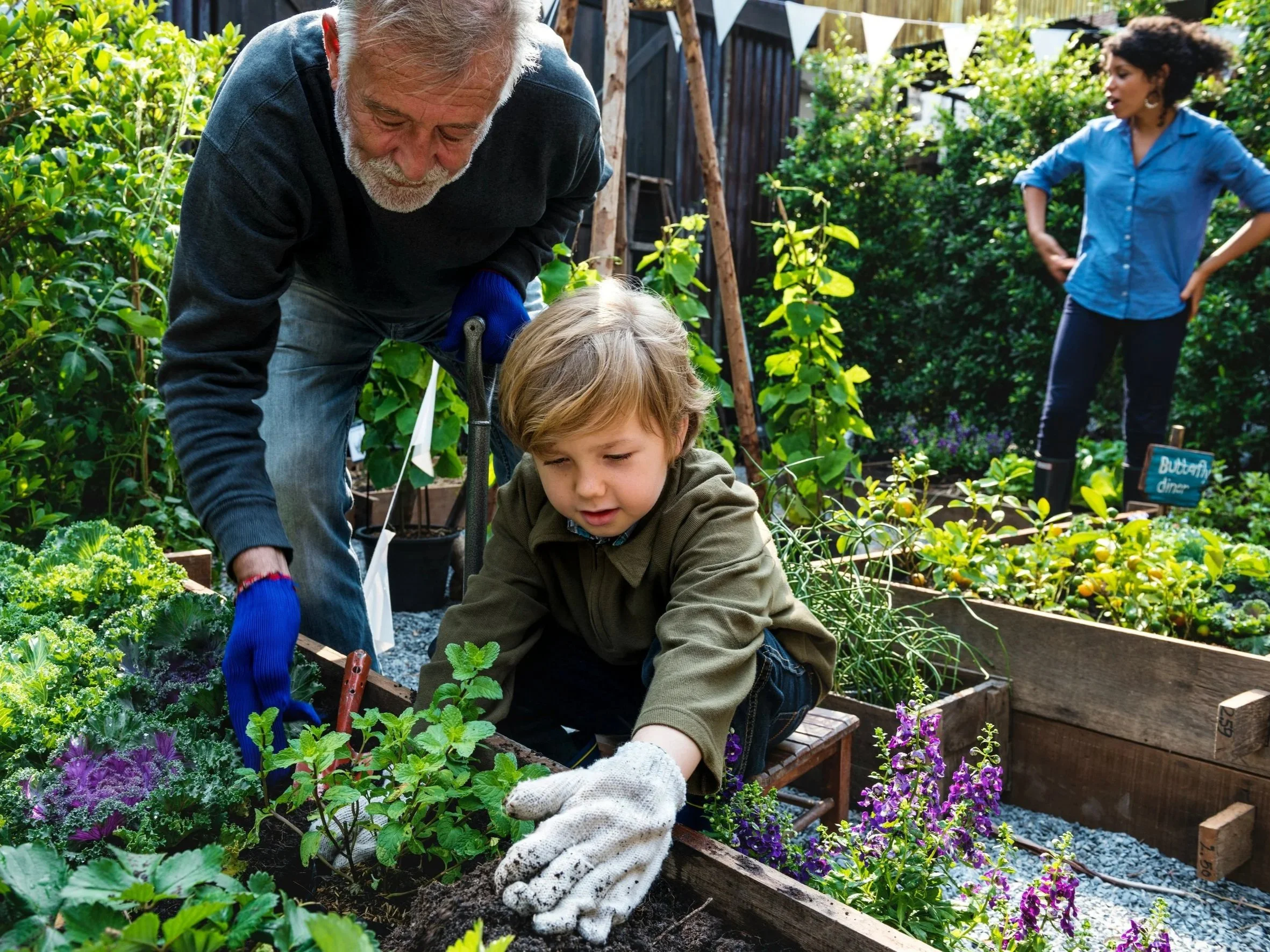
A child gardening with an older family member, planting young plants in a raised bed to illustrate how native species, patience, and shared care help rewild Irish homes over time.
For small gardens, consider meadow grasses, oxeye daisy, red clover, self-heal, and yarrow. These plants thrive without fuss and create layered habitat rather than single-purpose displays.
For balconies and containers, even limited space can host life. Native wildflowers in pots, ivy trained carefully, or small shrubs like heather provide shelter and nectar. A balcony can become a pause point — a place to feed, rest, and move on.
For hedgerows and boundaries, the gains are long-term and profound. Hawthorn, blackthorn, hazel, dog rose, and holly form living infrastructure: nesting sites, food sources, windbreaks, and corridors.
There is also a quieter layer to these plants — cultural as well as ecological.
Hawthorn marks thresholds.
Rowan carries protection.
Ivy flowers late, feeding insects when little else remains.
Planting them is not nostalgia. It is continuity.
Rewilding with children (without making it a lesson)
Rather than lessons, offer rituals.
Build a simple bug hotel together using hollow stems or old wood.
Step outside one evening to watch moths gather at light.
Keep a family list of seasonal “first sightings”: the first frogspawn, the first swallow, the first frost.
Let children lead the noticing. Let them decide what matters. Rewilding becomes durable when it is woven into memory rather than assigned as responsibility.
One line is worth holding onto:
Children don’t need to be taught to love nature — they need permission to stay close to it.
In rewilded spaces, children learn something quietly radical: that the world does not exist solely for use. That other lives have patterns, needs, and rhythms worth respecting. That care can be mutual.
Water, soil, and the invisible work
Much of rewilding happens out of sight.
Healthy soil is not dirt but community — fungi, bacteria, insects, roots exchanging nutrients and information. When soil is alive, plants grow stronger with less intervention. When it is compacted, stripped, or starved, everything above it struggles.
Let leaves break down where they fall. Allow worms to do the work you cannot. Avoid turning soil unless necessary. Disturbance, repeated too often, breaks the conversations happening underground.
Water, too, prefers patience. In Irish gardens, the instinct is often to drain quickly, to tidy dampness away. But shallow puddles, rain gardens, barrels, and soft ground slow water enough for life to respond. Frogs return. Birds drink. Soil holds memory.
Composting belongs here as well — not as waste management, but as an act of return. Food scraps become soil again. What leaves the kitchen comes back as growth. A closed circle, quietly repaired.
What not to do in 2026
Rewilding has its own temptations.
Resist over-consuming eco-products. A garden full of purchases is not necessarily a living one. Often the most effective changes involve subtraction rather than addition.
Resist chasing perfection. Nature does not aim for symmetry. Expecting it to perform aesthetically leads back to control, not care.
Resist instant results. Rewilding works on ecological time, not social media time. The first year is often preparation rather than spectacle.
And resist comparison. Instagram gardens are edited moments, not ecosystems. Your space is not behind. It is simply in conversation with its own conditions.
How to know it’s working
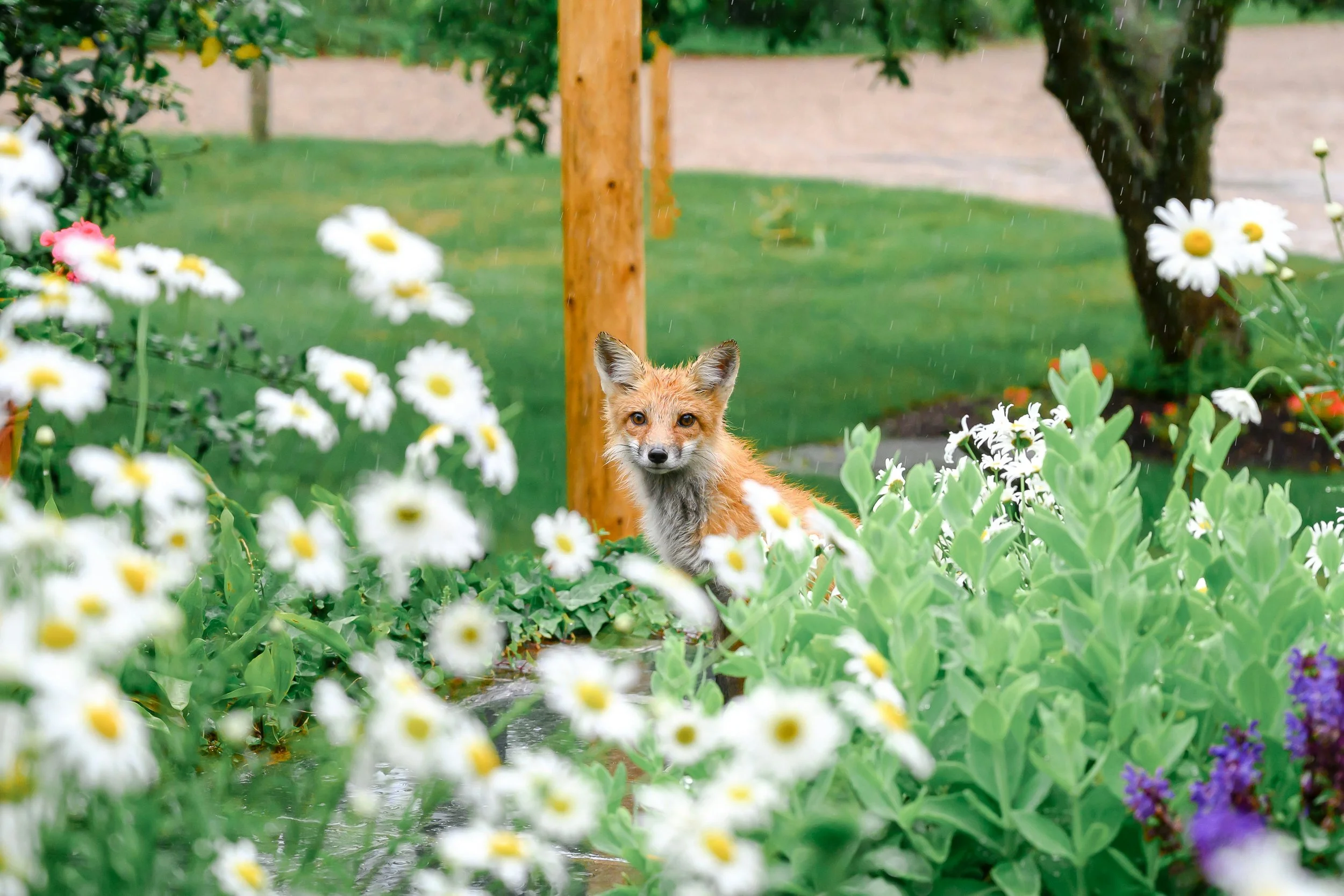
A red fox appears calmly between flowering plants in a garden left to grow naturally, reflecting how rewilding at home can restore balance and invite native wildlife back into Irish neighbourhoods.
Success rarely arrives as applause. Instead, notice the subtle shifts.
More insects, not fewer — even the ones you do not recognise.
Plants appearing without being planted.
Birds feeding differently, lingering longer.
Silence replaced by texture: hums, clicks, movement.
There is also another measure, quieter but no less real.
A change in how you feel in the space.
Less urgency.
More curiosity.
A sense of being accompanied.
Rewilding works when the garden stops feeling like a task and starts feeling like a place you belong.
From one home to a living neighbourhood
Rewilding spreads sideways.
A conversation over a hedge.
A shared decision about a verge.
Seeds swapped rather than bought.
When neighbours allow edges to soften together, wildlife moves more freely. When alive spaces become normal rather than exceptional, permission multiplies.
This is how landscapes reconnect — not through single large gestures, but through many small ones, aligned.
A future that arrives quietly
Rewilding is not something you finish.
It is something you pass on.
In ten years, Irish children may not remember policy debates or targets met. But they may remember turning over a stone and finding life beneath it. They may remember frogs returning to a ditch, moths at the window, a hedge alive with sound.
They may remember a world that answered back.
Start small.
Stay curious.
Let life respond.
A small list of things that genuinely help rewild Ireland
Leave leaves and seed heads through winter
Reduce mowing; allow grass to flower
Plant native species suited to your space
Let water linger instead of draining it away
Avoid pesticides and unnecessary chemicals
Keep hedges thick, varied, and connected
Share seeds, plants, and permission with neighbours
None of these are dramatic.
That is their strength.
Rewilding does not arrive with noise.
It arrives, like the robin at dawn, when we finally stop rushing past.
Afterword: what is at stake
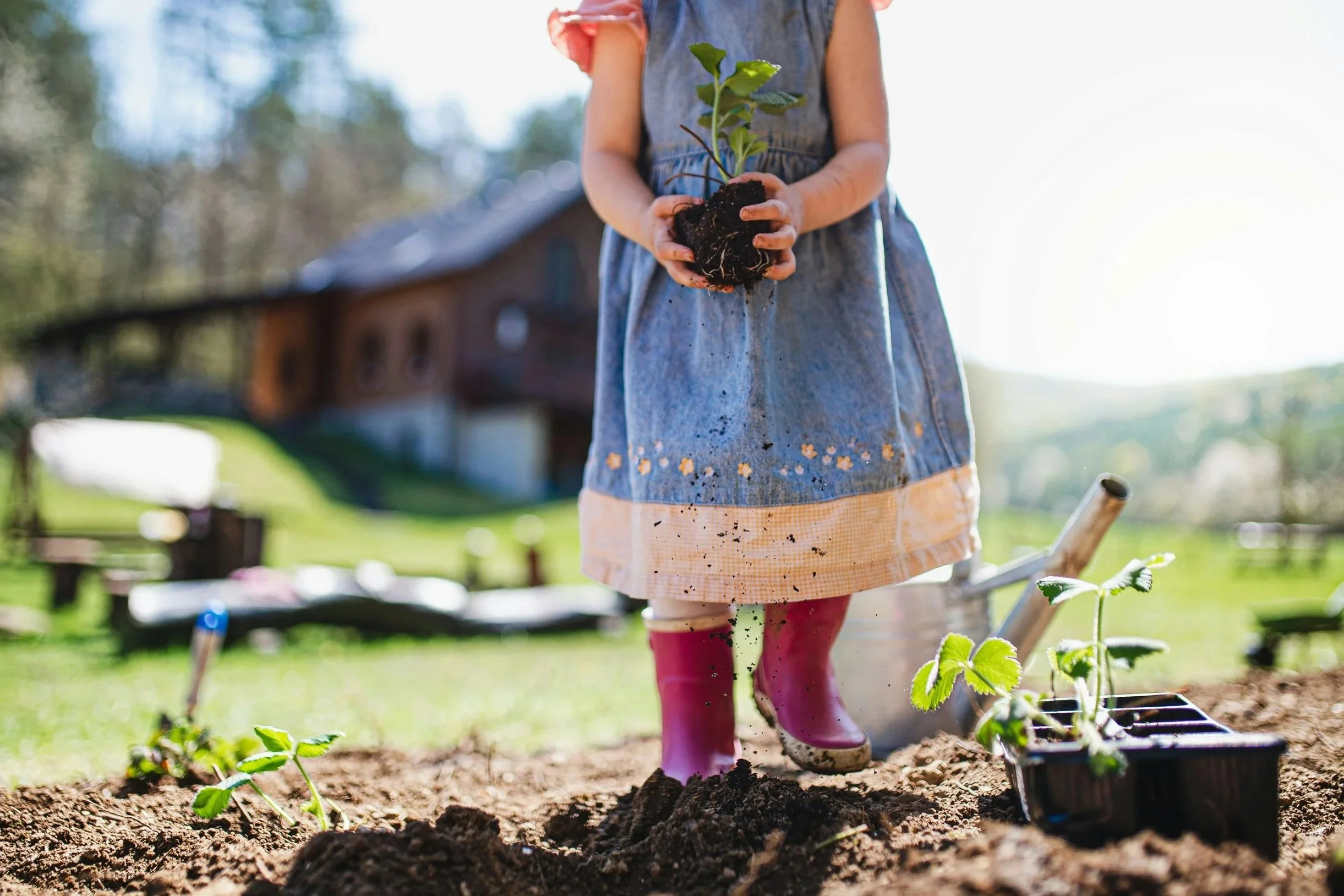
Small hands hold a plant with soil still clinging to its roots, capturing how family-led rewilding connects children to land, responsibility, and the future of Ireland’s ecosystems.
Rewilding Ireland is not a lifestyle choice. It is a response to a thinning world.
This island has lost much of what once held it together — wetlands drained, hedges narrowed, insects diminished to absence. These losses do not announce themselves loudly. They arrive as silence. As fewer returns. As children growing up without reference points for what abundance once felt like.
When we rewild at home, we are not repairing everything. But we are interrupting forgetting.
A living garden teaches children something no curriculum can: that the world is not inert, not endlessly replaceable, not designed only for use. It teaches patience, reciprocity, limits. It teaches that care has consequences beyond intention.
For ecosystems, small spaces matter because they accumulate. For children, they matter because they normalise life.
What we leave behind will not be measured in square metres restored, but in whether future generations inherit a land that still knows how to host life — and be hosted by it.
Rewilding is not optional stewardship.
It is a responsibility quietly waiting to be accepted.