The year of the native forest: 10 powerful resolutions to help rewild Ireland in 2026
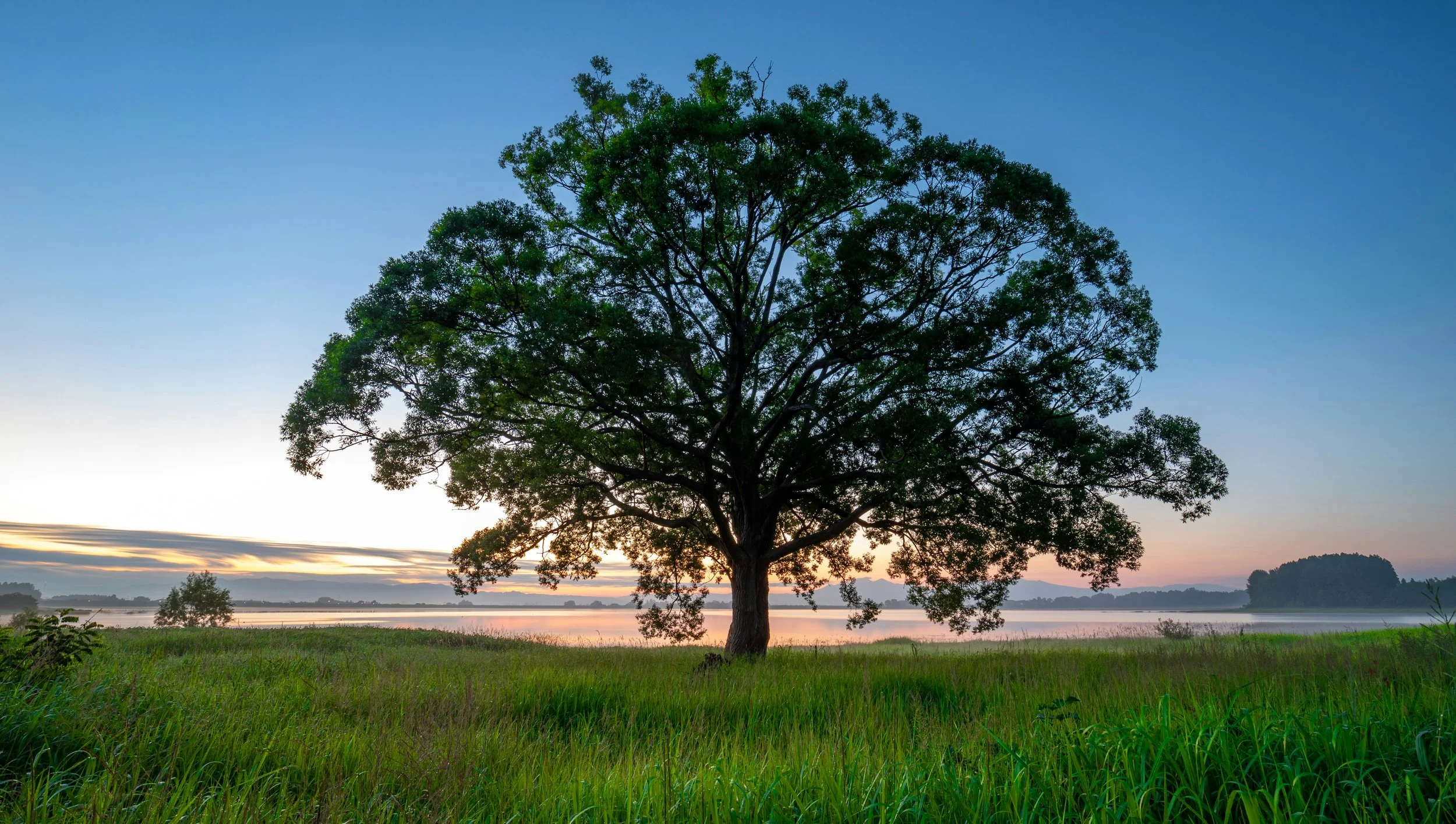
A lone tree rises from open meadow at first light, its branches spreading wide against the sky — a quiet symbol of endurance, ecological memory, and the long view required to restore native forests in Ireland.
A year we choose the forest
Ireland stands at the edge of another year, damp soil breathing beneath our boots, rain softening the fields into shades of green so familiar we forget how fragile they are. Hedgerows stitch the land together like old seams, some thick with life, others thinning, unraveling. There are places where oak once stood in quiet authority, where hazel coppices filtered light into leaf-shadowed rooms, where alder held the banks of rivers steady with its roots. Many of those places are now absent.
We know this loss. We carry it in statistics, in maps of forest cover reduced to percentages, in the uncomfortable truth that Ireland is one of the least forested countries in Europe when it comes to native woodland. But grief, if left unshaped, can paralyse. What we need now is not despair, nor abstract hope, but direction.
The turning of a year invites reflection, but it can also invite commitment. Let 2026 be more than another marker on a calendar. Let it be the year we choose the forest—not through grand declarations alone, but through grounded, collective acts of repair.
These are not resolutions of self-improvement. They are resolutions of relationship. Each one asks not how nature can serve us, but how we might learn, again, to live within it.
Why native forests matter (and why Ireland needs them now)
A native forest is not simply a group of trees. In Ireland, it is a living weave of species that evolved together over millennia: oak and birch, rowan and alder, hazel in the understorey, willow near water, holly holding winter green. These forests grow slowly, unevenly, patiently.
This is why monoculture plantations—often composed of fast-growing, non-native conifers—are not forests in any ecological sense that matters. They simplify landscapes, acidify soils, alter hydrology, and offer little refuge for native wildlife. They are crops, harvested on human timescales, not communities rooted in ecological time.
Native woodlands, by contrast, work quietly and persistently. They store carbon not quickly, but securely—locking it into soils, roots, and living biomass over centuries. They slow water, reducing flood risk downstream. They rebuild soils exhausted by overuse. And they hold cultural memory: place-names, folklore, and seasonal rhythms shaped by trees that once defined the land.
Crucially, native forests are not just about trees. They are habitat networks—intricate food webs where life depends on life. Songbirds nest in dense canopies; owls hunt along woodland edges; bats trace invisible paths between trees at dusk. Pine martens, once driven close to extinction, find shelter in connected woodlands. Invertebrates—beetles, moths, pollinators—depend on deadwood, fungi, leaf litter, and the microhabitats only native forests provide. Remove the forest, and the network collapses strand by strand.
This interdependence is why restoring native woodland is not optional. It is foundational.
From awareness to action: rewilding as a daily practice
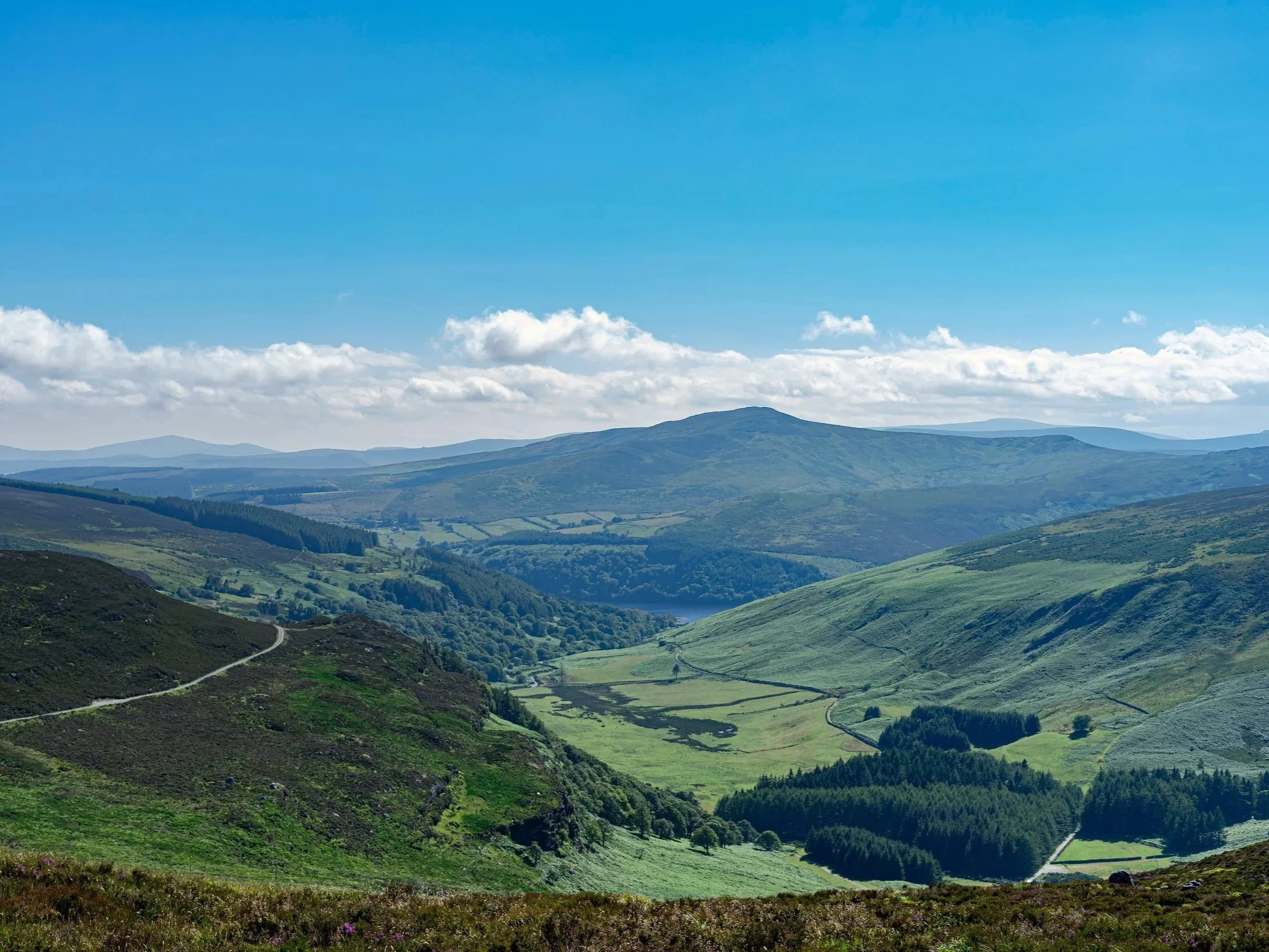
A sweeping Irish landscape unfolds across rolling hills and a wide valley, where farmland, hedgerows, and pockets of woodland coexist. The scene illustrates rewilding not as a distant ideal, but as something woven into daily land use, shaped by repeated, practical decisions over time.
Rewilding is often framed as something distant—large estates, policy rooms, vast tracts of land handed back to nature. That vision is important, but it is incomplete. Rewilding is not a single act.
It happens in gardens left imperfect, in hedgerows planted instead of fences, in conversations that shift how landscapes are valued. It happens when people choose restraint over control, patience over immediacy. Rewilding is not about abandoning responsibility; it is about realigning it.
You do not need to own land to participate. You need attention, intention, and a willingness to act where you are.
What follows are ten resolutions for 2026—practical, grounded, and cumulative. None are heroic on their own. Together, these repeated choices grow into something larger: a society learning to live alongside forests once more.
The 10 Resolutions for the year of the native forest (2026)
Resolution 1: learn the trees that belong here
Why it matters:
You cannot protect what you cannot name. Learning native trees is an act of recognition.
Concrete actions:
Learn to identify at least ten native tree species by leaf, bark, bud, and seasonal change.
Follow Irish ecologists, botanists, and native woodland groups.
Visit ancient or semi-natural woodland sites and observe how trees grow together.
Resolution 2: plant native — or don’t plant at all
Why it matters:
Planting the wrong trees in the wrong places can deepen ecological harm. Rewilding values quality, origin, and context over numbers.
Concrete actions:
Avoid non-native ornamentals and known invasive species.
Support nurseries growing Irish-origin native stock.
Prioritise hedgerows and mixed planting over isolated trees.
Resolution 3: protect what already exists
Why it matters:
The most effective form of rewilding often begins with restraint. Ancient woodland cannot be replaced once lost.
Concrete actions:
Support campaigns protecting remaining native woodland fragments.
Oppose unnecessary felling and land misuse at local level.
Learn the legal protections surrounding trees and hedgerows in your area.
Resolution 4: let the land rest where you can
Why it matters:
Rewilding does not always require planting. Much of Ireland’s land has been shaped by centuries of pressure—grazed, drained, tidied, corrected. Leaving corners of land untouched is not neglect; it is inviting the land to heal and grow in partnership with its original life.
Concrete actions:
Leave corners of gardens, verges, or fields unmown through spring and summer.
Allow brambles, ivy, nettles, and scrub to exist where they do no harm.
Keep deadwood, fallen branches, and leaf litter in place whenever possible.
Resist the cultural urge to tidy landscapes into silence.
What returns first is rarely dramatic. Grasses thicken. Insects arrive. Birds follow. Then fungi, mosses, and seedlings. Rewilding often begins at ankle height.
Resolution 5: make space for native wildlife, not just trees
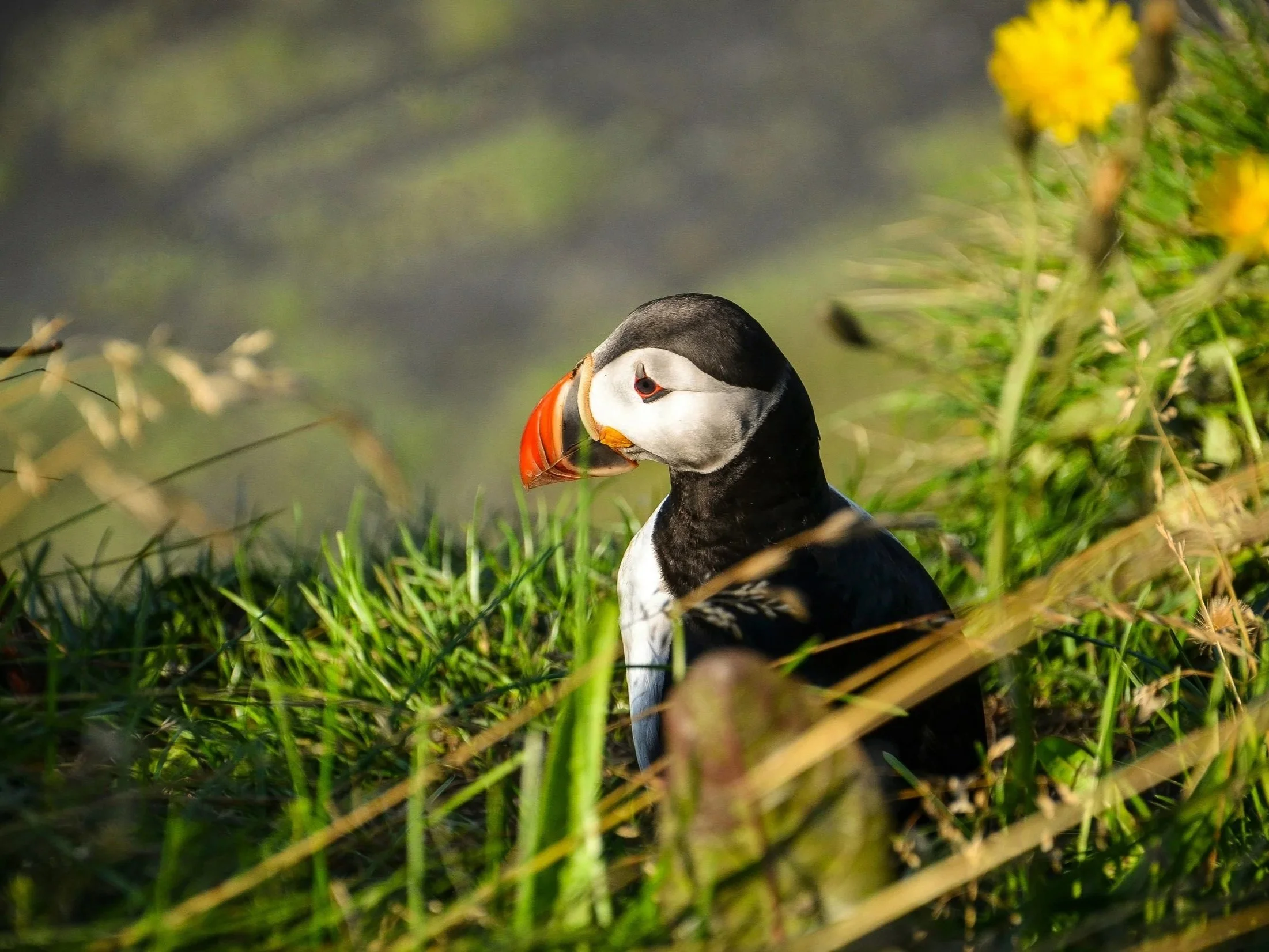
An Atlantic puffin pauses among coastal grasses, its bright beak contrasting with the surrounding vegetation. The image reflects the principle that rewilding is about restoring entire habitats—food webs, shelter, and breeding space—for native wildlife, not just planting trees.
Why it matters:
Rewilding Ireland is not about trees alone. It is about restoring homes, corridors, and food sources for the species that evolved alongside them. A forest without wildlife is a structure without life.
Concrete actions:
Plant berry- and nut-producing natives such as hawthorn, holly, hazel, and rowan.
Leave standing deadwood and fallen timber to support insects, fungi, and birds.
Install bird boxes, bat boxes, or insect habitats where appropriate and well-researched.
Reduce pesticide and herbicide use to as close to zero as possible.
Support habitat corridors that connect fragmented woodlands, hedgerows, and riverbanks.
Resolution 6: support native woodland organisations
Why it matters:
Individual action matters, but collective effort shapes landscapes. Across Ireland, organisations are doing slow, careful work—protecting remnants, restoring degraded land, and resisting short-term thinking.
Concrete actions:
Donate to or volunteer with native woodland and rewilding organisations.
Attend guided walks, talks, and planting days led by ecologists and local groups.
Share their work thoughtfully, prioritising long-term projects over performative gestures.
Support initiatives focused on ecological integrity, not quick visual results.
Rewilding is a commitment measured in decades.
Resolution 7: rethink forestry consumption
Why it matters:
Forests are not separate from daily life. They are embedded in the paper we use, the furniture we buy, the packaging we discard. Consumption choices shape landscapes elsewhere, even when they feel distant.
Concrete actions:
Reduce paper use and avoid unnecessary printing.
Choose FSC-certified or recycled wood products.
Ask where timber comes from—and where it does not.
Favour durability, repair, and reuse over replacement.
Every object made from wood carries a story of land use. Learn to read it.
Resolution 8: restore waterways as lifelines of the forest
Why it matters:
Forests and streams are inseparable. Native woodlands depend on healthy rivers, wetlands, and bogs for moisture, nutrients, and habitat connectivity. Restoring waterways not only benefits trees but also sustains wildlife, prevents erosion, and strengthens landscapes against climate extremes. This resolution shifts attention to a hidden yet essential dimension of rewilding that often gets overlooked.
Concrete actions:
Identify degraded streams, bogs, or ponds near native woodland sites.
Plant native riparian vegetation to stabilise banks and provide shade for aquatic life.
Remove invasive plants along waterways and prevent soil runoff.
Reduce water pollution by avoiding chemicals, proper waste management, and advocating for clean water policies.
Support community river or wetland restoration projects, creating corridors that link fragmented forests.
By focusing on water, you heal the lifeblood of the forest. Trees grow stronger, wildlife thrives, and landscapes become resilient to droughts and floods. This resolution connects every other action—planting, wildlife, soil, and community—through the most vital element: water.
Resolution 9: vote and advocate for native forests
Why it matters:
Rewilding is not politically neutral. Land use, forestry policy, planning law, and agricultural incentives shape the fate of forests as surely as climate and soil do. Silence is not apolitical—it favours the status quo.
Individual care must be matched with collective voice.
Concrete actions:
Support political representatives with credible, science-based environmental records.
Engage with local planning consultations that affect trees, hedgerows, and woodland remnants.
Write to councils and representatives when native woodland is threatened.
Demand stronger legal protection for ancient and semi-natural woodlands.
Advocacy does not require perfection or expertise—only persistence. Forests have no vote. We must lend them ours.
Resolution 10: walk the forest — even where it’s missing
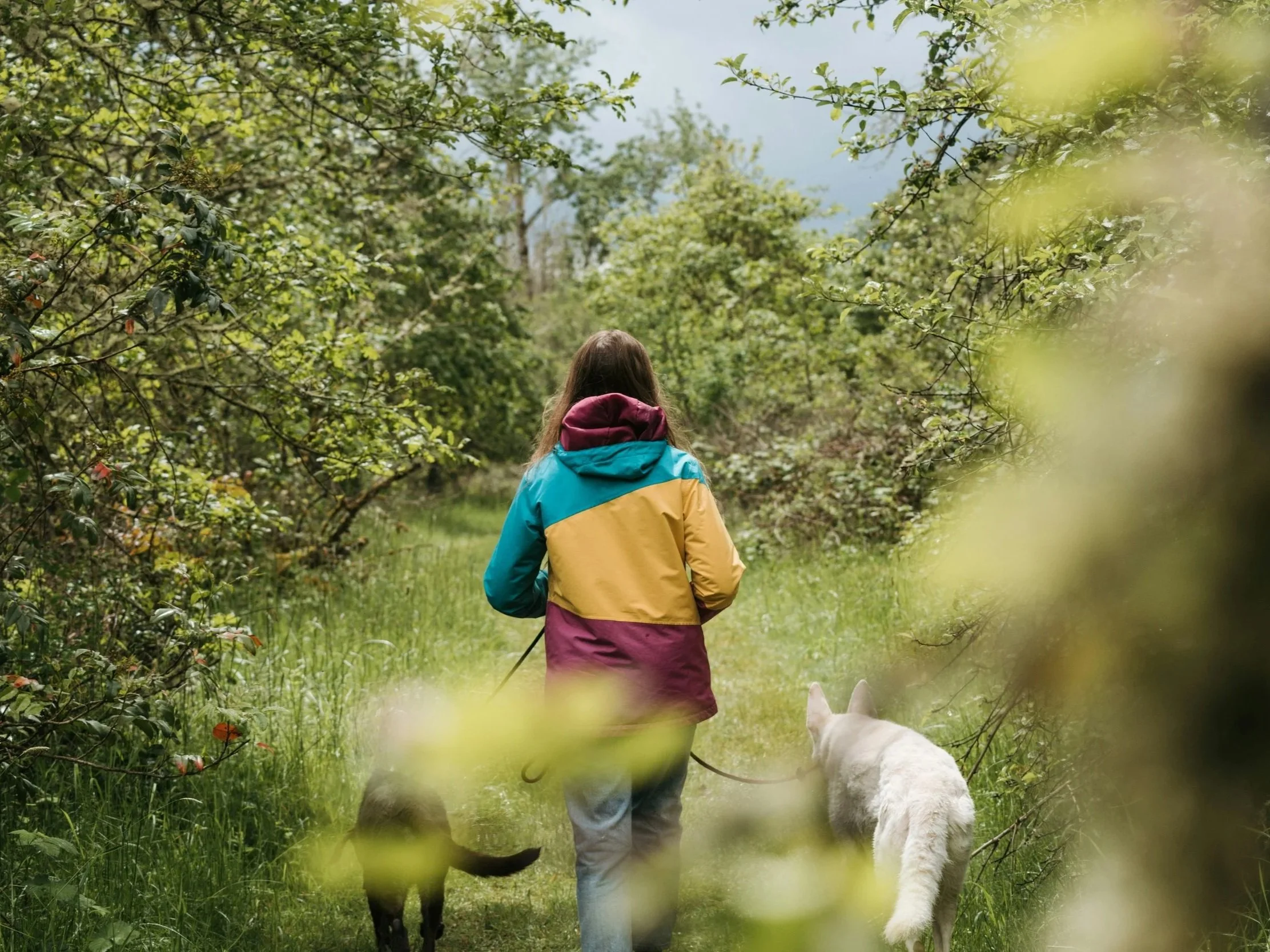
A quiet walk through a green corridor where hedgerows and young trees frame a narrow path — a moment of presence that reflects the idea of rewilding through attention, movement, and reconnection with Ireland’s living landscapes.
Why it matters:
Rewilding is sustained not only by knowledge, but by feeling. Without emotional connection, ecological responsibility erodes under pressure. Walking is one of the oldest ways humans have understood land.
Even absence can teach.
Concrete actions:
Visit existing native woodlands regularly, in different seasons and weather.
Walk deforested or degraded landscapes while imagining what once grew there.
Learn to read subtle signs: old boundary trees, place-names, shifts in soil and slope.
Allow grief, wonder, and responsibility to coexist without rushing to resolution.
Rewilding is not a trend — it’s a responsibility
Rewilding has entered public language, but language alone does not restore ecosystems. When reduced to aesthetics or branding, it loses its ethical weight. Native forests are not scenery. They are living communities with needs independent of our preferences.
To rewild is to accept limits—to acknowledge that not all land is ours to dominate, that not all growth should be engineered, that coexistence requires restraint. It is an act of humility as much as hope.
The forest does not exist to redeem us.
Rewilding beyond the land: culture, and time
Rewilding is not only ecological; it is cultural. It challenges deeply held ideas about order, productivity, and control. A landscape allowed to grow messy is often judged as neglected. A slow-growing forest is dismissed as inefficient. These are not ecological failures—they are cultural ones.
Native forests work on timescales that resist human impatience. Oaks do not rush. Hazel coppices return over generations. Soil builds grain by grain. To rewild is to recalibrate our sense of time.
It also demands humility. Rewilding is not about recreating a pristine past, nor about curating nature into aesthetic scenes. It is about making space—for other lives, other rhythms, other futures.
Forests are not resources waiting to be managed. They are communities asking to be respected.
A quiet promise to the future
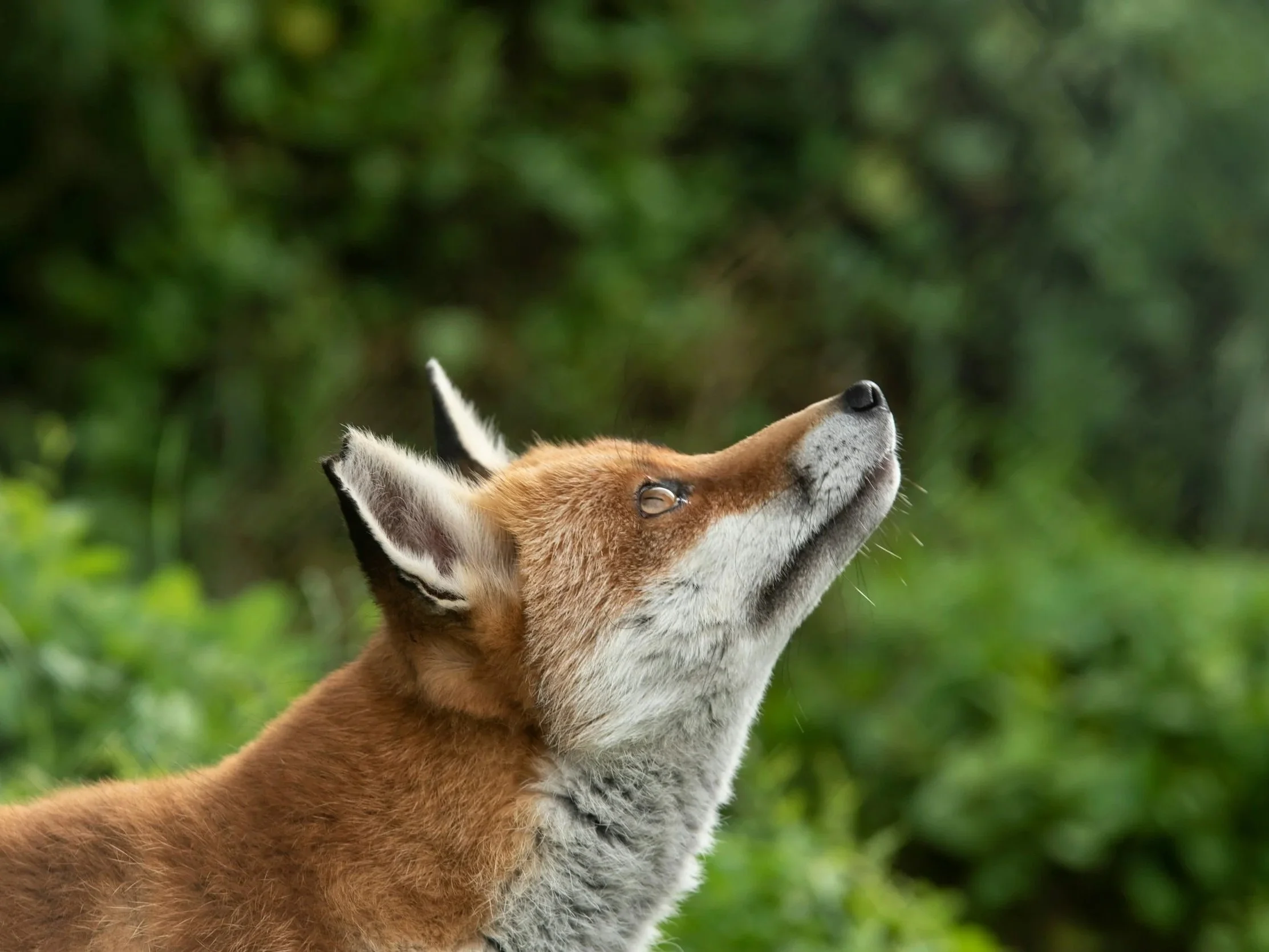
A fox pauses in quiet attention within a green woodland, embodying the fragile hope and continuity of life that rewilding seeks to protect for future generations.
Ireland does not need another slogan year. It needs to remember.
To remember that forests once shaped this land more than fences ever did. To remember that wildlife thrives where continuity exists. To remember that care, repeated by many people in small ways, becomes change.
2026 can be the year Ireland chooses to grow forests again—not quickly, not perfectly, but faithfully. Through patience. Through protection. Through daily acts that seem modest until they accumulate.
Walk the land. Learn its names. Let grief and responsibility sit beside hope. Let the wind through the branches remind you of what was lost and what might yet return. Let the hum of insects, the drip of rain, and the slow rise of moss become teachers in a world that too often measures progress by speed alone. Devotion to the forest is measured not in grand gestures, but in presence—in showing up, in noticing, in listening to the quiet pulse of life beneath our feet.
And if enough of us answer, quietly and persistently, the trees will do the rest. They will grow. They will shelter, sustain, and endure. They will remind us that time is layered, patience is a gift, and that even the smallest action—planted hedge, protected sapling, or a stretch of untended meadow—can ripple outward into a living, breathing future.
Ireland can remember again. And in that remembering, the land itself will keep its promise, carrying the echoes of those who chose to act, who chose to care, who chose to answer the forest’s call.