Ireland’s winter wildlife: the species fighting for survival in the darkest months
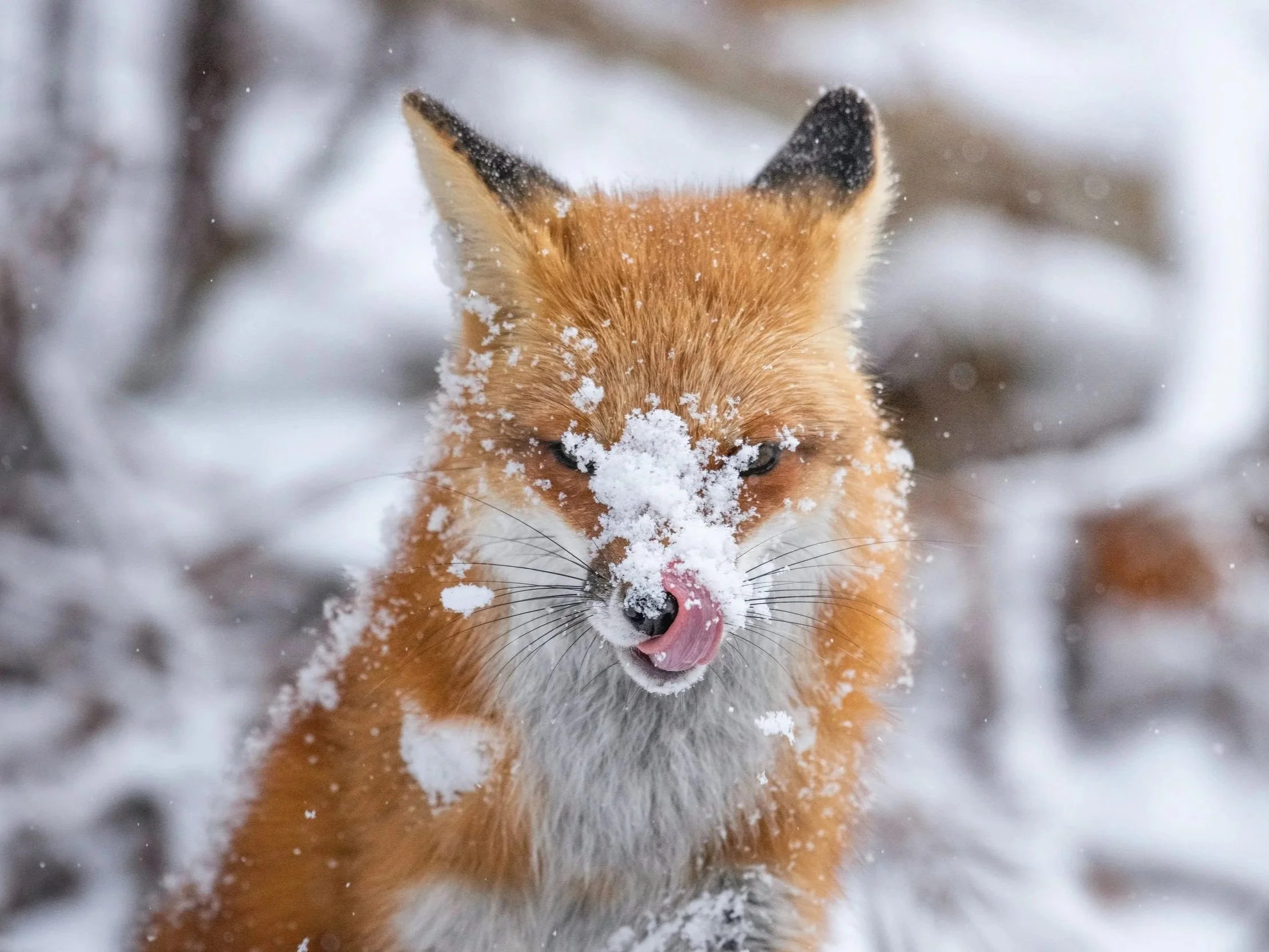
A red fox endures winter conditions as snow settles across its fur, illustrating the quiet resilience of Ireland’s wildlife during the darkest months. Winter survival for mammals depends on adaptability, shelter, and energy conservation as food becomes scarce and daylight shortens.
The long narrowing of winter
Winter in Ireland arrives quietly.
It does not announce itself with deep snow or cracking ice. Instead, it slips in quietly, almost politely, thinning the light by degrees, shortening the days until afternoon feels unfinished. Mornings begin in half-darkness. Evenings arrive before anything has properly ended.
The cold here is wet rather than sharp. It seeps. It settles. It tests patience more than endurance. Fields remain green, deceptively alive, while the sun lowers itself behind cloud after cloud, as if tired of trying. This is not a season of drama. It is a season of attrition.
Winter is often spoken of as a pause, a holding breath. But for wildlife, it is not rest. It is filtration. It is the narrowing of margins. What cannot adapt slips quietly away, leaving little evidence it was ever there at all.
Survival in winter is rarely loud. It does not roar or sprint or bloom. It happens in the unnoticed hours: in hedgerows holding heat, in feathers tightened against damp air, in bodies calculating energy with ruthless precision. It is work done out of sight.
And so the question winter asks is not what thrives, but what remains. Who stays when insects vanish from the air, when daylight thins to a rumour, when food becomes a memory stored in fat and instinct? Who persists when the world offers less?
Ireland’s winter is patient. It does not rush the answer. It waits.
Winter in Ireland is a time of work
There is a common assumption that winter slows everything down. That nature sleeps. That life retreats until spring restores it. In Ireland, this is a comforting myth—and a misleading one.
Ireland’s winters are mild by continental standards, rarely plunging far below freezing. But they are demanding in other ways. Rain saturates the land for months. Soils remain heavy and airless. Rivers swell. Daylight contracts to a narrow window, reducing feeding time for birds and mammals alike. Energy must be gained faster than it is lost, or not at all.
Food is the central pressure. Insects disappear into soil and bark. Seeds are picked clean. Berries rot or are taken early. What remains must be found repeatedly, efficiently, without waste. Every flight, every foraging attempt, carries a cost.
Habitat fragmentation sharpens these pressures. Hedgerows are thinner than they once were. Wetlands are drained. Gardens are tidied into silence. Winter exposes these losses more starkly than summer ever could.
Climate change adds another layer of uncertainty. Winters grow wetter, storms more frequent, temperature swings less predictable. Species adapted to rhythm are forced into improvisation.
Nothing here is dormant. Life continues under constraint. Winter in Ireland is not a sleep—it is a test conducted slowly, relentlessly, in dim light.
The winter birds
Winter redraws the map for birds. Boundaries sharpen. Alliances shift. What was tolerated in summer becomes contested in the dark months, when food is scarce and daylight brief.
The robin, so often mistaken for gentle ornament, becomes something else entirely in winter. Its red breast is not decoration but declaration—a warning signal flared against the dim. As insect numbers fall, robins abandon the easy abundance of shared space and turn fiercely territorial. One bird. One patch. Any intrusion is met with sudden violence: wings flashing, chests puffed, songs sharpened into weapons. The robin sings not to attract, but to repel. It is a sound of holding on.
Wrens survive winter by compression. One of Ireland’s smallest birds, all urgency and nerve, it loses heat rapidly. In cold spells, wrens roost communally, piling into nest boxes or dense ivy to share warmth, bodies pressed together in defiance of physics. Silence becomes survival. Song pauses. Movement becomes economical. The wren shrinks its world to what it can defend.
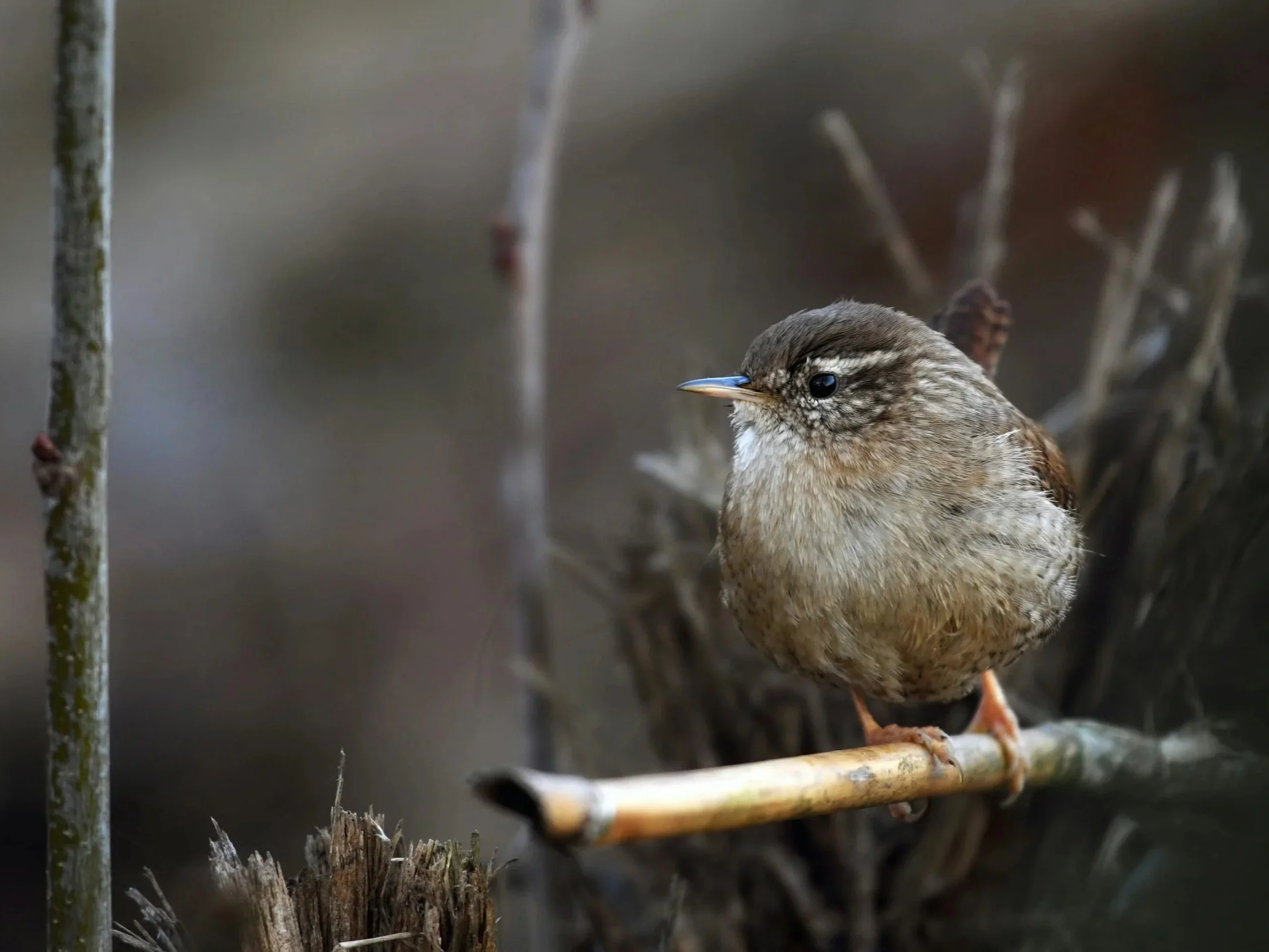
A Eurasian wren perches quietly in winter, its small body adapted to conserve heat and energy as daylight shortens in Ireland. Wrens survive the cold months through shelter, reduced movement, and communal roosting, making winter one of the most demanding seasons for small birds.
Blackbirds, too, alter their behaviour. Some remain year-round, defending feeding grounds with grim persistence. Others arrive from colder regions, swelling winter populations and increasing competition. Gardens become contested territories, places of both refuge and risk. A single apple left on frozen grass can draw half a neighbourhood of wings.
The goldcrest—Europe’s smallest bird—faces winter with a metabolism that borders on impossible. It must eat almost constantly to survive the cold night ahead. Each dawn is a narrow escape. Each sunset a calculation. Many do not make it through prolonged cold snaps. Those that do are often the ones that find shelter in conifers, dense hedges, places we rarely notice until they are gone.
And then there are the starlings. In winter, they relinquish individuality for scale. Murmurations form not from beauty, but from need: safety in numbers, warmth in closeness, confusion as defence. The sky becomes a moving organism, folding and unfolding as one. Below it, the fields are quiet.
What unites these birds is not resilience as we like to imagine it, but precision. Winter rewards accuracy. The right place. The right moment. The right decision, made again and again, in failing light.
Quiet lives beneath the hedges
Mammals endure winter differently—through concealment, restraint, and calculated absence. If birds mark winter with sound and motion, mammals endure it differently—through concealment, restraint, and calculated absence. Much of their survival unfolds beneath hedgerows, under leaf litter, inside setts and burrows whose entrances we pass without noticing.
The hedgehog is winter’s most precarious sleeper. Unlike true hibernators, hedgehogs enter a fragile torpor, their body temperature and heart rate dropping dramatically. But Ireland’s increasingly mild and erratic winters disrupt this state. Warm spells wake them. Cold snaps follow. Each awakening burns fat reserves meant to last the season. Without sufficient weight, many simply do not re-enter spring. The loss is quiet. Often, it goes unseen.
Badgers retreat rather than disappear. Winter does not drive them underground entirely, but it reduces their movement. Setts become vital shelters—complex systems passed down through generations. When these are disturbed by flooding, development, or collapse, the cost is immediate. Winter leaves no margin for rebuilding.
Foxes adapt by proximity. In towns and cities, winter foxes shorten the distance between wild and human space, drawn by refuse, warmth, and opportunity. Urban survival is not ease—it is risk traded for calories. Darker evenings increase road mortality. The same roads that cut through habitat become deadliest when visibility shrinks and hunger sharpens behaviour.
The pine marten tells a more hopeful story, though not an easy one. Slowly recovering after near-extinction, it faces winter with agility and opportunism, hunting small mammals and birds when food is scarce. But recovery does not mean security. Fragmented woodland and isolated populations leave martens vulnerable to harsh seasons that test even the well-adapted.
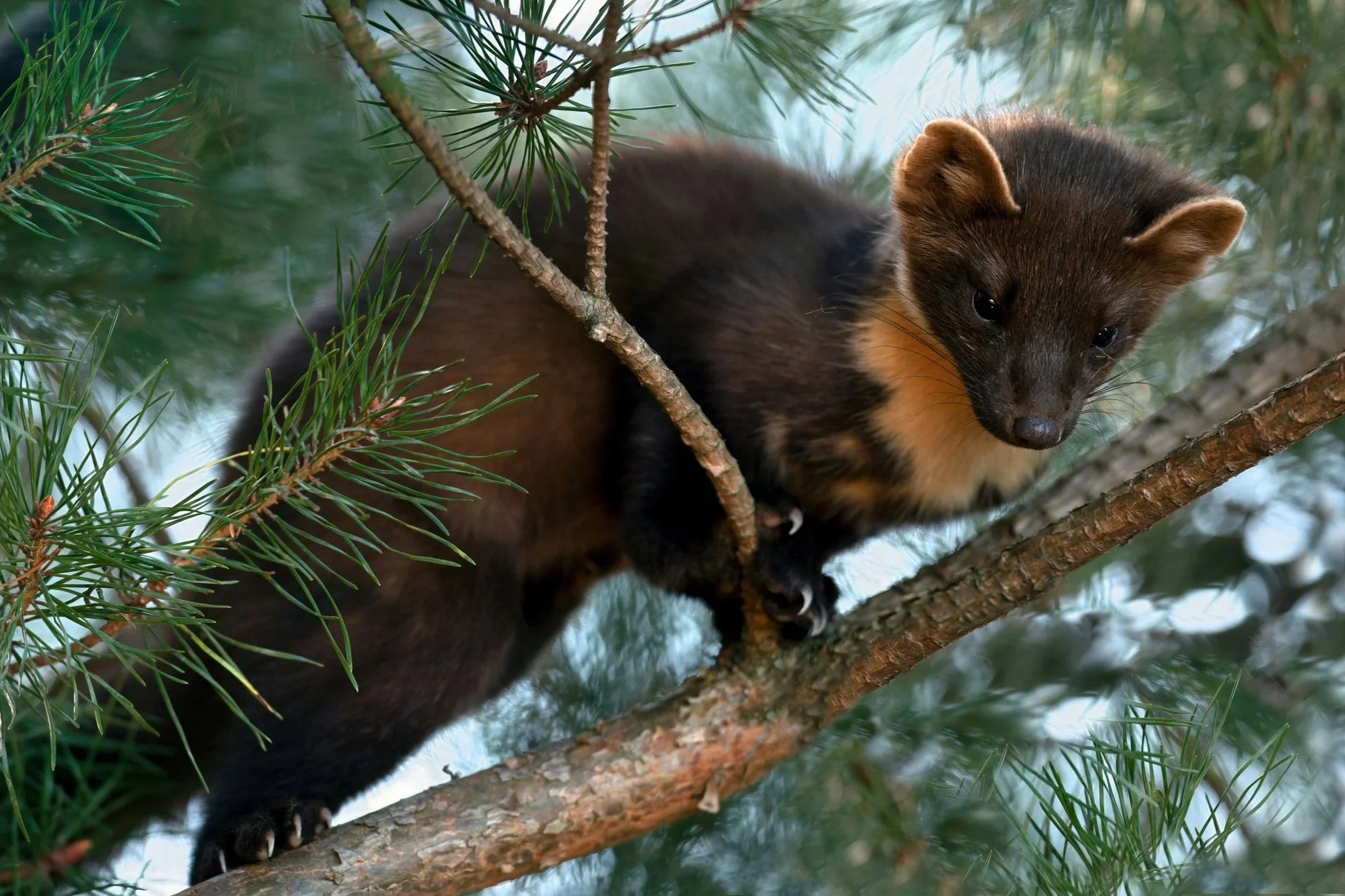
A pine marten navigates winter woodland, using tree cover and hedgerows to hunt and shelter during Ireland’s darkest months. Once near extinction, pine martens depend on connected habitats to survive winter, when food is scarce and energy conservation becomes critical.
Across these species, winter reveals a pattern: endurance depends less on strength than on continuity. Intact hedgerows. Undisturbed ground. Safe crossings. Remove these, and winter becomes not a challenge, but a sentence.
Mammals do not announce their struggle. They leave tracks briefly in mud, then erase them with rain. Survival here is not heroic. It is incremental. It happens if the land still knows how to hold them.
Amphibians, insects, and the lives we forget
Winter survival is often imagined at eye level: birds at feeders, mammals crossing roads at dusk. But much of Ireland’s winter life exists below notice, folded into mud, water, bark, and soil, carried through the dark months in states that look like absence.
Frogs and newts do not flee winter; they submit to it. As temperatures fall, they sink into pond sediment or soft ground, their metabolism slowing to a near halt. Oxygen is absorbed through skin. Movement becomes minimal. Survival depends on stillness and on water that remains unpolluted, unfrozen, undisturbed. Drain a pond, compact a field, and a winter refuge vanishes.
Insects persist through transformation. Some overwinter as larvae hidden in soil or rotting wood. Others survive as eggs sealed against frost, or as adults tucked beneath loose bark and leaf litter. Butterflies like the peacock and small tortoiseshell retreat into sheds, hollow trees, or crevices in stone walls, relying on darkness and cold to slow time itself.
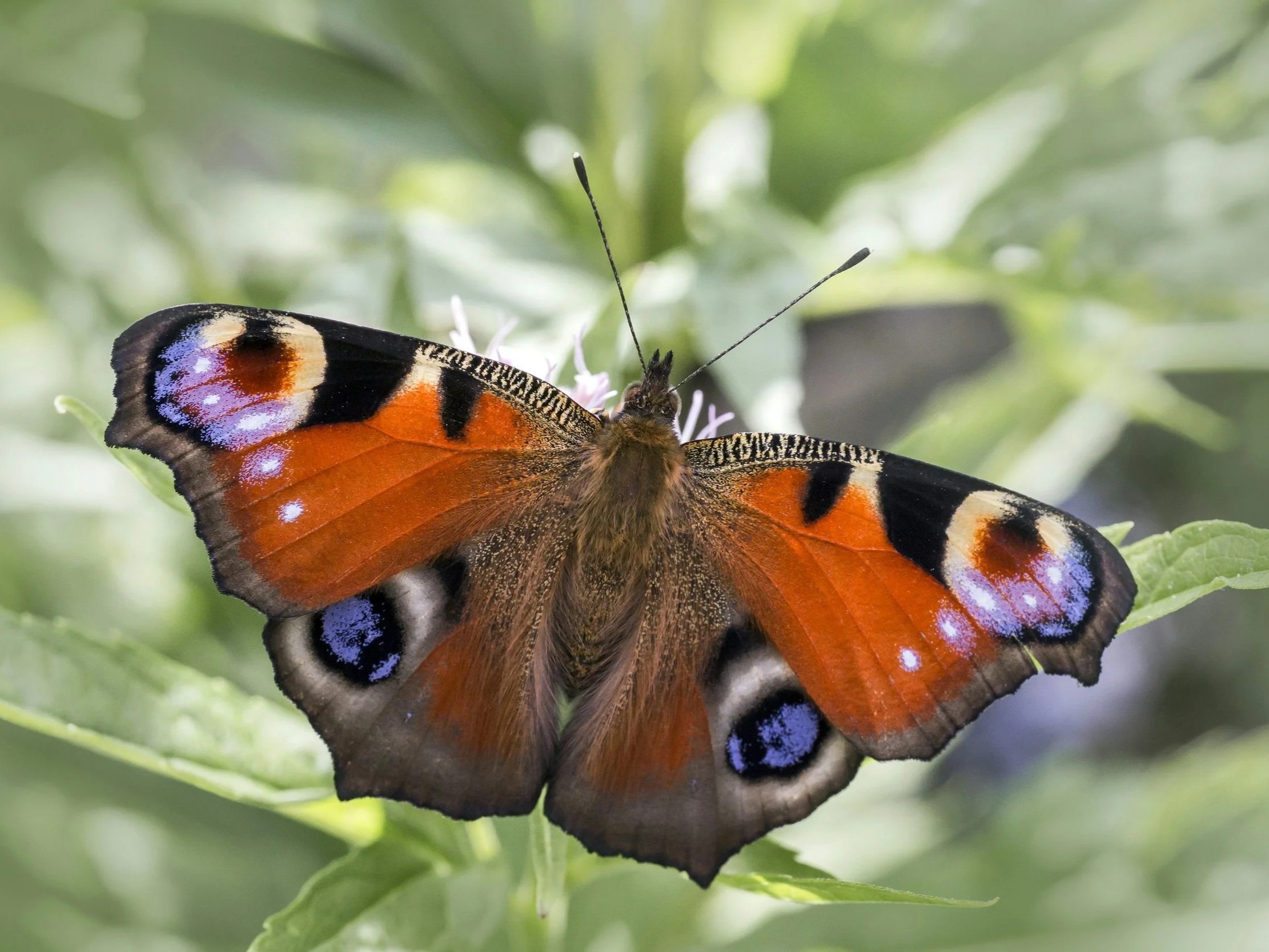
The peacock butterfly survives Ireland’s winter not through movement, but through disappearance. As temperatures fall, it retreats into darkness—tree hollows, stone walls, sheds—slowing its body until spring. Its survival depends on quiet, undisturbed spaces often erased by modern tidiness.
This is where modern landscapes fail most clearly. Tidiness—so often mistaken for care—removes precisely what winter survival requires. Fallen leaves are cleared. Dead wood is stripped away. Margins are cut back until there is nowhere left to wait.
Leaf litter is not waste; it is insulation. Dead wood is not decay; it is architecture. Beneath it, entire food chains endure winter together, stacked in layers of dependency.
What disappears first in winter are not the large, visible animals, but the small and silent ones. And when they go, spring arrives emptier than before, though few notice why.
Winter does not erase life here. It hides it. And whether that hidden life survives depends almost entirely on how much room we allow it to remain unseen.
Winter is the hardest season for survival
Winter is not simply another season. Ecologically, it is a narrowing gate.
Across Ireland’s landscapes, winter functions as a bottleneck through which only a portion of life can pass. What is lost here is rarely replaced by abundance later. A bird that starves in January will not be compensated for by a mild May. A hedgehog that fails to wake in March leaves no echo behind it.
This is because winter compresses pressure. Food scarcity, cold, darkness, and exposure converge at once. Energy budgets become brutally precise. A single missed feeding window, a single disturbed shelter, a single unnecessary flight can tilt survival toward failure. In summer, losses are absorbed. In winter, they accumulate.
Small declines matter more now than at any other time of year. Populations already reduced by habitat loss or fragmentation enter winter weakened. When conditions turn harsh—or simply unpredictable—there is no surplus to draw from. Recovery thresholds are crossed quietly, without spectacle, long before extinction is noticed.
Winter does not kill indiscriminately. It reveals what has already been strained. It exposes the cumulative weight of human decisions made far from the cold months: hedgerows removed, soils sealed, wetlands drained, food chains thinned.
To understand winter is to understand its forever consequences. It is the season that tells the truth about resilience—who had enough, and who did not.
How human choices shape winter survival
Winter survival is not shaped only by weather. It is shaped by decisions made months or years earlier, often without winter in mind.
Gardens become critical landscapes in the dark months. When feeding is done well—consistently, cleanly, with appropriate food—it can mean the difference between survival and loss. Done poorly, it spreads disease, concentrates stress, and creates dependency without safety. Even kindness carries consequence.
Artificial light fractures the night. Streetlamps, security lights, illuminated homes extend human time into hours wildlife evolved to rest. For nocturnal animals, darkness is shelter. When it is stripped away, movement becomes riskier, energy costs rise, and predation patterns unravel.
Winter hedge cutting removes berries, shelter, and insulation at precisely the moment they are needed most. Pesticides linger into the cold months, thinning already weakened food chains. Sealed soils shed water instead of holding life, flooding burrows and starving roots of oxygen.
Urban sprawl shortens distances between refuge and road, forcing animals into narrower corridors of survival. None of these pressures act alone. They stack.
Winter does not judge intention. It responds only to outcome. And in winter, the cost of error is paid immediately.
Protecting life in winter
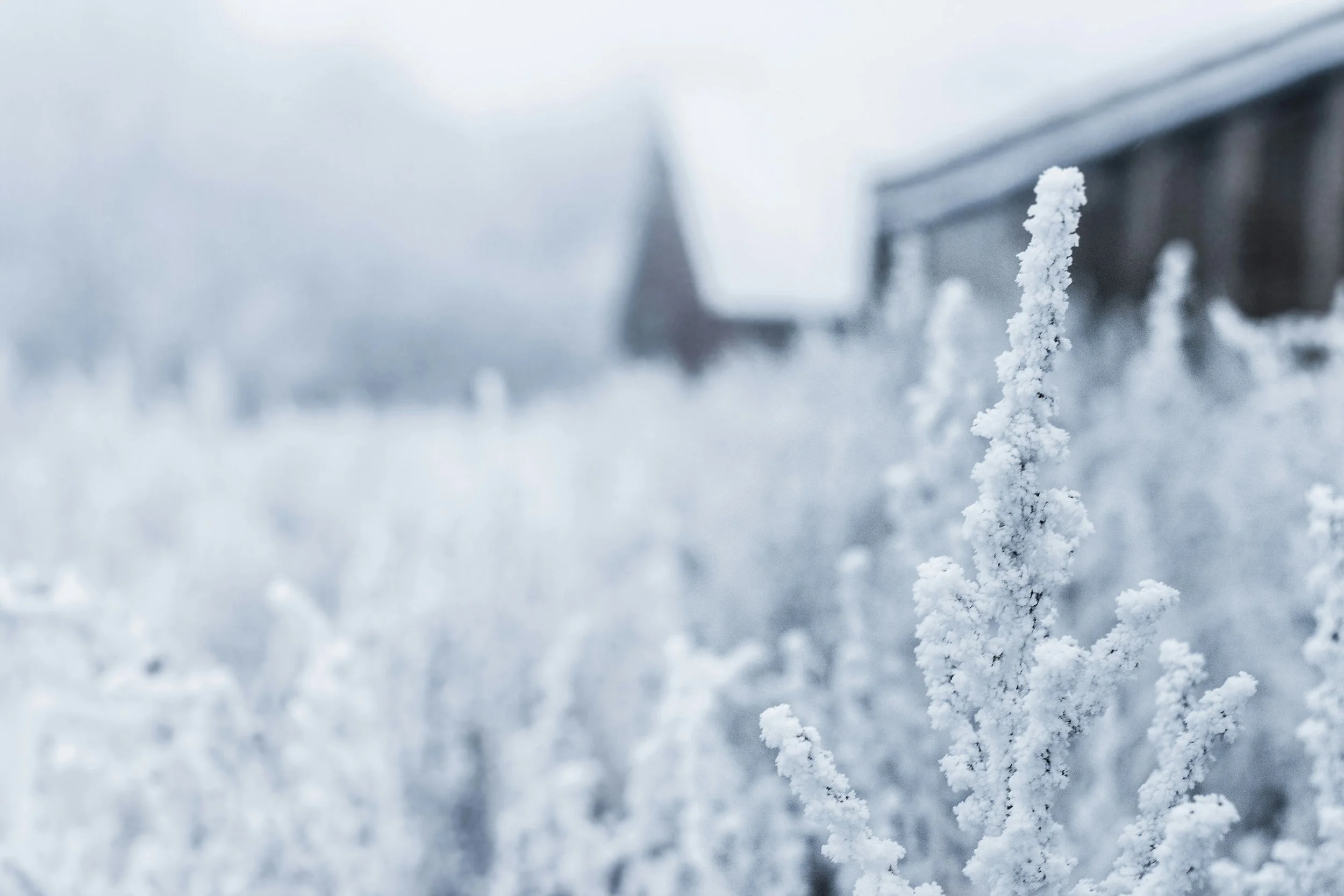
Frost-covered wild plants stand still in an Irish winter landscape, their delicate forms preserved by cold rather than erased by it. Leaving vegetation, seed heads, and natural cover intact through winter provides insulation, shelter, and food for insects and other wildlife struggling to survive the darkest months.
Protecting winter life rarely requires grand gestures. It asks for restraint.
Leave leaves where they fall. Let hedges grow thick and uneven. Accept that winter should look untidy, quiet, unresolved. Feed thoughtfully. Allow land—however small—to hold stillness.
Rewilding in winter is not about abundance. It is about continuity. About ensuring that something makes it through.
Protection, in the dark months, is less about doing more than about interfering less—and noticing what survives because you did.
Staying with what stays
Winter does not empty Ireland. It edits it.
What remains is quieter, harder to see, shaped by patience rather than display. Life does not pause here. It waits. It adapts. It endures.
The species that survive winter are not louder.
They are patient.