The beginner’s guide to irish native trees: identification, habitats & ecological importance
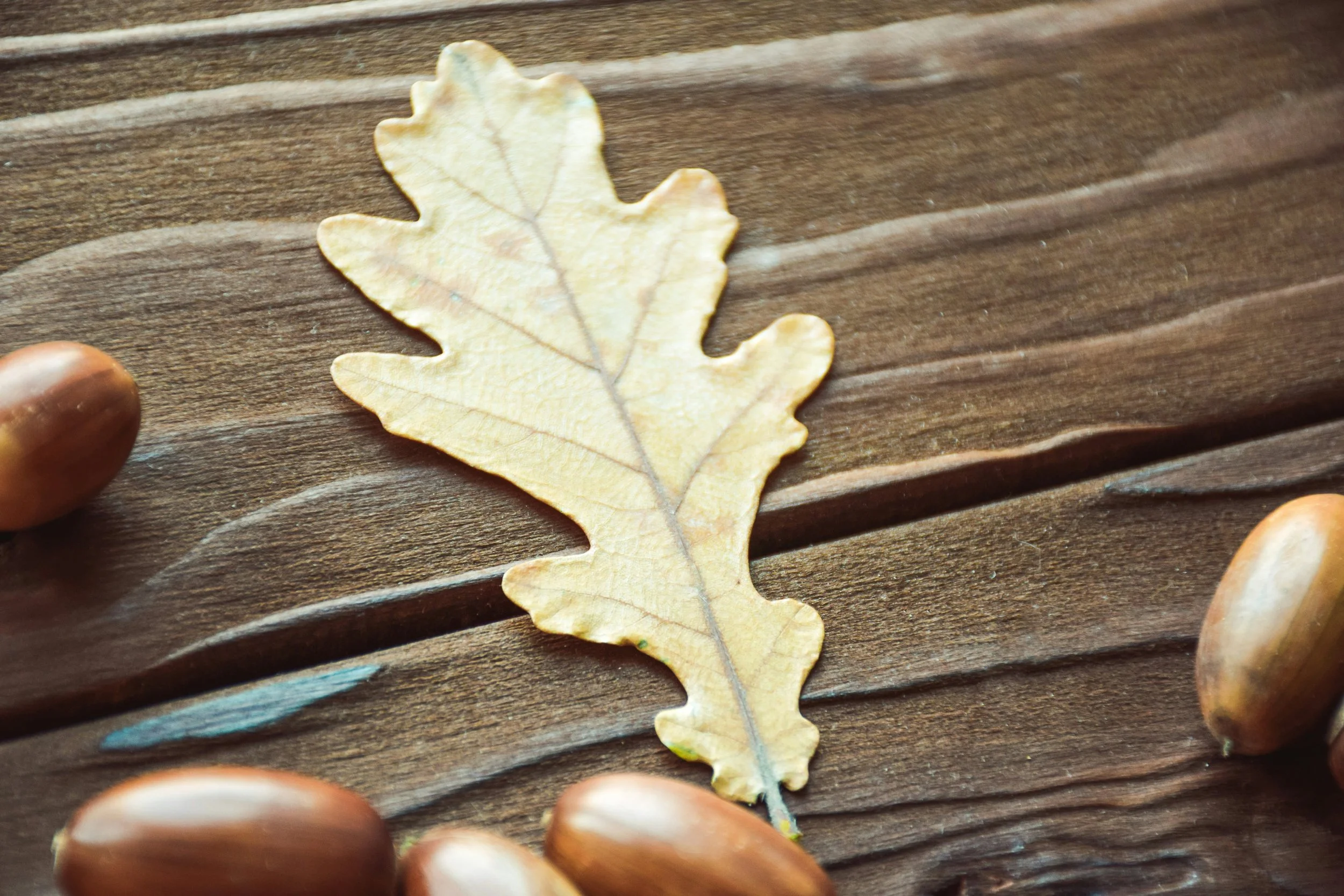
Close-up of a native Irish oak leaf (Quercus robur) with acorns on a wooden surface, illustrating key identification features of one of Ireland’s most important native trees. Oak supports hundreds of species and forms the backbone of ancient Irish woodland ecosystems.
Ireland is often imagined as green. But green is not a forest.
For centuries, the island’s woodlands have thinned, shifted, and regrown in fragments. Today, Ireland has one of the lowest levels of native woodland cover in Europe. Yet scattered across hedgerows, river valleys, uplands, and pockets of ancient woodland, the original trees remain, patient, resilient, and ecologically profound.
This beginner’s guide to Irish native trees explores how to identify them, where they grow, and why they matter, not only to biodiversity, but to climate resilience and cultural memory.
If you have ever wondered what trees are native to Ireland, or how to tell oak from ash in winter light, this is your starting point.
What are native trees in Ireland?
A native tree species is one that arrived in Ireland naturally, without human introduction, after the last Ice Age, roughly 10,000 years ago.
As glaciers retreated, seeds spread gradually across land bridges and via birds, wind, and water. Ireland, separated early from continental Europe, received fewer species than Britain or mainland Europe. The result is a relatively small but ecologically distinct group of trees native to Ireland.
Normally, native woodland species are defined by natural post-glacial colonisation.
To clarify:
Native species = arrived naturally after the last Ice Age
Non-native species = introduced by humans
Invasive species = spread aggressively and disrupt ecosystems
Archaeophytes = introduced long ago (often pre-1500), now naturalised
Ireland’s comparatively low tree diversity is not a weakness. It reflects biogeography. Fewer species arrived, but those that did became deeply woven into Irish ecosystems.
How many native trees does Ireland have?
Ireland has approximately 20–30 core native tree species, depending on classification criteria and whether certain shrubs are included as trees.
A simplified list of Irish native trees can be grouped as:
Canopy trees
Oak
Ash
Birch
Alder
Elm
Yew
Understorey trees
Hazel
Rowan
Holly
Native shrubs (often tree-forming)
Hawthorn
Blackthorn
Guelder rose
This modest diversity does not mean ecological simplicity. In fact, Irish forest biodiversity depends heavily on structural complexity. Layered canopies, deadwood, moss-rich bark, and seasonal light patterns.
How to identify irish native trees (beginner friendly)
If you’re new to tree identification in Ireland for beginners, start simple. Trees reveal themselves through four primary clues: leaves, bark, fruit, and habitat.
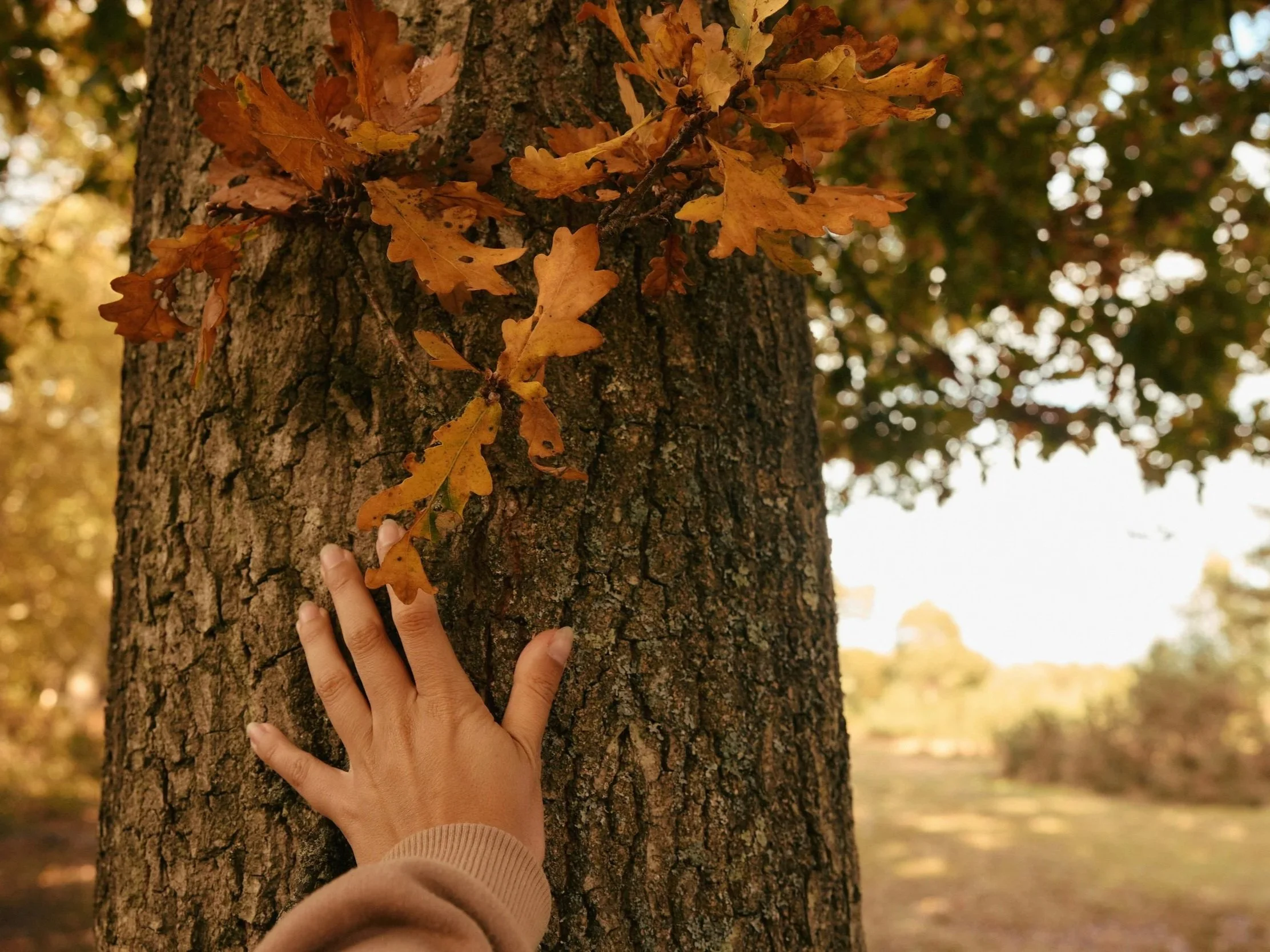
Close-up of a native Irish oak tree trunk with deeply fissured bark and lobed autumn leaves, demonstrating how to identify oak trees in Ireland using bark texture and leaf shape. Ideal example for beginner tree identification in Irish woodland.
1. Identify by Leaf Shape
Leaves are the most immediate clue in spring and summer.
Lobed leaves: Think oak — rounded lobes, deep sinuses.
Serrated leaves: Birch and elm have toothed edges.
Compound leaves: Ash has multiple leaflets arranged along a central stem.
Opposite vs alternate arrangement: Ash leaves grow opposite each other; oak leaves alternate along the twig.
In winter, fallen leaves disappear — but buds and branch patterns remain diagnostic.
If you’re wondering how to identify Irish trees in winter, focus on:
Bud shape and colour
Bark texture
Overall tree silhouette
Winter identification sharpens attention.
2. Identify by Bark
Bark is often overlooked, yet it tells a seasonal story.
Smooth silver bark: Birch
Deep fissures: Mature oak
Dark, blocky plates: Alder
Rough and vertically ridged: Elm
Some trees peel (birch), others crack (oak), others remain smooth for decades (young beech, though beech is non-native).
In Ireland’s damp Atlantic climate, bark is frequently layered with moss and lichen, subtle indicators of ecological continuity.
3. Identify by Seeds and Fruit
Autumn offers unmistakable clues:
Acorns → Oak
Winged seeds (samaras) → Ash
Red berries → Rowan or holly
Hazelnuts → Hazel
Learning seed forms builds rapid recognition skills.
4. Identify by Habitat
Trees grow where conditions suit them.
Riverbanks → Alder
Uplands → Rowan
Ancient woodland → Oak and yew
Hedgerows → Hawthorn and hazel
Understanding habitat is often more reliable than leaf shape alone.
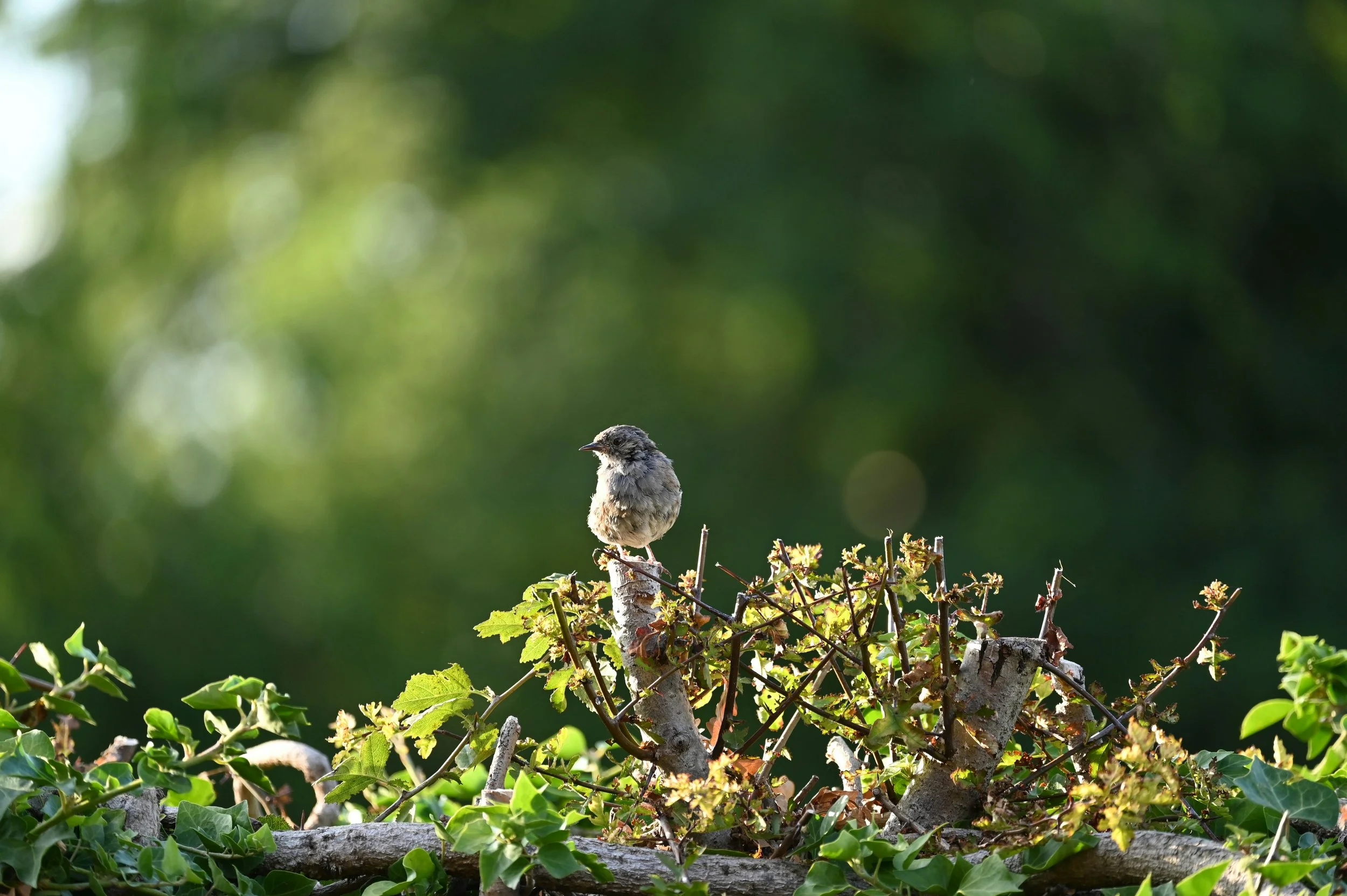
Native Irish hedgerow habitat with layered shrubs and perching songbird, illustrating how habitat helps identify native trees in Ireland. Hedgerows act as ecological corridors supporting biodiversity across fragmented woodland landscapes.
10 common native irish trees (with identification guide)
This section forms the ecological heart of any beginner guide to Irish tree identification.
1. Quercus robur (Pedunculate Oak)
Among the most important native oak trees in Ireland, pedunculate oak is recognised by:
Rounded lobed leaves
Acorns borne on long stalks
Broad, spreading crown
It can live for centuries. Ecologically, oak supports over 400 associated species, from insects to birds to lichens. It is a keystone of Irish woodland species.
Oak thrives in lowland soils and ancient woodland fragments.
2. Betula pubescens (Downy Birch)
The downy birch is Ireland’s most widespread native tree.
Identification:
White peeling bark
Small triangular leaves with fine serration
Light, airy canopy
Birch is a pioneer species, meaning it colonises poor soils first. It often appears in upland or cutover bog areas, preparing the ground for slower-growing species.
3. Fraxinus excelsior (Ash)
Recognisable by:
Opposite compound leaves
Black buds in winter
Winged samaras
Ash once dominated many hedgerows and woodlands. However, ash dieback disease has dramatically reduced populations across Ireland, reshaping future woodland composition.
Historically, ash wood was prized for tool handles and hurling sticks, culturally embedded in Irish rural life.
4. Corylus avellana (Hazel)
Hazel is more than a shrub; it forms dense understorey thickets.
Identification:
Rounded leaves with soft hairs
Long yellow catkins in late winter
Edible nuts
Hazel responds well to coppicing, a traditional woodland management technique that stimulates regrowth.
5. Crataegus monogyna (Hawthorn)
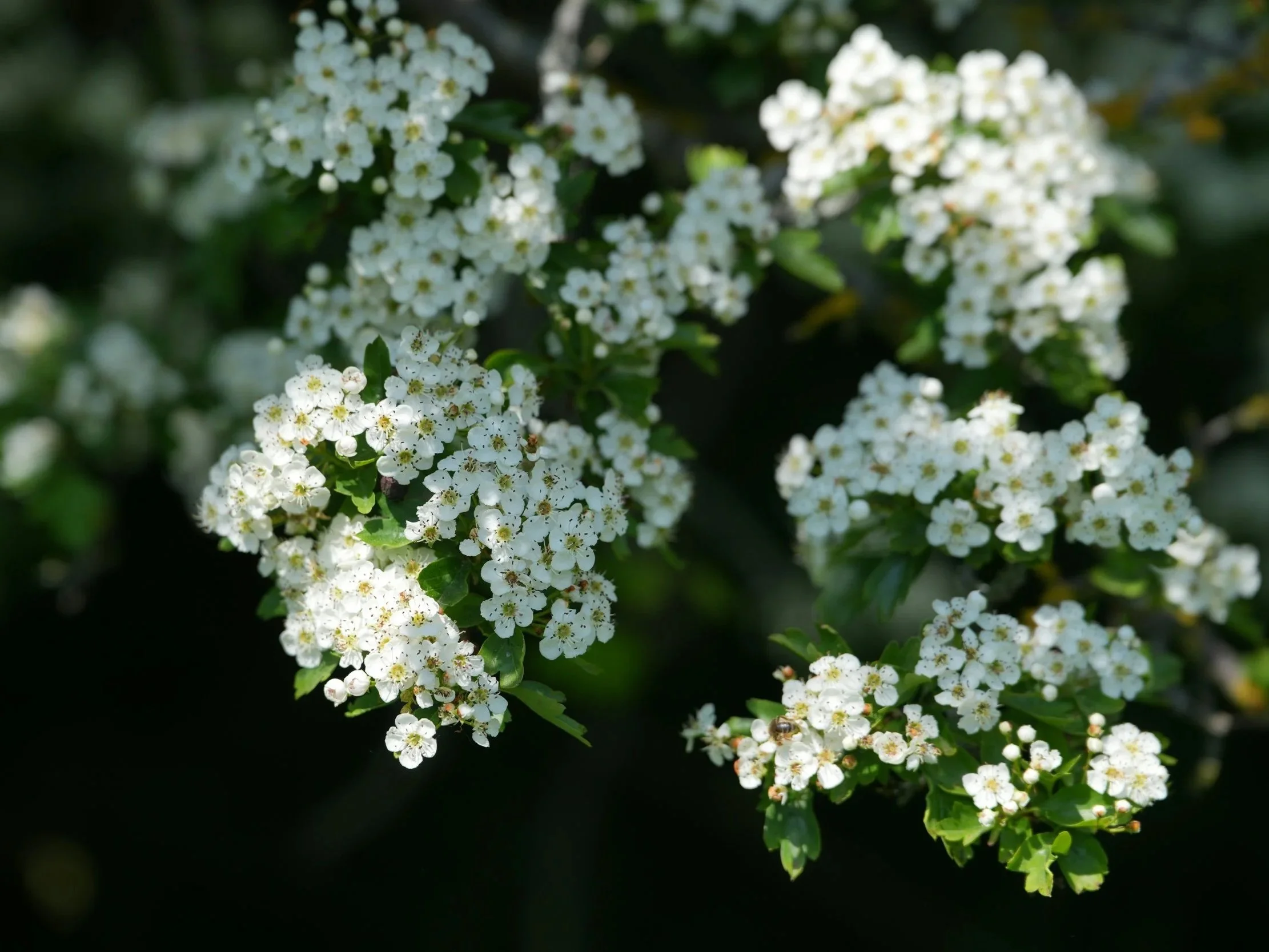
Spring blossom of Crataegus monogyna (common hawthorn) in an Irish hedgerow, showing dense clusters of white five-petalled flowers against deep green foliage. Hawthorn is one of Ireland’s most ecologically important native trees, forming the backbone of traditional hedgerows and acting as a vital wildlife corridor across agricultural landscapes.
In spring, hawthorn erupts into white blossom, transforming hedgerows.
Features:
Deeply lobed small leaves
Red haws (berries) in autumn
Thorny branches
Hawthorn holds deep folklore associations in Ireland, often linked to fairy trees and liminal spaces.
6. Sorbus aucuparia (Rowan)
Rowan grows where forest gives way to open ground — along upland edges, rocky slopes, and exposed hillsides.
Identification features:
Compound leaves with multiple narrow leaflets
Clusters of white spring flowers
Bright red berries in late summer
Often called mountain ash (though not a true ash), rowan thrives in poorer soils and exposed elevations. It is common in western uplands and along rocky slopes.
Ecologically, its berries feed thrushes and migrating birds. Culturally, rowan carried protective symbolism, planted near homes to ward off misfortune. In Irish landscapes where wind shapes growth into leaning silhouettes, rowan appears resilient, flame-bright against grey hills.
7. Alnus glutinosa (Alder)
If you walk along Irish riverbanks and see dark trunks rising from saturated soil, you are likely looking at alder.
Identification:
Rounded leaves with a slightly notched tip
Small cone-like seed structures
Dark, fissured bark
Alder is nitrogen-fixing, meaning it enriches soil through symbiotic bacteria in its roots. This makes it crucial for riparian woodland regeneration.
It grows primarily along streams, lakeshores, and floodplains, stabilising banks, slowing water flow, and improving water quality.
In a temperate Atlantic climate marked by heavy rainfall, alder is ecological infrastructure.
8. Ilex aquifolium (Holly)
Holly is Ireland’s only native evergreen broadleaf tree.
Recognisable by:
Glossy, dark green leaves
Spiny margins (on lower branches)
Bright red berries on female trees
It is shade tolerant, often growing beneath oak canopies. In winter, when deciduous trees stand bare, holly retains structure and colour, offering shelter and food for birds.
Beyond ecology, holly carries enduring symbolic weight, tied to midwinter traditions and continuity through darkness.
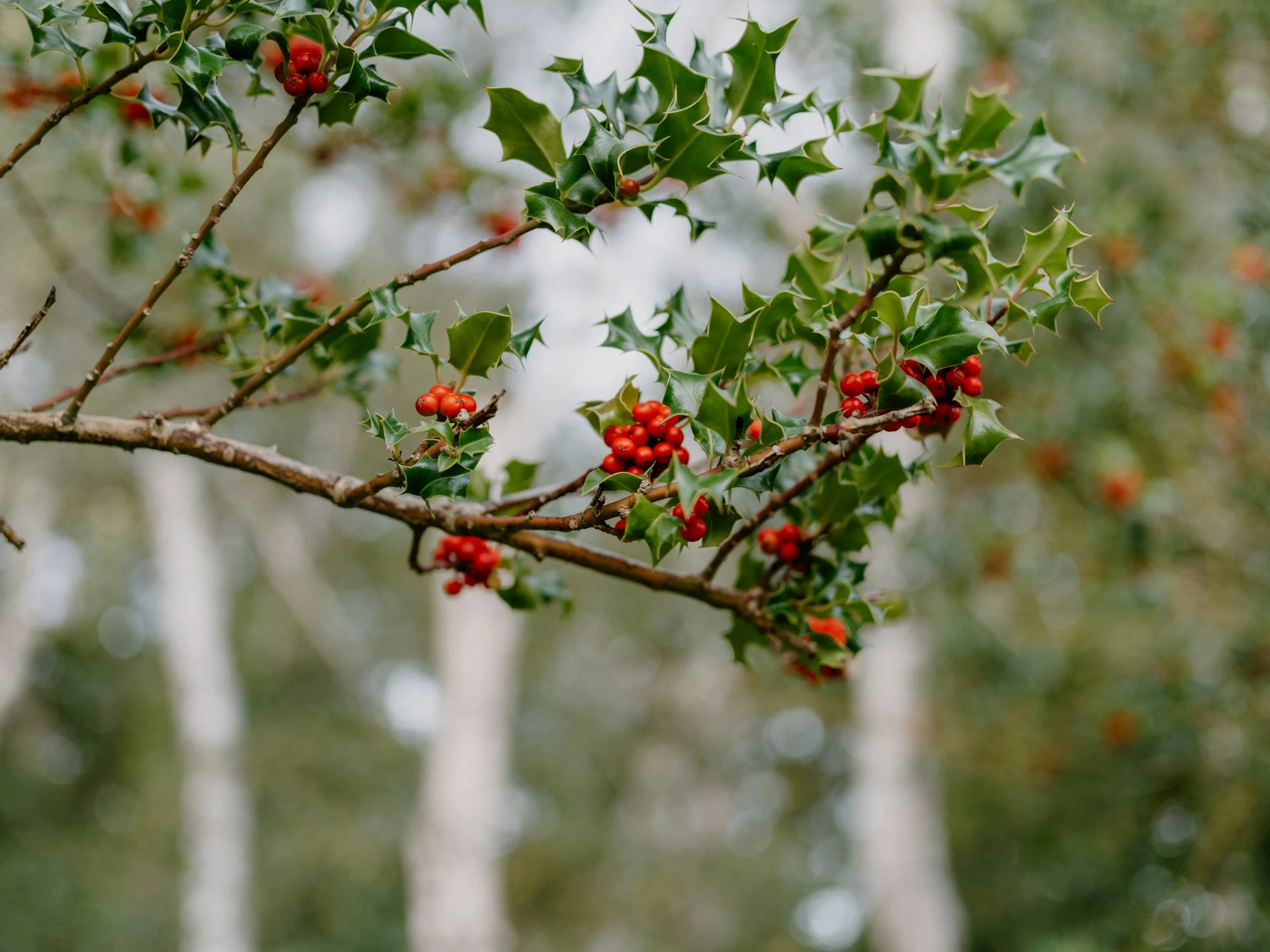
Winter branches of Ilex aquifolium (native Irish holly) displaying glossy evergreen leaves and bright red berries in woodland habitat. Holly is Ireland’s only native evergreen broadleaf tree, easily identified by its dark green, spiny-edged leaves and vivid scarlet berries on female trees. Growing beneath the shelter of oaks and within mixed native woodland, holly provides year-round structure, shelter, and winter food for birds and small mammals.
9. Ulmus glabra (Wych Elm)
Once widespread, wych elm populations declined dramatically due to Dutch elm disease.
Identification:
Large, rough leaves with serrated edges
Asymmetrical leaf bases
Broad crown when mature
Elm prefers fertile soils and lowland sites. Though now rarer, surviving specimens remain ecologically valuable, particularly for specialist insects.
Its decline reshaped hedgerows across Ireland, an example of how disease can alter entire landscapes.
10. Taxus baccata (Yew)
Yew is ancient in both lifespan and presence.
Features:
Dark, needle-like leaves
Red fleshy arils (not true berries)
Dense, shadow-casting canopy
Yew is long-lived, capable of surviving for centuries, even millennia. It often grows in churchyards and remnants of ancient woodland.
Unlike most conifers planted in modern forestry, yew is truly native. It tolerates deep shade and grows slowly, embodying endurance.
Where do native irish trees grow?
Understanding where native trees grow in Ireland reveals patterns shaped by climate, soil, and history.
Ireland’s temperate Atlantic climate — mild winters, cool summers, high rainfall — favours broadleaf woodland. But distribution depends heavily on soil drainage, altitude, and land use history.
Ancient woodland
Ancient woodland refers to areas continuously wooded since at least 1600.
One of the most significant examples is Killarney National Park, where oak and yew woodlands persist on old soils largely undisturbed by plantation forestry.
Ancient woodland supports complex microhabitats: decaying wood, moss-rich bark, fungi networks. These are biodiversity reservoirs.
Hedgerows
Ireland’s hedgerows function as hidden forest corridors.
Primarily composed of hawthorn, hazel, blackthorn, and ash, hedgerows connect fragmented woodland patches, enabling species movement across agricultural landscapes.
In ecological terms, hedgerows increase structural diversity and reduce habitat isolation, crucial for birds, pollinators, and small mammals.
Upland woodland
In higher elevations and western counties, birch and rowan dominate.
Poorer soils, exposure to wind, and shallow substrates limit taller canopy formation. These woodlands are lighter, more open, often transitional between bog and forest.
Riparian woodland
River systems support alder-dominated corridors.
These riparian zones stabilise banks, reduce flooding risk, and filter sediment — natural flood mitigation systems embedded in Irish forest biodiversity.
Why irish native trees matter
1. Biodiversity
Native oak alone supports hundreds of species. Structurally diverse native woodland provides essential nesting and feeding habitat for declining bird populations.
Non-native monoculture plantations do not replicate this ecological web.
2. Climate resilience
Native trees contribute to:
Carbon sequestration
Flood mitigation
Soil stability
Temperature regulation
Diverse woodland is more resilient to pests and disease than single-species plantations. Assisted natural regeneration (allowing native species to recolonise land) strengthens long-term ecosystem stability.
3. Cultural heritage
Trees native to Ireland are woven into early legal systems and folklore.
Under Brehon law, certain trees were classified as “nobles of the wood,” with fines imposed for unlawful cutting. Oak, hazel, and yew carried both ecological and symbolic status.
Sacred groves once structured spiritual life. Even today, lone hawthorns stand in fields, left untouched.
4. Rewilding and restoration
Ireland’s native woodland cover remains low compared to European averages. Rewilding initiatives increasingly prioritise native species expansion over non-native commercial forestry.
Planting oak, birch, and alder (or allowing natural regeneration) rebuilds ecological networks gradually.
Restoration is not about recreating a mythical past. It is about increasing resilience forward.
Native vs non-native trees in Ireland
Understanding the difference between native and non native trees in Ireland is crucial for informed woodland management.
Common non-native species include:
Picea sitchensis (Sitka spruce)
Fagus sylvatica (European beech)
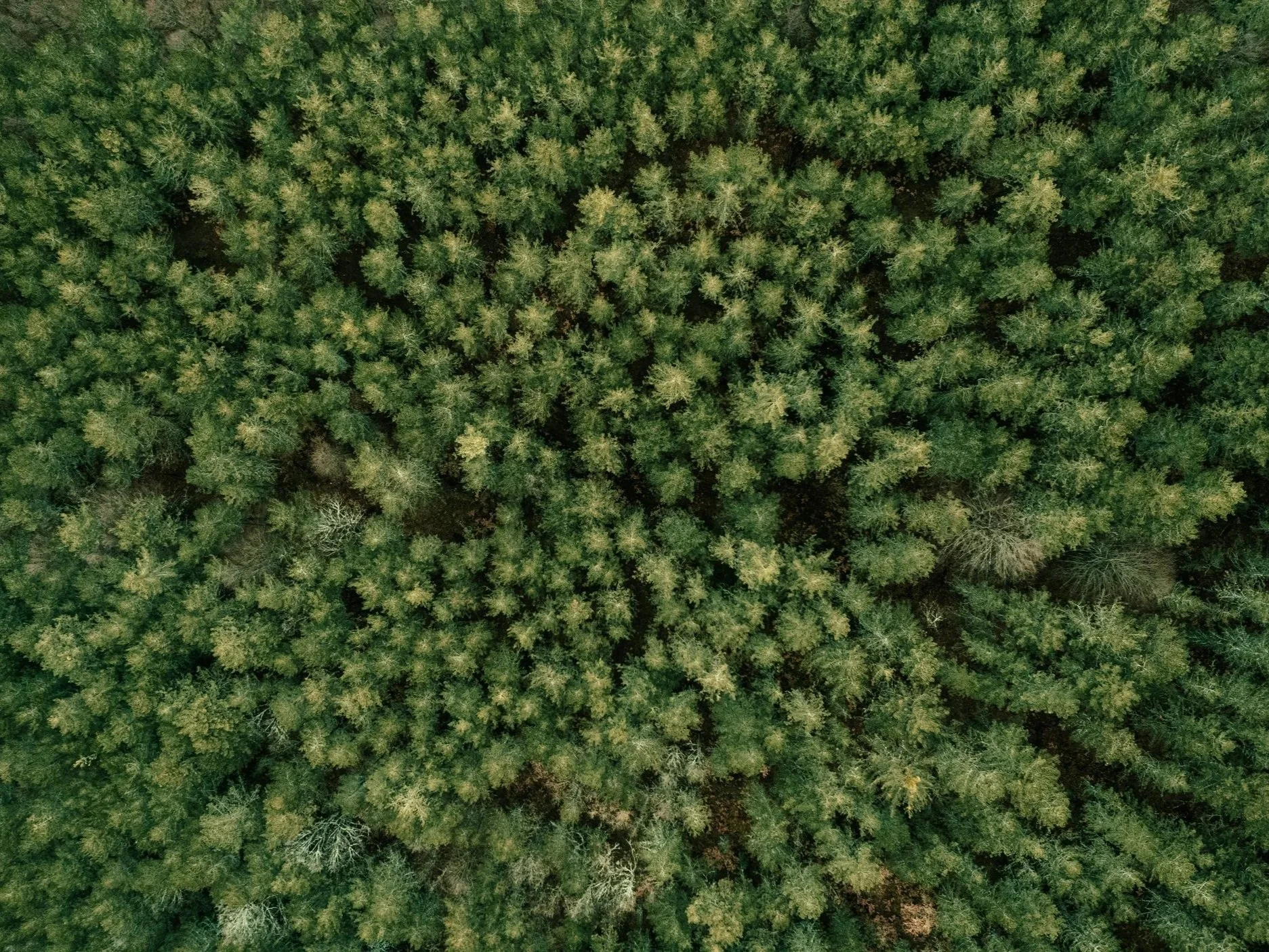
Aerial view of dense plantation forestry in Ireland, illustrating the structural uniformity typical of non-native conifer monocultures such as Sitka spruce. Unlike diverse native Irish woodland, commercial plantations are often composed of evenly spaced, single-species stands grown for timber production. While economically important, these forests typically support fewer plant, insect, and bird species compared to mixed native broadleaf woodland.
Sitka spruce dominates commercial plantations due to rapid growth and timber yield. However, such monocultures support far fewer species than mixed native woodland.
Native forests exhibit:
Greater structural diversity
Richer understorey layers
More complex food webs
Non-native plantations prioritise production. Native woodland prioritises ecological function.
Both exist in Ireland, but their impacts differ significantly.
How to start learning irish tree identification
If you want to deepen your understanding:
Visit a local woodland regularly across seasons
Carry a field guide focused on Irish woodland species
Learn winter bud identification
Join guided walks organised by Coillte or local conservation groups
Use reputable biodiversity databases
Tree identification improves with repetition. Familiarity grows quietly, like roots.
FAQ: irish native trees
How many native trees are there in Ireland?
Approximately 20–30 core native tree species, depending on classification.
What is the most common native tree in Ireland?
Downy birch (Betula pubescens) is among the most widespread.
Are oak trees native to Ireland?
Yes. Quercus robur is one of Ireland’s most important native oak species.
Why are native trees important in Ireland?
They support biodiversity, stabilise soils, store carbon, and preserve cultural heritage.
Seeing Ireland through its trees
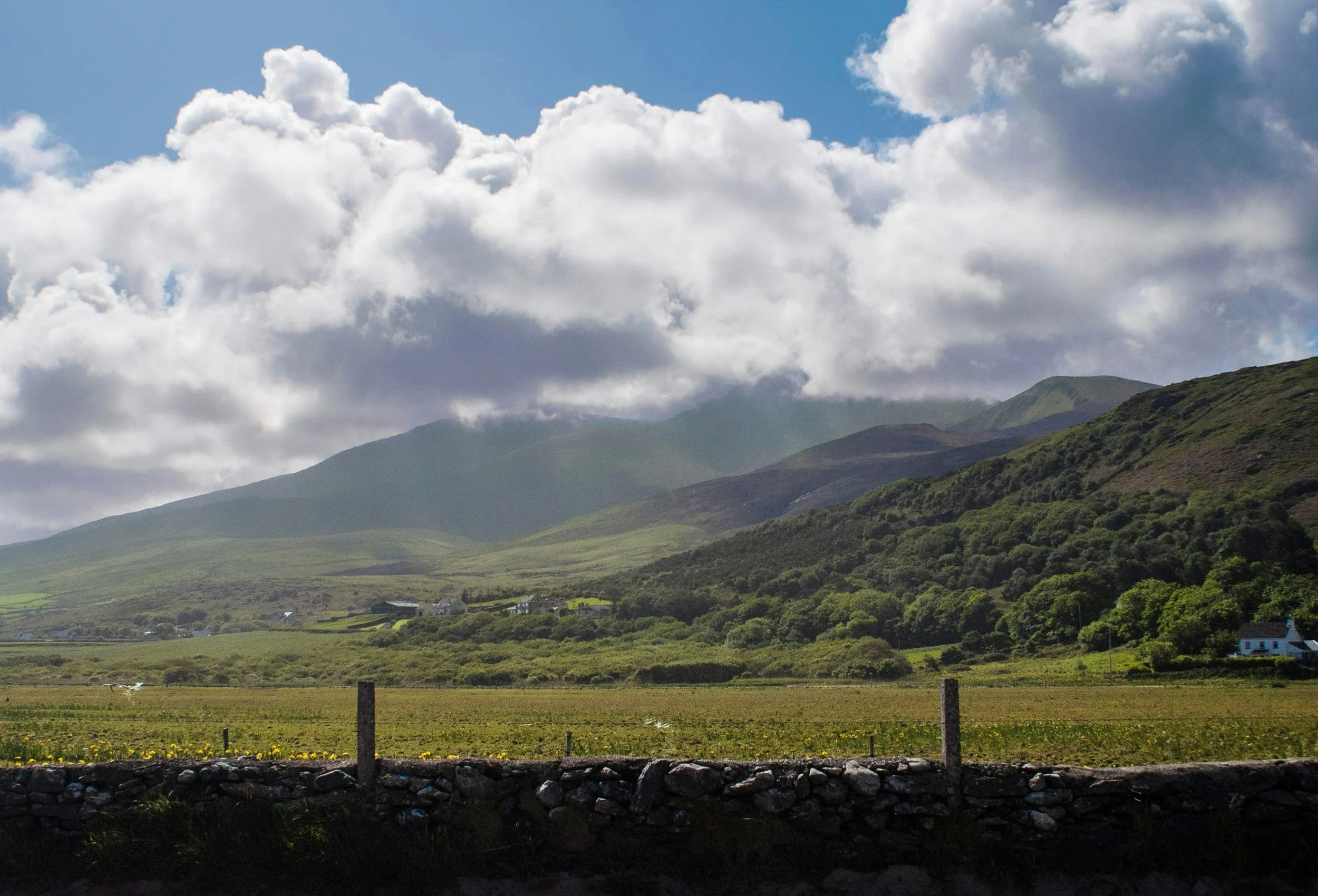
A quiet Irish landscape shaped by native trees — hedgerows threading through fields, oak silhouettes rising against soft Atlantic light — a reminder that Ireland’s forests still breathe in fragments, waiting to be seen, named, and restored.
To see Ireland through its trees is to witness a quiet, ancient resilience. It is a recalibration of the soul: where a hedgerow transforms into a bustling corridor, a riverbank reveals itself as a complex system, and a solitary oak stands not as an object, but as a sprawling city of life.
Our woodlands may not be vast, but they are profound. They are the patient architects of this landscape, having arrived seed by seed to endure the Atlantic wind and the thin, rain-soaked soil. They do not just inhabit the land; they define it.
Learning their names is the first step in a vital reclamation. It is an act of restoration, not only of the soil, but of our own attention. By naming them, we acknowledge them. By acknowledging them, we commit to their future.
Step into the light of the forest: learn one species today, plant another tomorrow, and help return the wild heartbeat to the Irish landscape