How to take care of your planted trees: a simple guide for irish gardens

Close-up of a family gently holding a small tree seedling in their hands while gardening outdoors, highlighting tree planting and early tree care practices in Ireland.
The real work begins after planting
Planting a tree is easy. Keeping it alive is the real challenge.
A sapling can be set into the soil in less than an hour: a hole opened, roots eased downward, earth pressed back into place. Yet what follows in the months and years after planting matters far more than the moment of planting itself. Without careful attention, even the healthiest young tree can struggle to survive.
In Ireland, trees grow within a landscape shaped by rain, Atlantic winds, and soils that range from rich loam to stubborn clay. The country’s wet climate might suggest that trees can simply look after themselves. But Irish rain does not always soak deeply enough to nourish young roots, and wind can rock a newly planted tree before it has had time to anchor itself into the ground.
Learning how to take care of planted trees is therefore one of the most important skills for any gardener or land steward. The early years of a tree’s life require patience and gentle care.
In this tree care guide for Ireland, you will learn how to care for newly planted trees through simple, reliable practices: watering correctly, protecting young trees from weather, pruning wisely, and following a seasonal care routine that helps them grow strong and resilient for decades to come.
Why proper tree care matters
A newly planted tree is not yet independent.
Although it may stand upright and appear settled in its new home, its roots are still confined to the small area where it was first planted. The wider soil around it remains unexplored territory. Until those roots extend outward, the tree depends heavily on the care it receives.
This is why the first three to five years after planting are so critical.
Without proper care, newly planted trees often experience root stress. Soil may dry too quickly, or become compacted. Wind can loosen the roots before they have taken hold. Growth slows, leaves thin, and the tree spends precious energy simply trying to survive.
But when young trees are looked after properly, the rewards unfold steadily over time.
Healthy care allows roots to grow deeper and wider into the soil. The tree becomes more stable, more resistant to storms, and better able to draw nutrients from the earth. Growth quickens, branches strengthen, and the tree begins to establish the form it will carry for decades.
In short, careful attention during the early years determines whether a tree merely survives, or truly thrives.
The first year after planting (most important stage)

Low-angle view of a young tree trunk and green crown illuminated by sunlight, symbolising the early growth stage and root establishment of newly planted trees in garden landscapes.
The first year after planting is the most delicate chapter in a tree’s life.
During this period, a young tree is adjusting to an entirely new environment. Its roots have been disturbed during planting, and it must begin the slow process of extending new root tips into the surrounding soil. Until this network expands, the tree remains vulnerable.
For this reason, tree care after planting should focus on careful observation. A gardener who watches closely will often notice the earliest signs of stress long before serious problems develop.
Two habits are particularly important during the first year.
Check soil moisture regularly
Ireland is known for its rainfall, yet that rain does not always reach the roots where it is needed most.
Light showers may dampen only the surface layer of soil. Beneath that thin wet crust, the ground can remain surprisingly dry. Newly planted trees, with their shallow root systems, may struggle in these conditions.
The simplest way to test soil moisture is with your finger or a small hand trowel. Push gently into the soil a few centimetres below the surface. If the soil feels dry or crumbly, watering may be necessary. If it feels cool and moist, the tree likely has enough water.
This small check, done regularly, prevents both drought stress and overwatering.
Watch for stress signs
Young trees often communicate their needs through subtle signals.
Yellowing leaves can indicate nutrient or water stress. Drooping foliage may suggest dehydration. A tree that produces very little new growth during the growing season may be struggling beneath the surface.
None of these signs should immediately alarm a gardener. Instead, they should be read as messages, small adjustments may be needed in watering, soil care, or protection from wind.
Attentive observation during the first year builds the foundation for healthy growth in the years ahead.
How often should you water newly planted trees?
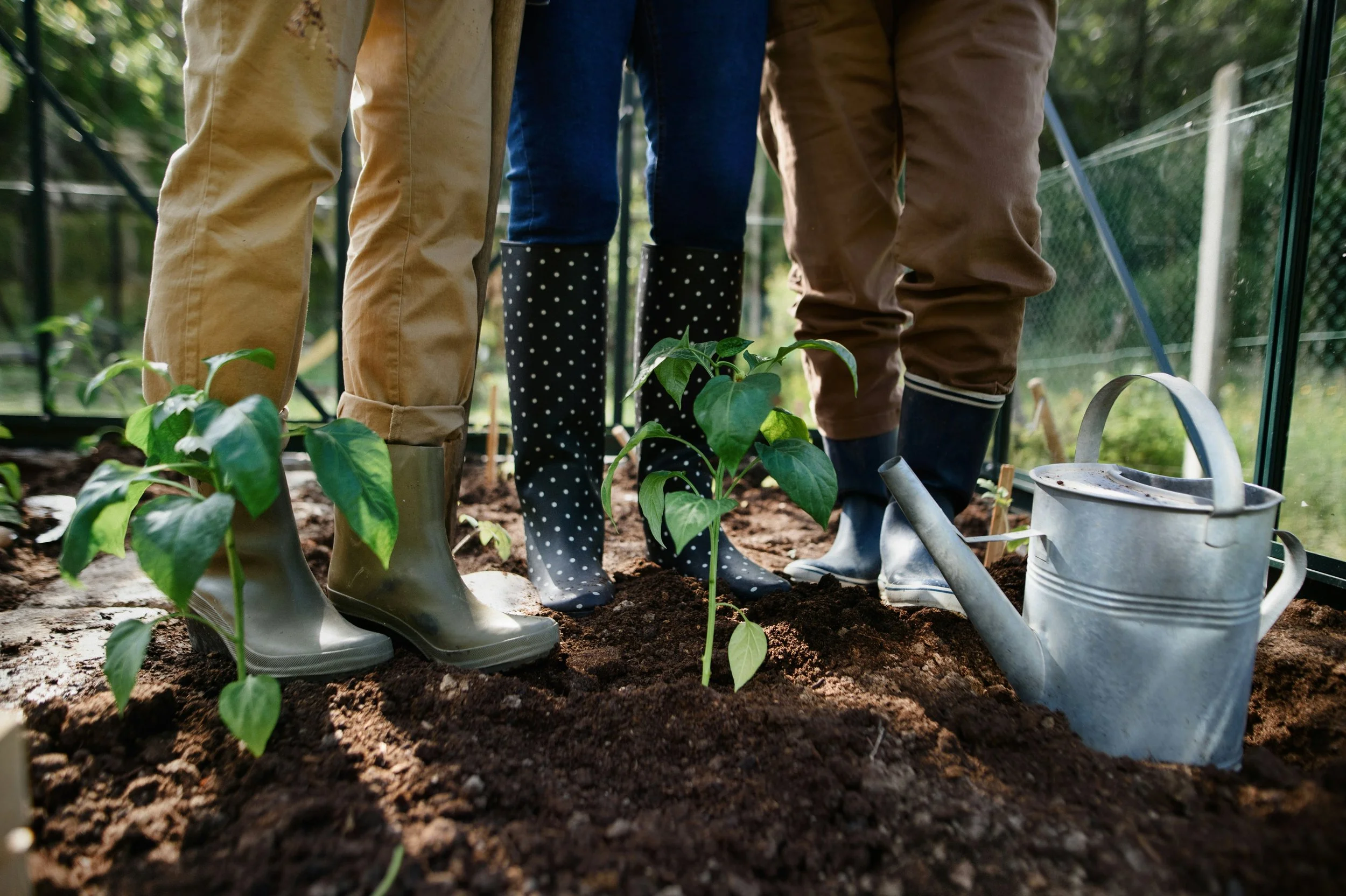
Gardeners standing around young plants in freshly prepared soil beside a watering can, illustrating the importance of proper watering for newly planted trees and plants. Deep, consistent watering helps young roots establish and grow strong during the early stages of tree care in Irish gardens.
One of the most common questions in any tree care guide for Ireland is deceptively simple: how often should you water a newly planted tree?
The answer lies not in the calendar alone, but in understanding how water moves through soil and how young roots absorb it. Newly planted trees benefit most from deep, slow watering, rather than frequent light sprinkling. When water soaks gradually into the ground, it travels deeper into the soil profile, encouraging roots to grow downward in search of moisture. This deeper rooting creates a stronger, more resilient tree.
In contrast, shallow watering keeps moisture only near the surface. Roots remain near that surface layer, where they are far more vulnerable to drought and temperature changes.
As a general guide for watering trees in Ireland, consider the following pattern during the first growing season:
Spring and Summer
Water newly planted trees once or twice per week, depending on rainfall and soil type. Sandy soils drain quickly and may need more frequent watering, while heavier clay soils hold moisture longer.
Autumn
Water about once per week, particularly during dry spells. Autumn is an important time for root growth, even though the tree’s leaves may be slowing down.
Winter
In most Irish winters, watering is rarely necessary because rainfall usually keeps the soil moist. However, during unusually dry or windy periods, a deep watering can still help prevent root stress.
When watering, aim for a slow soak around the base of the tree rather than a quick splash. Allow the water to penetrate deeply into the soil so that the roots are encouraged to expand outward and downward. This simple habit forms the foundation of how to care for newly planted trees successfully.
Mulching your trees the right way
Mulching is one of the simplest and most effective tree maintenance tips a gardener can practice.
A layer of mulch placed around the base of a young tree works quietly but powerfully. It helps the soil retain moisture, reduces competition from weeds, and protects the delicate root zone from sudden temperature swings. In Ireland’s climate — where periods of rain can be followed by drying winds — this layer acts as a steady buffer between the soil and the weather.
For those interested in mulching trees in Ireland, the process is straightforward but must be done correctly.
Begin by spreading a layer of organic mulch roughly 5 to 8 centimetres thick around the base of the tree. Bark chips, wood chips, or well-rotted compost all work well. Spread the mulch in a circle extending outward from the trunk toward the tree’s drip line — the outer reach of the branches.
However, one important rule should never be forgotten: keep mulch away from the trunk itself.
Mulch piled directly against the trunk can trap moisture against the bark, creating ideal conditions for rot, fungal growth, and pests. Instead, leave a small gap around the base so the trunk can breathe freely.
Done properly, mulch acts like a quiet guardian for young roots. It stabilises soil moisture, nourishes the ground as it slowly breaks down, and makes the work of caring for young trees far easier throughout the year.
Protecting trees from irish wind and weather
Ireland’s landscape is shaped by wind.
Across gardens, fields, and coastal hillsides, Atlantic gusts sweep through with surprising force. For established trees this wind may be little more than a passing pressure. But for young saplings with small root systems, strong wind can cause a problem known as wind rock — the gradual loosening of roots as the trunk sways repeatedly.
Protecting young trees from this movement is an important step in tree care after planting.
The most common solution is staking. A stake placed beside the tree and loosely tied to the trunk helps stabilise the young plant during its early years. The tie should be firm enough to reduce excessive movement but loose enough to allow some natural sway. This small movement actually helps the tree develop stronger trunk tissue.
In most cases, staking is needed for one to two years while the roots establish themselves in the surrounding soil.
However, stakes should never remain permanently. Once the tree has developed a stable root system, the support should be removed so the trunk can strengthen naturally.
Protection may also include simple measures such as planting wind-tolerant species, placing young trees near hedges for shelter, or using protective guards during stormy seasons.
With thoughtful protection from Ireland’s wind and weather, young trees can settle into the soil with confidence, gradually building the strength needed to stand on their own.
When and how to prune young trees
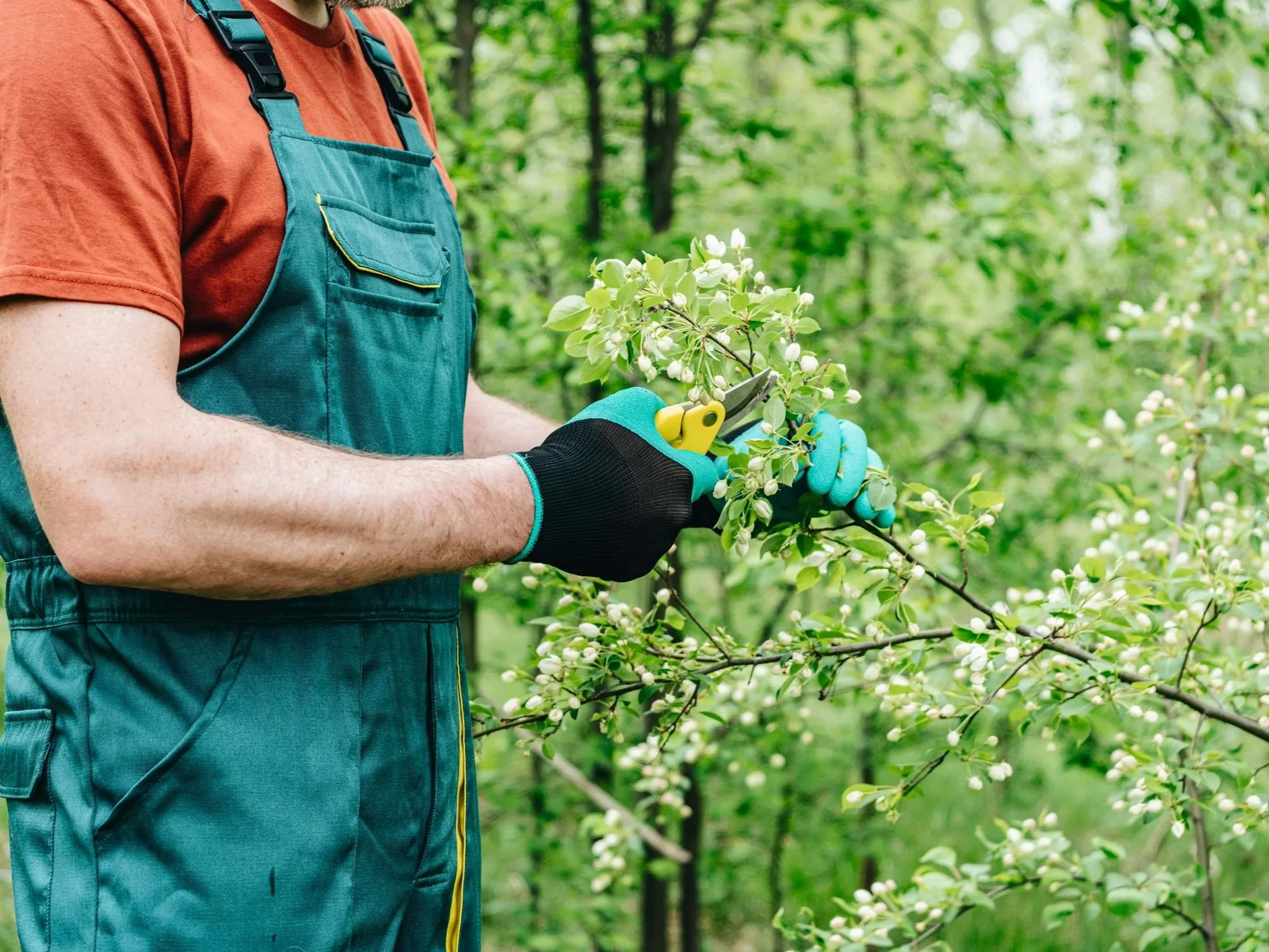
A gardener carefully prunes a young tree branch using hand pruners, demonstrating proper pruning techniques for healthy tree growth. Learning when and how to prune young trees is an essential part of tree care in Irish gardens, helping shape strong structure, remove damaged branches, and encourage resilient growth during the early years after planting.
Pruning a young tree is less about control and more about guidance.
Left entirely alone, many trees will still grow, reaching upward toward light in their own irregular ways. Yet careful pruning in the early years helps shape a stronger structure — one that will support the tree through storms, heavy foliage, and the passing decades.
In the context of caring for young trees, pruning should always be gentle and thoughtful. The goal is not to remove large amounts of growth, but to guide the tree toward a balanced form.
The best time for pruning most garden trees in Ireland is late winter or very early spring, when the tree is still dormant but the coldest weather has passed. At this stage, branches are easier to see clearly without the distraction of leaves, allowing you to identify which parts of the structure need attention.
Start by removing dead, damaged, or diseased branches. These can drain the tree’s energy and sometimes invite pests or infection. Next, look for branches that cross or rub against one another. Over time, these rubbing branches can cause wounds in the bark, so it is best to remove the weaker of the two.
When making cuts, use sharp, clean tools and cut just outside the branch collar — the slightly swollen area where the branch meets the trunk or a larger limb.
Above all, avoid heavy pruning during the first few years after planting. Young trees rely on their leaves to produce energy through photosynthesis. Removing too much growth too early can slow their development.
With light, careful pruning, a young tree gradually forms a stable structure that will support healthy growth for many years to come.
Feeding your trees (do they need fertiliser?)
Many gardeners assume that newly planted trees require large amounts of fertiliser to grow well. In reality, this is rarely necessary — especially in Ireland, where many soils are already reasonably fertile.
For most gardens, the best way to nourish a young tree is through organic matter rather than synthetic fertilisers. Adding compost or well-rotted organic material to the soil surface improves its structure, encourages beneficial microorganisms, and releases nutrients slowly over time.
This natural process supports steady growth without overwhelming the young root system.
Fertiliser may occasionally be helpful if a tree shows signs of poor growth — such as unusually small leaves or limited seasonal development. In these cases, a gentle, balanced fertiliser applied in early spring can provide a temporary boost.
However, overfeeding can cause rapid, weak growth that is more vulnerable to wind damage and disease.
For this reason, a simple routine of compost, mulch, and attentive observation is often all that is required when learning how to take care of planted trees successfully.
Common tree care mistakes to avoid
Even with the best intentions, a few common mistakes can undermine the health of newly planted trees.
One of the most frequent problems is overwatering. While young trees need consistent moisture, soil that remains constantly saturated can deprive roots of oxygen and encourage rot. Deep watering followed by periods where the soil can breathe is far healthier.
Another mistake is piling mulch directly against the trunk. This “mulch volcano” traps moisture against the bark and creates ideal conditions for decay and pests. Mulch should always be spread in a ring around the tree, leaving space around the trunk itself.
Gardeners also sometimes leave support stakes in place for too long. While staking helps stabilise a tree during its early years, permanent support can weaken the trunk over time. Once the roots have established, the stake should be removed.
Finally, some people simply forget to check on their trees after planting. Newly planted trees benefit from regular observation — watching for pests, disease, or signs of stress.
Avoiding these simple mistakes goes a long way toward successful tree care after planting.
Seasonal tree care checklist
Trees follow the rhythm of the seasons, and their care naturally changes throughout the year. For those following a tree care guide in Ireland, a simple seasonal routine can make maintenance far easier.
Spring
As temperatures begin to rise, inspect the soil around young trees and ensure moisture levels are balanced. Spring is also a good time to refresh mulch if the previous layer has begun to break down. Light pruning can be done before new growth fully emerges.
Summer
During the warmer months, focus primarily on deep watering, particularly during dry periods. This is also the season when pests or disease may appear, so occasional inspection of leaves and branches is wise.
Autumn
Autumn is an excellent time to strengthen the soil before winter. Adding a fresh layer of mulch helps protect roots from temperature changes while slowly enriching the ground. Watering can be reduced as rainfall becomes more consistent.
Winter
Winter is generally a quieter season for tree care. However, it is still useful to inspect young trees after storms for any damage or loosened stakes. Late winter is also the ideal time to plan pruning before the growing season begins again.
By following these seasonal habits, gardeners develop a steady rhythm of caring for young trees throughout the year.
Helping your trees thrive for decades
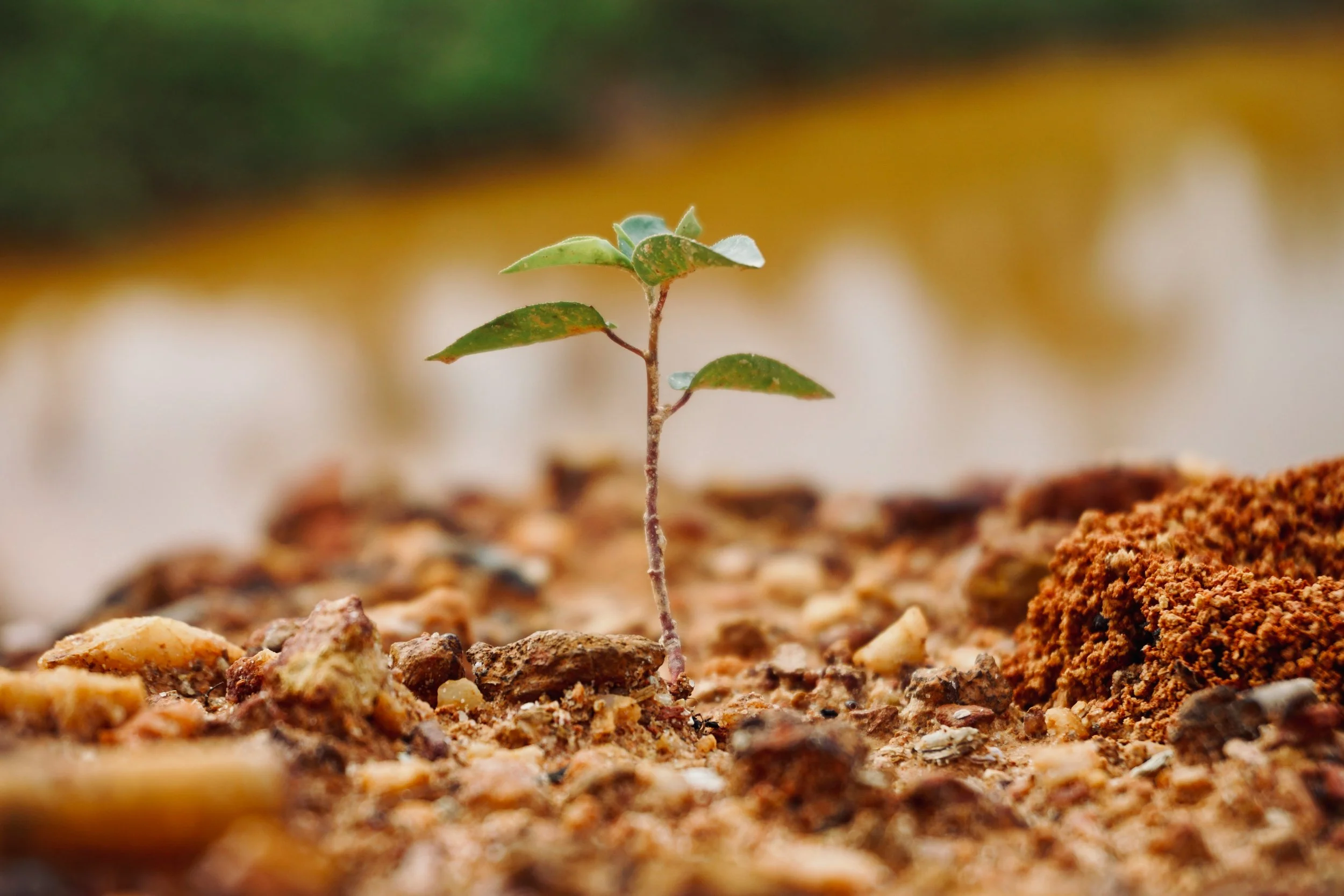
A small tree seedling emerging from the soil represents the beginning of long-term tree growth and care in a garden landscape. With proper watering, mulching, pruning, and protection during the early years, young trees can develop strong roots and thrive for decades in Irish gardens, becoming lasting features that support wildlife and healthy ecosystems.
Trees ask for patience.
A newly planted sapling grows slowly at first, quietly extending its roots into the surrounding soil. Much of its work happens unseen beneath the surface. Yet with steady care in these early years — careful watering, thoughtful mulching, protection from wind, and light pruning — the tree gradually becomes stronger and more independent.
Learning how to take care of planted trees is ultimately an act of long-term thinking. The small routines practiced today shape the landscape of tomorrow.
A tree planted and cared for properly may stand for generations. Long after the gardener who planted it has moved on, its branches will continue to cast shade, shelter birds, soften the wind, and anchor the soil.
All of this begins with simple care, and the quiet decision to look after a young tree as it grows into its future.