The environmental cost of Christmas trees: forestry, pesticides, carbon—and greener alternatives
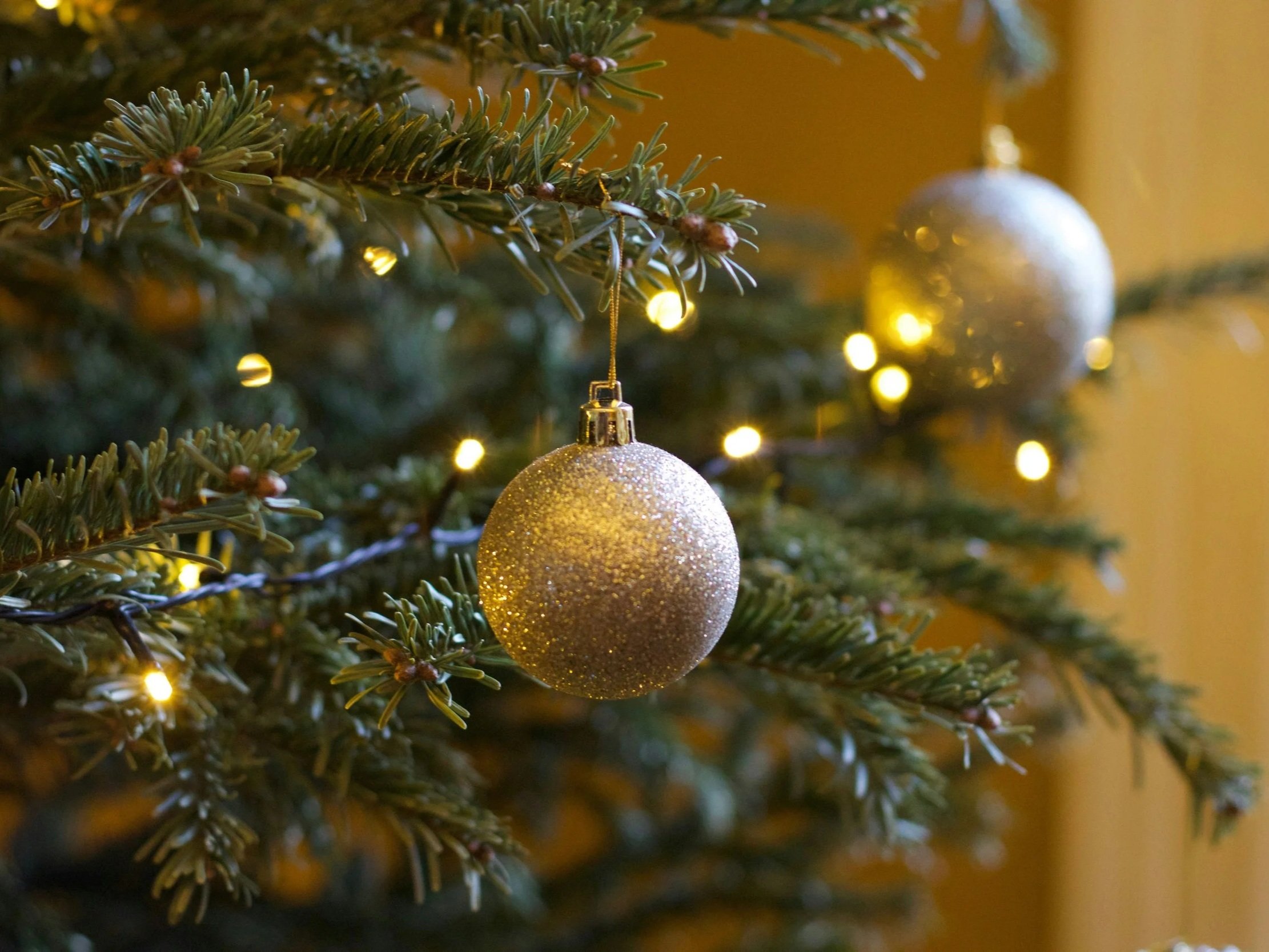
A softly lit Christmas tree branch with ornaments and lights, reflecting the historical symbolism of evergreens as signs of life, continuity, and renewal during winter, before the tradition became shaped by modern consumption and global supply chains.
Evergreen memory
Before the Christmas tree was merchandise, before it was freighted across continents or wrapped in plastic netting, it was an idea—green against winter, life insisting itself in the season of least light.
Long before Christianity shaped the ritual, evergreen branches were carried indoors by ancient hands. According to HISTORY (2025), Egyptians, Romans, Druids, and northern European peoples turned to plants that refused to die back in winter. Pine, fir, and spruce—trees that kept their color when the world seemed to drain of it—became symbols of continuity, protection, and renewal. In these cultures, evergreens stood for life’s persistence against cold and darkness, for the promise that the sun would return after the solstice. The tree was not decoration then, but reassurance.
From Pagan grove to Christian hearth
As Britannica (2025) records, this symbolism was never fully erased by Christianization; it was absorbed. Pagan reverence for trees survived in northern Europe as branches hung in homes, barns, and granaries, or as offerings left outdoors for birds. In Germany, these practices coalesced into the Yule tree, and later into the medieval “paradise tree”: a fir hung with apples to represent Eden in December plays depicting Adam and Eve. On December 24th, households brought this tree indoors, adorning it first with apples and wafers—symbols of sin and redemption—and later with candles, light held delicately among needles.
By the sixteenth century, the Christmas tree had taken a recognizable form. HISTORY (2025) notes that German Christian households began decorating trees indoors, and legend credits Martin Luther with adding candles inspired by starlight filtering through winter branches. Germany became the cultural hearth of the modern Christmas tree, fusing pagan reverence for nature with Christian theology of light and salvation.
From Eden to Empire
From there, the tree traveled with people. It crossed borders and oceans, carried by German migrants into Britain and North America. Its early reception was not warm. In the United States, Puritan influence cast the tree as pagan excess, something suspect and unbiblical. But images are powerful arguments. In 1846, an illustration of Queen Victoria and Prince Albert gathered around a decorated tree reshaped public opinion almost overnight. According to HISTORY (2025), what had been foreign became fashionable, then familiar, then indispensable.
Technology transformed the ritual again. Electric lighting replaced candles, extending the tree’s life indoors and making it safer, brighter, and more public. By 1931, the Rockefeller Center Christmas tree rose in New York City—a towering, illuminated symbol of abundance, endurance, and spectacle (HISTORY, 2025). The tree had moved from hearth to plaza, from intimate ritual to civic performance.
A global symbol, a material object
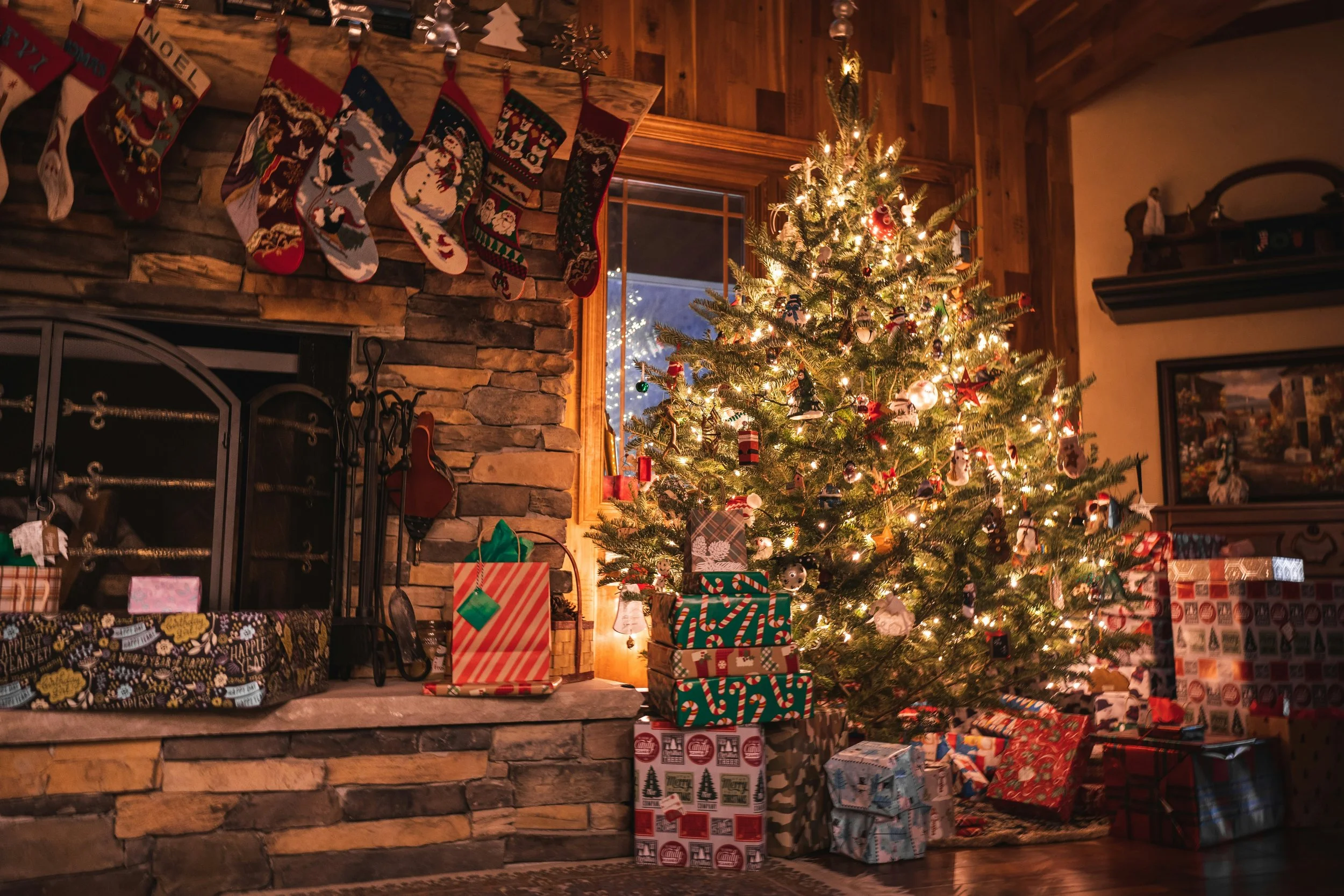
A decorated Christmas tree surrounded by gifts inside a home, illustrating how the Christmas tree has evolved into a globalized material object linked to mass production, transport emissions, energy use, and seasonal consumption.
Globally, the tradition continued to adapt. As Britannica (2025) notes, Christmas trees now appear in regions without native conifers, sometimes imported, sometimes improvised—crafted from wood, metal, paper, or light. In many places, artificial trees dominate. In others, potted trees or symbolic structures stand in. Religious meaning often recedes; the tree becomes secular, a focal point for gifts, gathering, and seasonal rhythm.
What remains constant is the tree’s emotional gravity. It gathers people. It anchors memory. It signals pause.
Yet traditions that travel, grow, and industrialize also accumulate weight—ecological weight. The Christmas tree we know today is no longer just a symbol inherited from ancient forests and medieval plays. It is a product shaped by global supply chains, agricultural chemicals, transport emissions, and waste systems. Its needles now brush against questions of carbon, pesticides, land use, and disposal.
The evergreen once promised continuity of life. The question before us now is whether the way we honor that promise quietly undermines it.
In the next section, we step out of memory and into material reality—into fields, farms, factories, and landfills—to ask what the modern Christmas tree truly costs the landscapes it comes from.
Fields, factories, and carbon arithmetic
To understand the environmental cost of the Christmas tree, we must leave the living room and walk backward along its supply lines—into plantations, factories, transport routes, and, eventually, landfills. What emerges is not a simple moral choice between “real” and “fake,” but a landscape shaped by carbon accounting, chemical dependence, and end-of-life decisions.
Natural Christmas trees are agricultural products. As Timperley (2025) explains, they are typically grown on plantations for eight to twelve years before harvest. During that time, they photosynthesize, capturing carbon dioxide and storing it in wood and needles. This sequestration is modest in global terms, but locally meaningful. In the United States alone, roughly 15,000 family-run farms cultivate Christmas trees, planting between one and three seedlings for every tree harvested (Handwerk, 2024; The Nature Conservancy, n.d.). These farms often occupy land that might otherwise be paved, developed, or converted to more intensive agriculture.
Ecologically, these plantations sit somewhere between forest and field. They are not wild ecosystems, nor are they biological deserts. Studies cited by Timperley (2025) and Caplat (2022) show that Christmas tree plantations can provide refuge for birds and insects in otherwise simplified agricultural landscapes, particularly when managed with lower chemical intensity. Their open structure, limited disturbance, and seasonal human presence allow certain species to persist where monocultures like maize cannot.
The cost of perfection
But these benefits come with costs. Uniformity—the hallmark of a “perfect” Christmas tree—demands intervention. As Sidebottom (2024) documents, species such as the Fraser fir are highly vulnerable to pests like the balsam woolly adelgid. Without chemical control, mortality rates can be devastating. Herbicides, insecticides, and fungicides are applied—typically two or three times a year—to manage invasive species, weeds, and disease.
Producers often rely on pyrethroids such as bifenthrin, compounds derived synthetically from natural chrysanthemum toxins and commonly used in household products (Sidebottom, 2024). According to EPA guidelines cited in that same reporting, the interval between application and safe exposure is short, comparable to that of non-organic vegetables. Yet environmental concerns persist, particularly regarding runoff, worker exposure, and aquatic ecosystems.
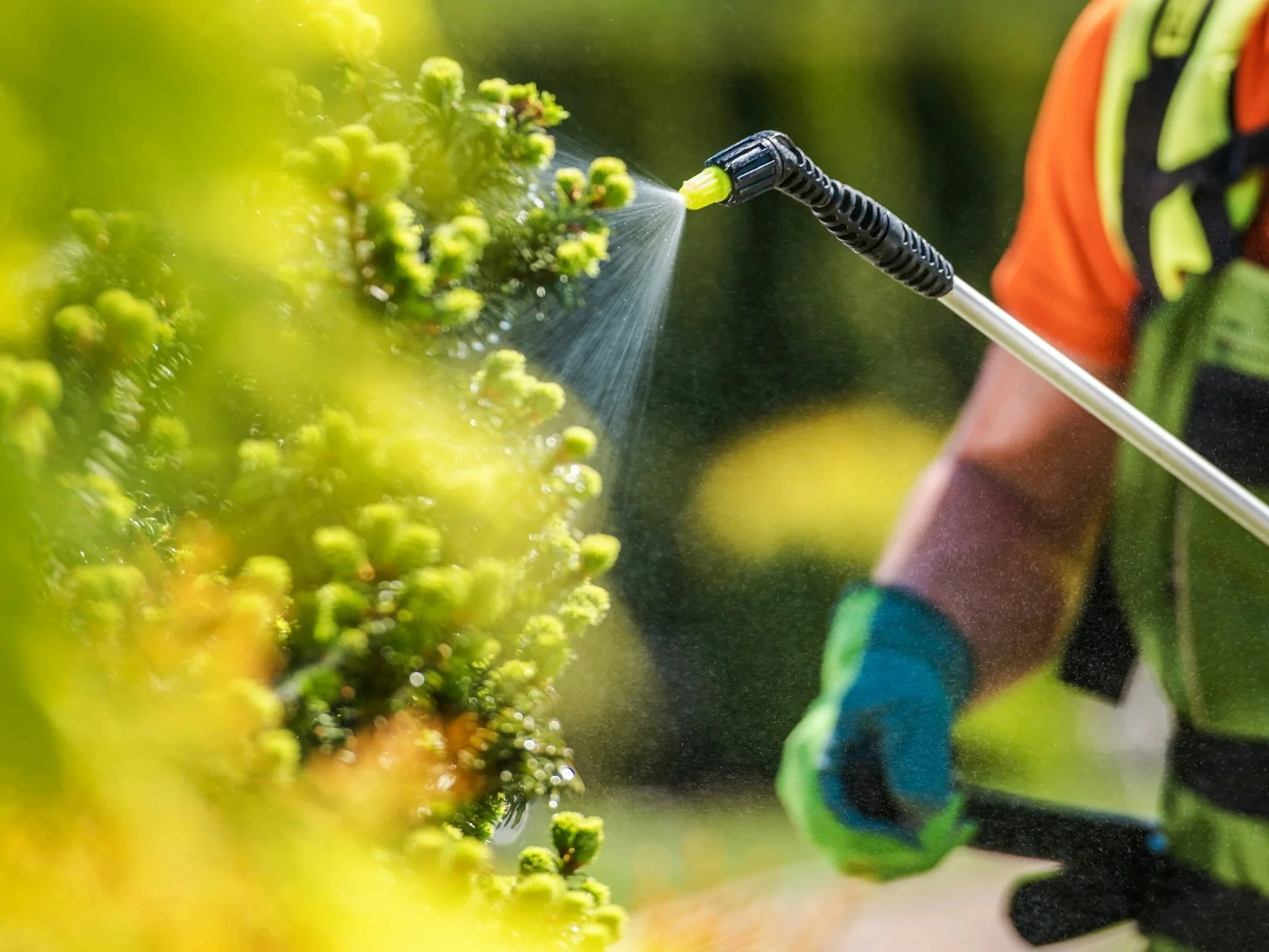
A close-up of pesticide application on a cultivated evergreen, highlighting the chemical inputs used in Christmas tree farming to maintain uniform appearance, pest resistance, and market standards at ecological cost.
Documented environmental contamination
Wallace (2014) documents how pesticide residues—including chlorpyrifos, bifenthrin, and chlorothalonil—have been detected in Oregon’s Clackamas River, a crucial source of drinking water and salmon habitat. While direct human health risks from Christmas trees remain low, the cumulative ecological burden of these chemicals is harder to dismiss.
History offers a cautionary tale. In Boone, North Carolina, unusually high rates of childhood leukemia in the 1990s prompted Christmas tree growers to radically reduce pesticide use—without waiting for definitive proof of causation (Chase, 1995). Chemical inputs dropped by more than 75 percent, biodiversity returned, and economic viability remained intact. The episode revealed something essential: perfection is a choice, not a necessity.
Plastic forests
Artificial trees, often marketed as the “clean” alternative, carry their own invisible weight. According to Caplat (2022), Lee (2025), and Matsumura (2024), most artificial trees are made from PVC and metal, materials derived from fossil fuels and produced through energy-intensive processes. Around 90 percent are manufactured in China, relying heavily on coal-powered industry and long-distance transport (Matsumura, 2024).
The carbon arithmetic is stark. A typical artificial tree generates close to 40 kg of CO₂ over its lifecycle (Lee, 2025; ZEOHOMES, 2024). By contrast, a natural two-meter tree emits roughly 3.5 kg of CO₂ if composted or chipped—but as much as 16 kg if left to rot in a landfill, where it releases methane, a greenhouse gas far more potent than carbon dioxide (Lee, 2025; Timperley, 2025).
Longevity or Illusion
Artificial trees only approach parity if reused for 10–12 years or more—a threshold many households never reach (Caplat, 2022; Handwerk, 2024). Worse, they are not recyclable. When discarded, they persist for centuries, slowly shedding microplastics into soil and water systems (ArboristNow, n.d.).
The paradox is unavoidable: natural trees demand chemicals and land; artificial trees demand fossil fuels and permanence. Neither option is impact-free. But the decisive factor, repeated across nearly every source—from The Nature Conservancy (n.d.) to ZEOHOMES (2024)—is not what the tree is, but what we do with it.
Where it is grown.
How far it travels.
How long it is used.
And where it ends its life.
In the next section, we step beyond the tree itself—into wrapping paper, food waste, returns, lights, and excess—to see why focusing on the tree alone risks missing the deeper environmental story of Christmas.
Beyond the tree: the weight of the season
The Christmas tree draws the eye. It stands still while everything else moves around it—shopping lists, parcels, ovens, screens glowing late into December nights. But as several of the sources make clear, focusing on the tree alone risks mistaking the symbol for the system. The environmental cost of Christmas does not radiate from a single trunk; it spreads outward, quietly, through habits of excess that feel normal only because they are repeated each year.
One of the least visible impacts arrives after the celebration ends. Renwick (2020), writing for The Guardian, traces the environmental shadow of online shopping returns, which surge dramatically after the holidays. In the United States alone, around 3.5 billion items are returned annually, and roughly 5 billion pounds of goods end up in landfills. This process generates an estimated 15 million metric tons of CO₂ each year. Contrary to popular belief, most returned items are not resold. Many are damaged, out of season, or simply cheaper to discard than to process.
Seasonal waste at scale
Returns are not neutral reversals; they are amplifiers. Online returns double those from physical stores and involve multiple transport legs, fresh packaging, and sorting logistics. Renwick (2020) estimates that 20–25% of e-commerce’s environmental impact comes from returns alone. The promise of “free returns” encourages overbuying—ordering more than needed, with the quiet assumption that unwanted items can be erased without consequence.
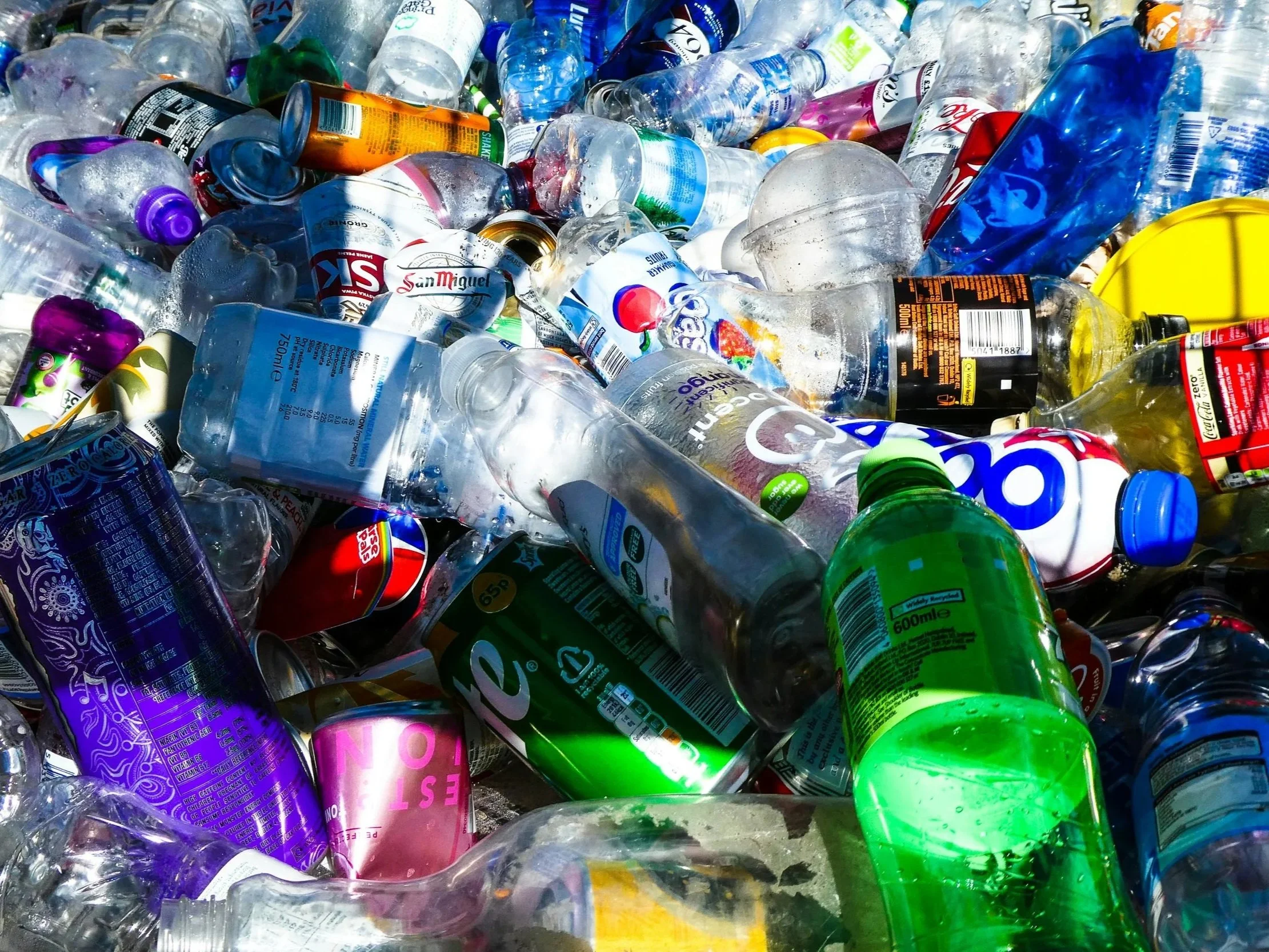
Discarded plastic bottles and beverage containers piled together, representing the surge in packaging waste and landfill pressure generated by holiday consumption and post-Christmas disposal.
Waste Mission (2024) widens the lens further. In the United Kingdom, Christmas generates an additional 3 million tonnes of waste, a 30% increase over other times of year. Food accounts for a staggering share. Each year, an estimated 4.2 million Christmas dinners are thrown away. This includes 230,000 tonnes of food waste, equivalent to 42 million meals, driven largely by over-purchasing: seven in ten people admit to buying more food than they need.
Food thrown away, resources lost
Food waste carries a double cost. As The Happy Turtle Straw° (2024) emphasizes, discarding food means discarding everything embedded in it—water, fertilizer, fuel, labor. Globally, food waste contributes 8–10% of greenhouse gas emissions, largely through methane released as food decomposes in landfills. During Christmas, when meals are larger and planning looser, this impact intensifies.
Packaging compounds the problem. Waste Mission (2024) reports that each Christmas season sees the use of 227,000 miles of wrapping paper—enough to circle the Earth nine times—along with 40 million rolls of tape and vast quantities of plastic. Much of this material is not recyclable due to coatings, glitter, or mixed fibers. Add to this one billion Christmas cards, three-quarters of which are discarded rather than recycled.
Short-lived decorations, long-term waste
Decorations, too, leave a trail. Each year, 500 tonnes of Christmas lights are thrown away, alongside 189 million batteries, many improperly disposed of (Waste Mission, 2024). These items contain metals and chemicals that persist long after the decorations are boxed up or forgotten.
The cumulative effect is striking. Waste Mission (2024) estimates that Christmas accounts for nearly 6% of the UK’s annual carbon emissions, concentrated into a matter of days. This figure includes food production, gift manufacturing, transport, lighting, and waste management. In other words, the tree—natural or artificial—is only a fraction of the seasonal footprint.
Ritual becomes accumulation
This is not to suggest that tradition itself is the problem. The sources do not argue for austerity or joyless restraint. Instead, they point to a mismatch between intention and scale. What was once a ritual of light in darkness has become, in many households, an exercise in accumulation: more food than can be eaten, more gifts than can be used, more objects than can be returned to the earth.
The Happy Turtle Straw° (2024) introduces the idea of a circular Christmas—one that prioritizes reuse, planning, and longevity. Leftovers become future meals. Decorations are repaired rather than replaced. Gifts shift toward experiences, handmade items, or durable goods. None of these gestures are radical in isolation. Their power lies in repetition and collective adoption.
Seen this way, the environmental cost of Christmas is less about what we celebrate than how automatically we do it. The tree becomes a mirror, reflecting a broader question: are we honoring continuity, or quietly exhausting it?
Rethinking tradition

A family playing together in the snow beneath evergreen trees, symbolizing a shift away from material-focused Christmas traditions toward shared experiences, connection to nature, and lower-impact seasonal rituals.
If there is a single lesson threaded through the evidence, it is this: there is no perfect Christmas tree, and no immaculate holiday. There are only choices—repeated quietly, at scale—and the meanings we attach to them.
The sources converge on a surprisingly gentle conclusion. The most sustainable tree is not defined by ideology, but by care. A living tree in a pot, if it survives and is replanted, carries the lowest footprint of all (ZEOHOMES, 2024; Matsumura, 2024). Rent-a-tree programs allow the same tree to grow year after year, accumulating carbon rather than releasing it (Timperley, 2025; Weedem, 2025). Locally sourced, organic, or certified trees reduce transport emissions and chemical load (Caplat, 2022; Wallace, 2014). And if an artificial tree already exists, the most responsible act is not replacement but loyalty—using it for decades, then passing it on (Lee, 2025; ArboristNow, n.d.).
Yet the deeper shift is not botanical. It is relational.
Christmas, as HISTORY (2025) and Britannica (2025) remind us, began not as consumption but as symbolism: evergreen life against winter death, light held deliberately in darkness. The problem arises when ritual hardens into habit, when abundance becomes excess without intention.
Excess is a collective weapon
The broader environmental data make this clear. The tree matters—but food waste matters more (Waste Mission, 2024; The Happy Turtle Straw°, 2024). Returns matter. Packaging matters. Scale matters. A holiday built on surplus quietly contradicts the values it claims to celebrate.
What the evidence ultimately offers is not instruction, but orientation. Small changes, multiplied across millions of households, carry real weight. Planning meals with restraint. Choosing reuse over novelty. Allowing imperfection—crooked branches, fewer gifts, reused lights—to replace spectacle. These are not sacrifices. They are acts of attention.
The hard truth of joy
There is no need to abandon the tree. But there may be a need to remember what it once meant.
The evergreen was never about excess. It was about continuity. About life insisting itself in the coldest season. About carrying a fragment of the living world indoors and treating it with care.
A more honest Christmas does not demand purity—only consciousness. Not perfection, but better questions. And perhaps the recognition that celebrating life should never require exhausting it.
References
ArboristNow. (n. d.). Real vs. Artificial Christmas Trees: An Arborist’s Environmental Impact Analysis. https://arboristnow.com/news/real-vs-artificial-christmas-trees-an-arborist-s-environmental-impact-analysis/
Britannica. (2025). Christmas. https://www.britannica.com/topic/Christmas
Caplat, P. (2022). How sustainable is your Christmas tree? Queen’s University Belfast. https://www.qub.ac.uk/Research/GRI/TheInstituteforGlobalFoodSecurity/institute-for-global-security-news/NewsArchive2022/Xmastrees.html
Chase, N. (1995). Growing a Healthy Crop for Christmas. NWF - National Wildlife Federation. https://www.nwf.org/Magazines/National-Wildlife/1995/Growing-a-Healthy-Crop-For-Christmas
Gallina, G., Cregg, B., Patterson, E., & Saha, D. (2022). A Review of Chemical Weed Control Practices in Christmas Tree Production in the United States. Forests. 13. DOI: 250. 10.3390/f13020250.
Handwerk, B. (2024). Here’s how artificial Christmas trees stack up against the real thing. National Geographic. https://www.nationalgeographic.com/environment/article/history-origin-artificial-Christmas-trees
HISTORY. (2025). History of Christmas Trees. https://www.history.com/articles/history-of-christmas-trees
Lee, M. (2025). Real vs Fake Christmas Tree: Which One Is Better for the Environment? Earth Org. https://earth.org/real-vs-fake-christmas-tree-environmental-impact/
Matsumura, E. (2024). Real vs Artificial: The Great Christmas Tree Debate. Fort Collins Nursery. https://fortcollinsnursery.com/fcn-blog/real-vs-artificial-the-great-christmas-tree-debate/
Renwick, D. (2020). The hidden environmental cost of your free holiday returns. The Guardian. https://www.theguardian.com/environment/2020/jan/02/as-americans-send-back-millions-of-holiday-gifts-theres-a-hidden-environmental-cost
Sidebottom, J. (2024). FAQ: Pesticides Used in Christmas Trees. Forestry & Environmental Resources. NC State Extension, NC State University. https://christmastrees.ces.ncsu.edu/faq-pesticides-used-in-christmas-trees/
The Happy Turtle Straw. (2024). The Hidden Cost of Christmas: Food Waste and the Path to a More Sustainable Holiday. https://www.thehappyturtlestraw.com/the-hidden-cost-of-christmas-food-waste-and-the-path-to-a-more-sustainable-holiday/
The Happy Turtle Straw. (2024). The sad truth about Christmas trees. https://www.thehappyturtlestraw.com/the-sad-truth-about-christmas-trees/
The Nature Conservancy. (n. d.). Real vs. Fake—Which Christmas Tree Is Better for the Environment? https://www.nature.org/en-us/what-we-do/our-priorities/protect-water-and-land/land-and-water-stories/real-vs-fake-christmas-tree/
Timperley, J. (2025). The overlooked benefits of real Christmas trees. https://www.bbc.com/future/article/20221213-why-christmas-trees-may-be-good-for-the-environment
Wallace, H. (2014). Seasons Greening: How Christmas Tree Farmers Are Cutting Down on Pesticides. https://civileats.com/2014/12/11/seasons-greening-how-christmas-tree-farmers-are-cutting-down-on-pesticides/
WasteMission. (2024). Christmas Waste Facts: Reduce, Reuse, Recycle This Holiday Season. https://wastemission.com/blog/christmas-waste-facts/
Weeden, M. (2025). Real vs. Fake Christmas Trees: Which is Better For the Environment? OneTreePlanted. https://onetreeplanted.org/blogs/stories/real-vs-artificial-christmas-trees?srsltid=AfmBOopJfXGU8q1JSzDrGIqiofHQkNhcQ8Zi7YhIXJ2C5BaUKAwG9bf8
ZEOHOMES. (2024). Real vs. Plastic Christmas Trees: Which Is the “Greener” option?https://www.zeohomes.cz/real-vs-plastic-christmas-trees-which-is-the-greener-option/?lang=en