The emotional lives of animals: empathy, intelligence, and the ethics of welfare
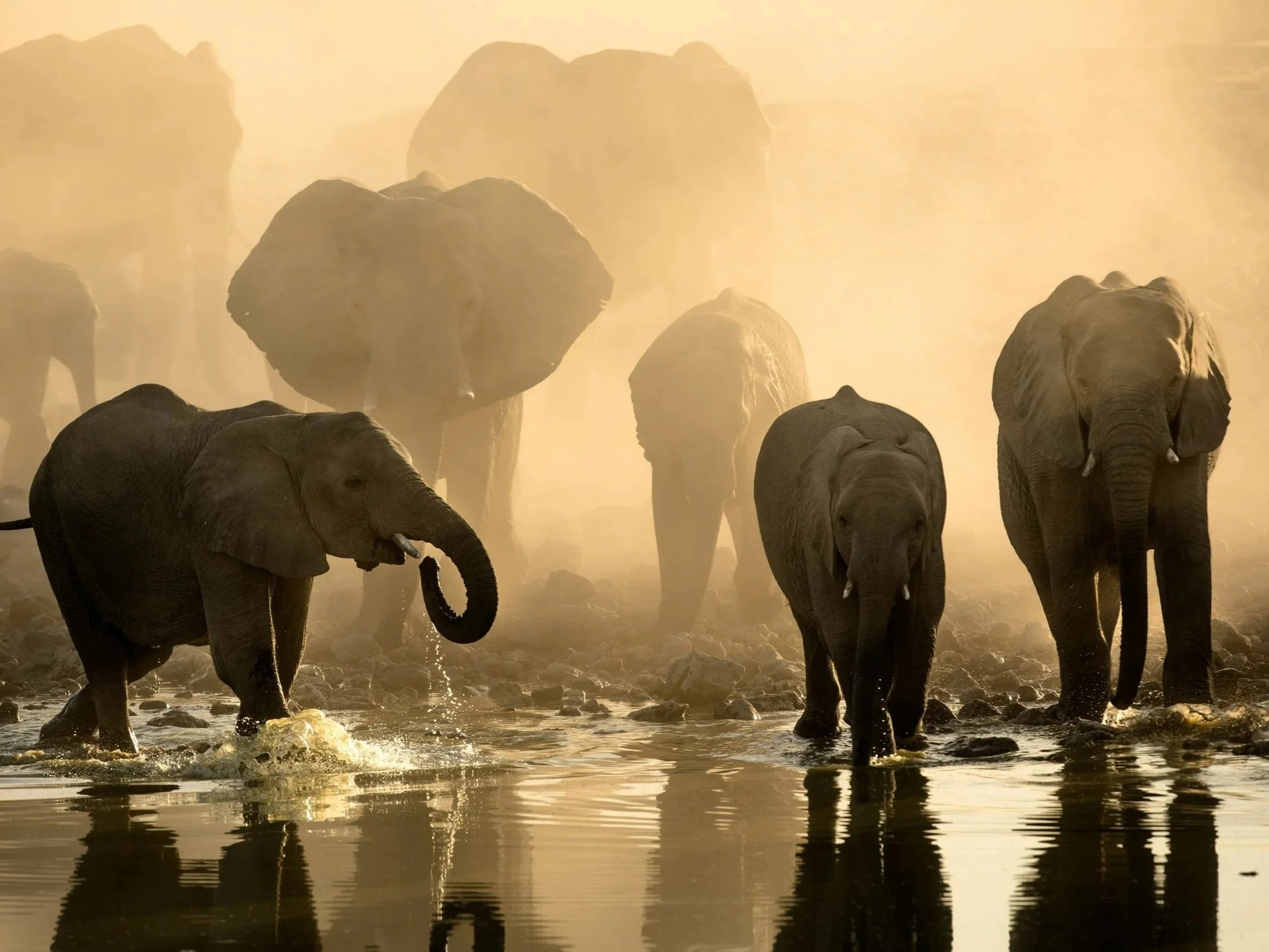
A herd of African elephants moves together through shallow water at dawn, their bodies partially veiled by golden dust and mist. Elephants are widely studied for their capacity for consolation, grief, and emotional regulation, making them a powerful example of animal sentience and the ethical implications of welfare and conservation.
The quiet intelligence of feeling: animals, empathy, and the emotional continuum
For much of human intellectual history, animals have lived at the margins of emotion. They moved, reacted, survived—but did not feel, at least not in ways that mattered. Emotion was framed as language-dependent, reflective, moral: a human possession. What animals had, we told ourselves, were instincts—automatic, shallow, interchangeable.
Science has been undoing that story for decades.
What emerges instead is not a sentimental narrative, but a demanding one: a recognition that emotional intelligence did not suddenly bloom with Homo sapiens, but has deep evolutionary roots. It is embodied, social, and ancient. Across species, animals perceive, resonate with, and respond to the emotional states of others. They console, avoid, assist, imitate, and remember. They suffer and they seek relief—not only for themselves, but sometimes for those around them.
To understand this is to accept that humans are not emotional outliers. We are participants in a continuum.
Emotional intelligence beyond the human frame
Contemporary models of emotional intelligence define it as the capacity to perceive, regulate, and use emotions adaptively (Stoewen, 2024). These models, long applied exclusively to humans, now find echoes across the animal kingdom. Studies on emotion recognition show that animals respond meaningfully to facial expressions, vocal cues, postures, and contextual signals of others’ affective states (Stolier & Freeman, 2016). Emotional regulation—once assumed to require high-level cognition—has been observed in nonhuman species through behavioral modulation, social buffering, and physiological adjustment (Menefee, Ledoux, & Johnston, 2022).
Crucially, emotion in animals is not isolated. It is relational. Social bonding amplifies emotional sensitivity, shaping how animals respond to distress, excitement, or threat within their group (Cole & Young, 2009). Empathy, defined not as moral reasoning but as affective resonance and concern, appears repeatedly where social life demands coordination and cohesion (Decety et al., 2016).
The question is no longer whether animals feel, but how emotional intelligence operates across bodies, brains, and evolutionary histories.
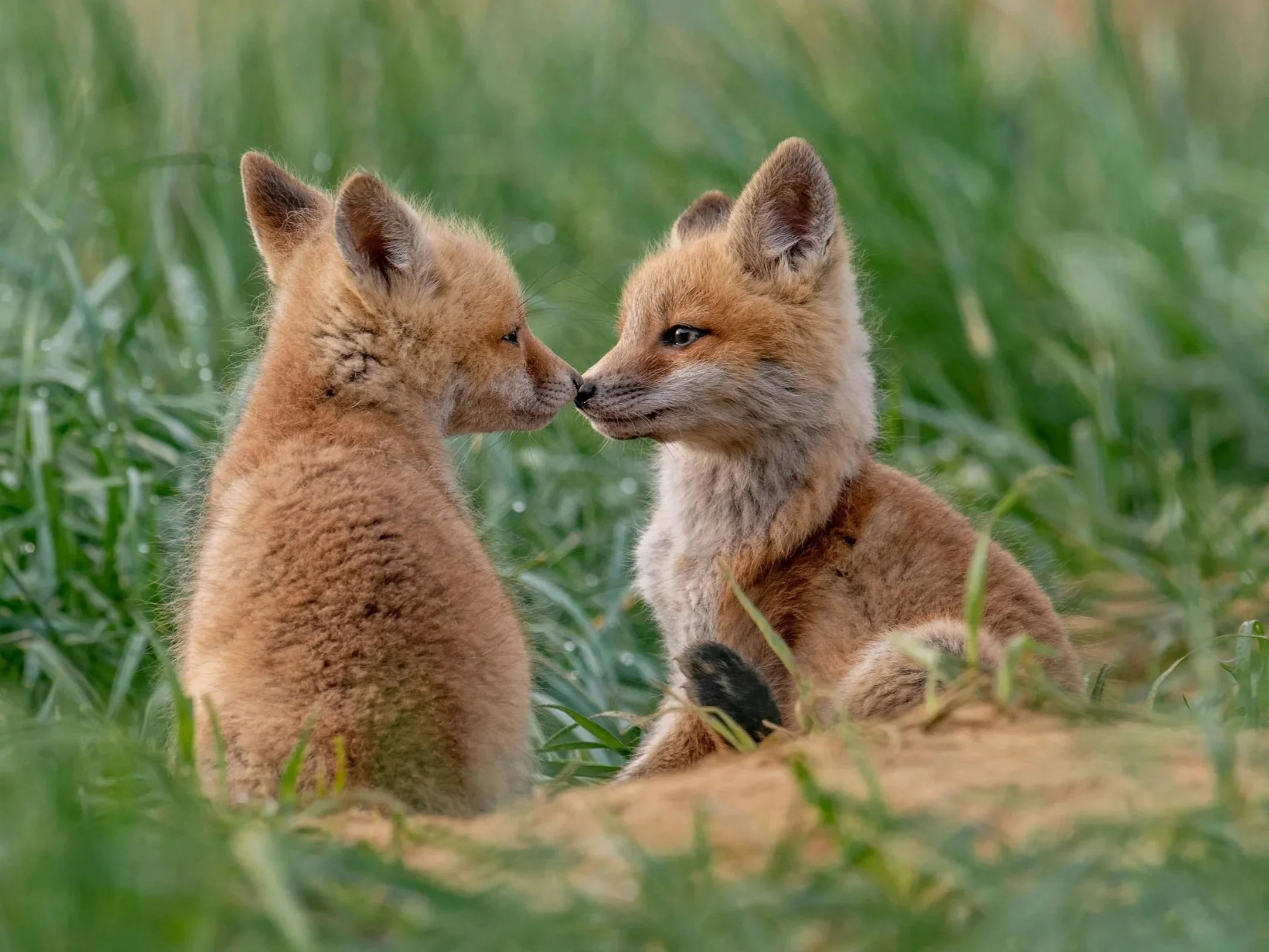
Two young foxes face one another in close proximity within a grassy landscape, engaging in gentle, attentive interaction. Such behaviors reflect the evolutionary roots of empathy and emotional regulation shared across mammalian species.
Contagion: when emotion moves between bodies
At the most basic level of empathy lies emotional contagion—the alignment of emotional states between individuals. This process requires no language, no reflection, and no explicit intention. It is immediate, embodied, and powerful.
In a striking experiment, Adriaense et al. (2019) demonstrated negative emotional contagion in common ravens (Corvus corax). Ravens observing a conspecific in a negative affective state—induced through food manipulation—later displayed pessimistic judgment biases themselves. The observers had no direct interaction, no information about the cause of the emotion. They simply caught it.
This matters. It shows that birds, with brains structured differently from mammals, nonetheless share mechanisms that allow emotional states to transfer socially. Empathy, at least in its foundational form, is not mammal-exclusive.
Rodents reveal similar processes. Langford et al. (2006) showed that mice observing familiar companions in pain exhibited heightened pain responses themselves, synchronized in timing and intensity. This effect depended on visual perception and familiarity, aligning with perception–action models of empathy. Emotional states, once perceived, triggered parallel physiological responses.
Panksepp and Panksepp (2013) situate these findings within shared subcortical emotional systems. Primary emotional circuits—fear, care, distress—are conserved across mammals. They operate below conscious reflection, yet shape behavior profoundly. Empathy begins here, not in moral philosophy, but in neural resonance.
From resonance to action: prosocial behavior
Empathy becomes ethically meaningful when it motivates action.
In a now-classic study, Bartal, Decety, and Mason (2011) demonstrated that rats repeatedly learned to free trapped companions. They did so intentionally, developing consistent techniques, and continued even when no social interaction followed. When chocolate was offered alongside a trapped peer, rats freed the peer and shared the food. Helping carried motivational weight equivalent to a highly valued reward.
These were not reflexes. The behavior was learned, flexible, and goal-directed. It reflected sensitivity to another’s distress and a drive to alleviate it.
Similar patterns appear across taxa. Elephants, observed by Plotnik and de Waal (2014), approached distressed herd members with unsolicited touch, vocalizations, and protective group formations. Consolation extended beyond the directly affected individual, spreading through the group in what appeared to be shared emotional arousal.
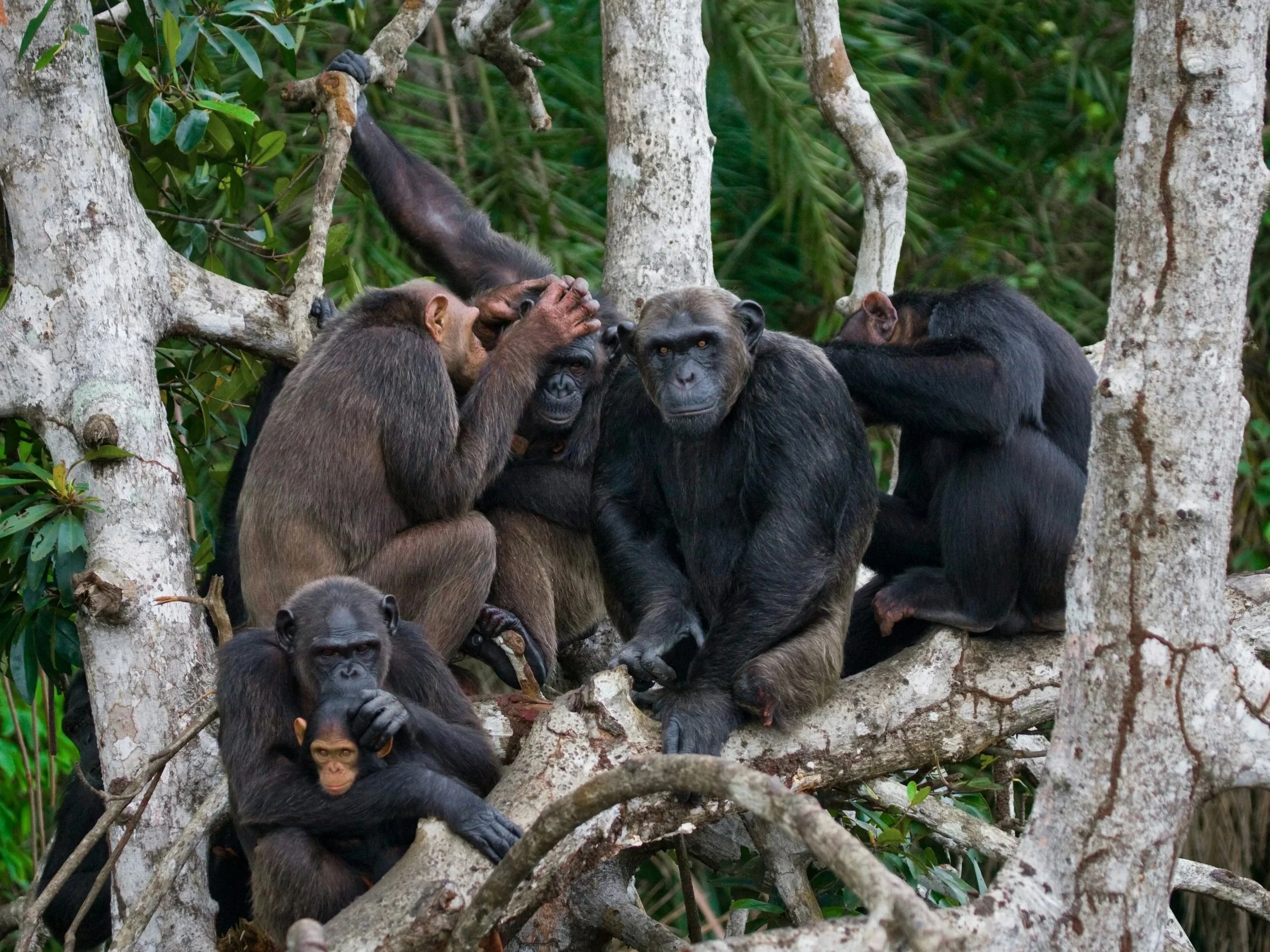
A group of chimpanzees engages in close social contact, including grooming and physical reassurance, illustrating prosocial behavior driven by empathy and emotional intelligence. Such affiliative actions reflect evolved emotional capacities that motivate helping, consolation, and social bonding—core evidence that animal emotions translate into intentional, welfare-relevant behavior.
Chimpanzees show some of the clearest parallels to human empathy. Romero, Castellanos, and de Waal (2010), analyzing over 3,000 conflicts, found that third-party consolation occurred most often among socially close individuals and reduced stress in victims. Consolation was reciprocal and patterned, embedded within long-term social relationships.
These behaviors are not accidental. They are adaptive strategies shaped by social life, where understanding another’s emotional state enhances group stability and individual survival.
Consolation, play, and the repair of social worlds
Emotion does not only respond to pain; it also amplifies joy.
In New Zealand kea parrots, Schwing et al. (2017) demonstrated that play vocalizations function as positive emotional contagion. When kea heard play calls, they increased spontaneous play—even in adults and even without social prompting. The vocalizations did not merely signal play; they induced a playful emotional state.
Ravens, too, engage in post-conflict affiliation. Fraser and Bugnyar (2010) found that ravens offered consolation primarily to valued partners, reducing the risk of renewed aggression. Victims also actively sought affiliation, indicating awareness of their own emotional needs and those of others.
Play, consolation, and affiliation function as emotional regulators within social systems. They restore balance, reduce stress, and reinforce bonds.
Emotional awareness and recognition
Emotion requires perception. Animals must recognize affect in others to respond meaningfully.
Parr (2001) showed that chimpanzees spontaneously matched facial expressions to emotionally valenced stimuli, categorizing scenes as positive or negative without training. Physiological measures revealed stress responses when viewing scenes involving pain or threat, demonstrating conscious emotional awareness rather than simple arousal.
Dogs provide a powerful example of cross-species emotional intelligence. Albuquerque and Resende (2022) detail how dogs read human emotions multimodally—integrating facial expressions, gestures, posture, voice, and scent—and use this information strategically. Dogs adjust behavior, avoid negatively associated objects, and modulate decisions based on emotional cues. These abilities extend beyond pets to free-ranging and street dogs, underscoring their robustness.
Intelligence, social life, and sentience
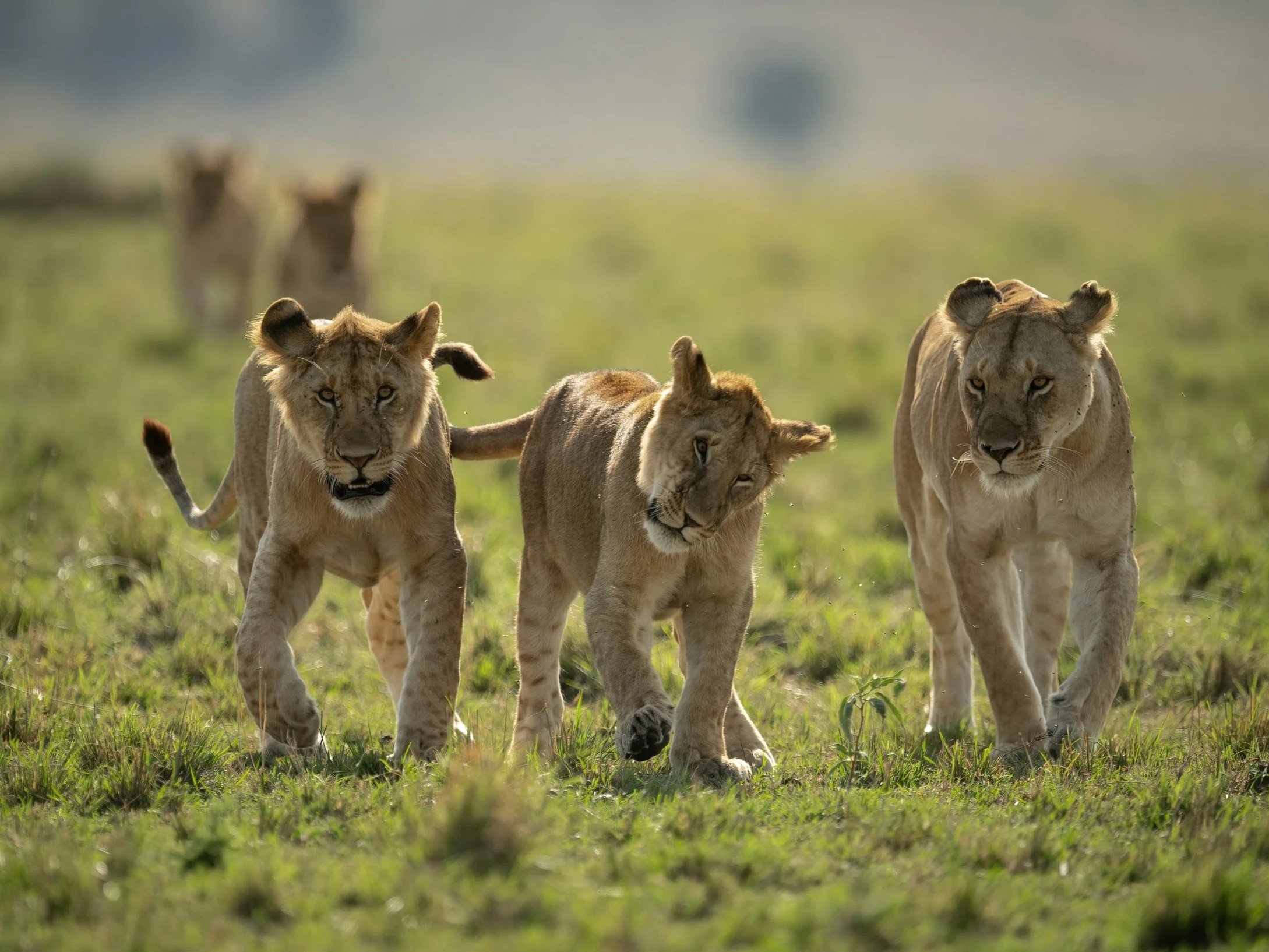
A group of lions walks together across open grassland, demonstrating coordinated movement, social cohesion, and shared awareness. Such group behavior reflects advanced social intelligence and sentience, where emotional attunement, cooperation, and learned relationships shape survival strategies in highly social species.
Emotional intelligence does not emerge in isolation. It is intertwined with social complexity.
Morell (2016) tested the social intelligence hypothesis by comparing social and solitary carnivores. Social species—lions and spotted hyenas—outperformed solitary species on novel problem-solving tasks, suggesting that social living enhances general cognitive flexibility.
Balcombe (2014) extends this insight across vertebrates and beyond. From fish to goats to birds, animals show preferences, moods, optimism and pessimism, grief and pleasure. Cognitive bias studies reveal that animals in enriched environments respond more optimistically to ambiguous stimuli, while those in poor conditions develop pessimistic biases.
Farm animals, often excluded from discussions of intelligence, show comparable capacities. Lambert and Carder (2019) demonstrated that cows’ ear postures reliably reflect emotional states under positive and negative conditions. New Roots Staff (2022) synthesize evidence that cows exhibit emotional contagion, social learning, memory, and empathy—forms of intelligence long overlooked due to cultural bias.
As the University of West Alabama (2019) notes, skepticism about animal emotion increasingly reflects philosophical resistance rather than empirical doubt.
The silence that no longer holds
Accepting that animals possess emotional lives is not a neutral act. It destabilizes long-standing ethical frameworks built on the assumption that suffering without language matters less, or not at all. Once emotional intelligence is acknowledged as widespread—manifested through empathy, distress, consolation, anticipation, and joy—our moral obligations necessarily expand.
For decades, animal welfare has focused primarily on physical health: freedom from hunger, disease, and injury. These are essential, but insufficient. Emotional suffering—chronic fear, isolation, frustration, boredom, and social deprivation—can be extremely damaging. Cognitive bias studies repeatedly show that animals housed in impoverished conditions interpret ambiguous situations pessimistically, a hallmark of negative emotional states. Welfare, therefore, must be understood as psychological as well as physical.
Institutions built on emotional deprivation
This has direct implications for captivity. Zoos, aquaria, laboratories, and industrial farming systems often prioritize efficiency, visibility, or productivity over emotional needs. Yet animals evolved for complex social and ecological worlds. Removing agency, limiting social contact, or preventing species-typical behaviors does not merely inconvenience them—it alters their emotional landscapes. Enrichment should not be treated as optional decoration, but as emotional infrastructure.
Conservation, too, must evolve. Relocation, culling, reintroduction, and habitat fragmentation do not only affect populations; they fracture social bonds and generate trauma. Highly social species—elephants, cetaceans, primates, corvids—carry emotional histories. Ignoring this can undermine conservation goals themselves, leading to stress-related mortality or social breakdown.
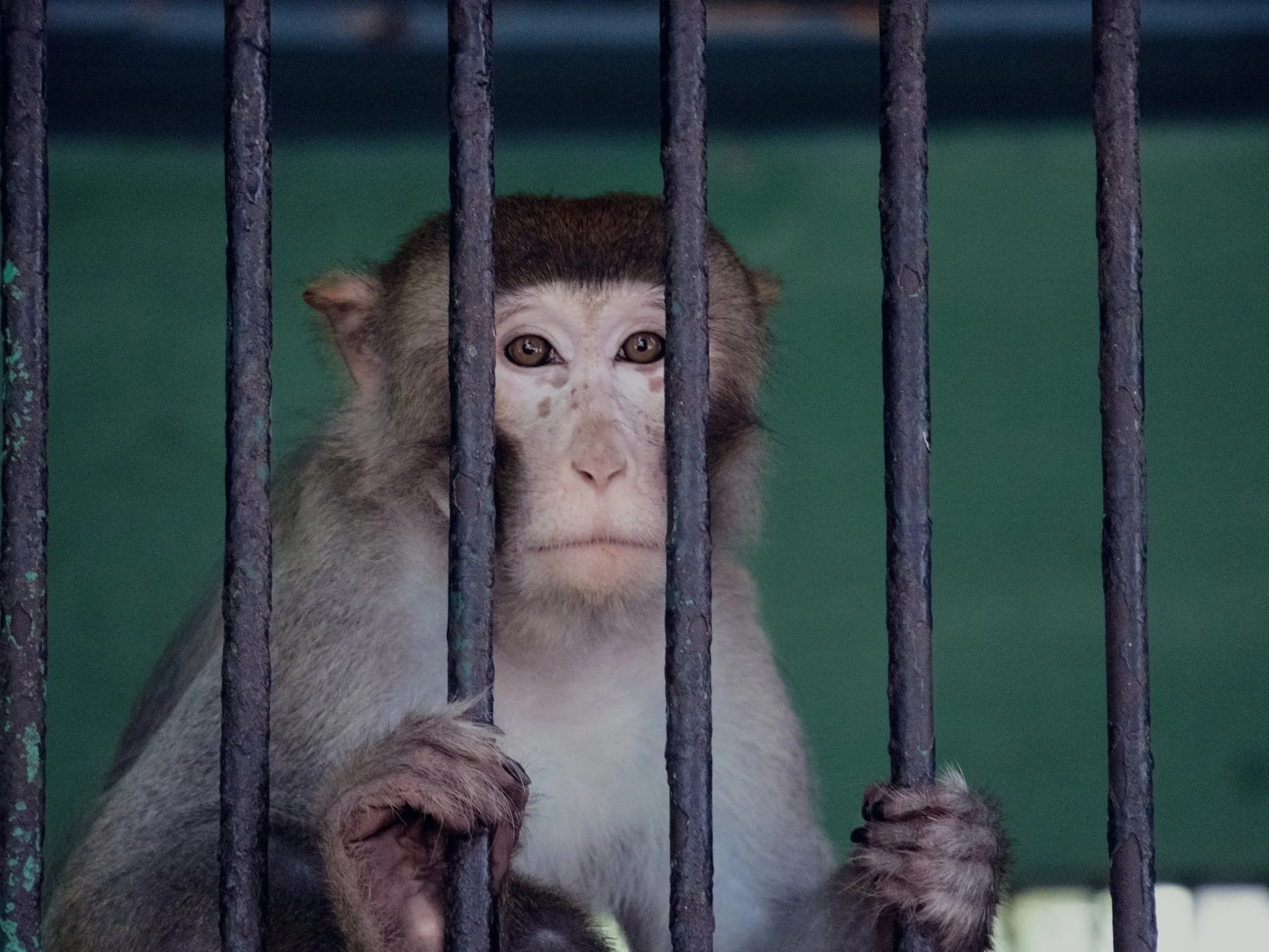
A macaque sits behind metal bars in a captive enclosure, visually conveying emotional deprivation, confinement, and loss of agency. The image underscores how institutional settings such as laboratories, zoos, and wildlife trade facilities often fail to meet animals’ psychological and emotional needs, highlighting the ethical implications of captivity for sentient beings.
Work without consent
The use of working animals raises equally urgent concerns. Dogs, horses, donkeys, and other laboring animals often form deep emotional attachments to humans. Recognizing their emotional intelligence means acknowledging emotional labor: stress, vigilance, fear, and loyalty. Ethical use requires limits, rest, choice where possible, and humane training methods that rely on trust rather than coercion.
Underlying all of this is a broader cultural issue. Many forms of animal abuse persist not because of cruelty alone, but because of ignorance—because animals are still widely perceived as unfeeling objects or replaceable resources. Science now contradicts that view. The gap between knowledge and practice is no longer scientific; it is social and educational.
The violence we choose not to see
There is, however, a reality that cannot be addressed with theory alone.
Across the world, millions of animals endure systematic physical abuse under the hands of industries and individuals who either deny or disregard their emotional lives. They are beaten, confined, starved, overworked, mutilated, and discarded. Many are denied even the most basic needs: adequate nutrition, veterinary care, rest, or shelter. Illness goes untreated. Pain is normalized. Suffering becomes routine.
This is not an accident. It is the consequence of profound educational failure.
Most abuse does not occur because people actively wish to cause harm, but because animals are still widely perceived as tools, commodities, or background objects—beings without inner worlds. When emotional intelligence is ignored, exploitation becomes easier to justify. When sentience is denied, accountability disappears.
Industrial systems amplify this violence. In factory farming, animals are pushed beyond biological limits in environments that generate chronic fear, frustration, and pain. In entertainment and tourism, emotional distress is masked as training or tradition. In domestic contexts, neglect—improper feeding, lack of medical care, social isolation—is often invisible and unpunished.
Recognizing emotional intelligence makes this reality impossible to excuse. It reframes abuse not as isolated cruelty, but as widespread moral negligence. If animals experience distress, anxiety, attachment, and grief, then physical harm inflicted upon them is not merely a welfare issue—it is an ethical failure that society has tolerated for far too long.
The absence of animal education is not neutral. It actively enables suffering.
Ecosystems pay the price: the cost of human impact
This educational failure extends far beyond domesticated animals. In wildlife, the consequences are often less visible but equally devastating. Each day, more species lose the habitats on which their lives depend. When ecosystems are destroyed, animals are not simply displaced—they are emotionally and socially destabilized.
Habitat loss fractures family groups, erases migration routes, and interrupts learned behaviors essential for survival. For species with long memories and strong social bonds, such as elephants, cetaceans, primates, and birds, environmental destruction produces prolonged stress, fear, and confusion. Young animals lose elders who carry ecological knowledge; social cohesion collapses; mortality rises.
These harms are rarely framed as ethical violations. They are described instead as economic trade-offs or environmental externalities. Yet if animals are emotionally sentient, then destroying the environments that sustain their social lives constitutes a form of indirect violence—one that inflicts suffering without ever raising a hand.
Protecting wildlife therefore cannot be reduced to preserving numbers alone. It requires safeguarding ecosystems as emotional and social landscapes, recognizing that conservation is not only a biological responsibility, but a moral one.
Enough silence, enough suffering
There comes a moment when knowledge demands response.
We now know—beyond reasonable doubt—that animals are not empty vessels moving on instinct alone. They feel fear and relief. They form bonds and mourn losses. They experience joy, anticipation, frustration, and pain. Their emotional lives may differ from ours in form, but not in significance.
And yet, suffering continues—largely unchecked, often invisible, frequently unpunished.
This dissonance is no longer a scientific problem. It is a moral one.
For too long, animal suffering has been treated as collateral damage: the cost of convenience, profit, tradition, or indifference. But suffering does not become acceptable because it is normalized. Pain does not diminish because it is common. Silence does not absolve responsibility.
Enough.
Enough of pretending that ignorance excuses harm.
Enough of allowing abuse to hide behind legality.
Enough of letting emotional lives be erased for efficiency.
Change begins with education—teaching children and adults alike that animals are not objects, but subjects of experience. We must continue with accountability—supporting stronger welfare laws, reporting abuse, and refusing to participate in systems that depend on suffering. It is our responsibility to demand stronger animal rights.
Supporting this shift means amplifying scientific literacy, backing ethical initiatives, donating to and volunteering with animal protection organizations, demanding transparency from industries, and choosing compassion even when it is inconvenient.
It grows through everyday choices: how we consume, how we care, how we speak, how we intervene.
Empathy is not weakness. It is responsibility.
The science is clear. The suffering is real. The impunity must end.
How we treat animals is not a side note in human progress—it is a measure of who we are becoming.
References
Adriaense, J. E. C., Martin, J. S., Schiestl, M., Lamm, C., & Bugnyar, T. (2019). Negative emotional contagion and cognitive bias in common ravens (Corvus corax). Proc. Natl. Acad. Sci. U.S.A. 116 (23) 11547-11552. DOI: https://doi.org/10.1073/pnas.1817066116.
Albuquerque, N., & Resende, B. (2022). Dogs functionally respond to and use emotional information from human expressions. Evol Hum Sci. 2022 Dec 6;5:e2. DOI: 10.1017/ehs.2022.57. PMID: 37587944; PMCID: PMC10426098.
Ashcroft-Gaudreault, K. (2023). The Study of Animal Intelligence and Its Human Bias. Whales Online, A Gremm Project. https://baleinesendirect.org/en/letude-de-lintelligence-animale-et-son-biais-humain-partie-2/
Bartal, I.B.A. et al. (2011). Empathy and Pro-Social Behavior in Rats. Science334,1427-1430(2011). DOI: 10.1126/science.1210789.
Balcombe, J. (2014). Yes, Animals Have Feelings (Op-Ed). LiveScience. https://www.livescience.com/49093-animals-have-feelings.html
Cole, C. D., & Young, L. J. (2009). Neuroendocrinology of Social/Affiliative Behavior, Editor(s): Larry R. Squire, Encyclopedia of Neuroscience, Academic Press, 2009, Pages 377-383, ISBN 9780080450469. DOI: https://doi.org/10.1016/B978-008045046-9.01188-8.
Decety, J., Bartal, I. B., Uzefovsky, F., & Knafo-Noam, A. (2016). Empathy as a driver of prosocial behaviour: highly conserved neurobehavioural mechanisms across species. Philos Trans R Soc Lond B Biol Sci. 2016 Jan 19;371(1686):20150077. DOI: 10.1098/rstb.2015.0077. PMID: 26644596; PMCID: PMC4685523.
Fraser, O. N., & Bugnyar, T. (2010). Do ravens show consolation? Responses to distressed others. PLoS One. 2010 May 12;5(5):e10605. DOI: 10.1371/journal.pone.0010605. PMID: 20485685; PMCID: PMC2868892.
Kuta, S. (2025). Crows May Grasp Basic Geometry: Study Finds the Brainy Birds Can Tell the Difference Between Shapes. Smithsonian maganize. https://www.smithsonianmag.com/smart-news/crows-may-grasp-basic-geometry-study-finds-the-brainy-birds-can-tell-the-difference-between-shapes-180986425/
Kwon, D. (2022). Crows Perform Yet Another Skill Once Thought Distinctively Human. ScientificAmerican. https://www.scientificamerican.com/article/crows-perform-yet-another-skill-once-thought-distinctively-human/
Lambert, H., & Carder, G. (2018). Positive and negative emotions in dairy cows: Can ear postures be used as a measure? Behav Processes. 2019 Jan;158:172-180. DOI: 10.1016/j.beproc.2018.12.007. Epub 2018 Dec 10. PMID: 30543843.
Langford, D. J., et al. (2006). Social Modulation of Pain as Evidence for Empathy in Mice. Science312,1967-1970(2006). DOI: 10.1126/science.1128322.
Menefee, D. S., Ledoux, T., & Johnston, C. A. (2022). The Importance of Emotional Regulation in Mental Health. Am J Lifestyle Med. 2022 Jan 12;16(1):28-31. DOI: 10.1177/15598276211049771. PMID: 35185423; PMCID: PMC8848120.
Mendl, M., Neville, V. & Paul, E.S. (2022). Bridging the Gap: Human Emotions and Animal Emotions. Affec Sci 3, 703–712 (2022). DOI: https://doi.org/10.1007/s42761-022-00125-6.
Morell, V. (2016). Good social skills make animals smarter. Science. https://www.science.org/content/article/good-social-skills-make-animals-smarter
New Roots Staff. (2022). Are Cows Smart? What Recent Research Says About Cows’ Intelligence. https://www.newrootsinstitute.org/articles/are-cows-smart
Osiecka, A. N., Lefèvre, R., & Elodie F. (2025). Briefer, Emotional contexts influence vocal individuality in ungulates. Animal Behaviour, Volume 231, 2025, 123405, ISSN 0003-3472. DOI: https://doi.org/10.1016/j.anbehav.2025.123405.
Parr, L.A. (2001). Cognitive and physiological markers of emotional awareness in chimpanzees (Pan troglodytes). Anim Cogn. 2001 Nov;4(3-4):223-9. DOI: 10.1007/s100710100085. Epub 2001 May 31. PMID: 24777512.
Panksepp, J. (2012). What is an emotional feeling? Lessons about affective origins from cross-species neuroscience. Motivation and Emotion, 36(1), 4–15. DOI: https://doi.org/10.1007/s11031-011-9232-y.
Panksepp, J., & Panksepp, J. B. (2013). Toward a cross-species understanding of empathy. Trends in Neurosciences, Volume 36, Issue 8, 2013, Pages 489-496, ISSN 0166-2236. DOI: https://doi.org/10.1016/j.tins.2013.04.009.
Paul, E. S., & Mendl, M. T. (2025). Tackling challenges in the study of animal emotions: a review. Cognition and Emotion, 39(6), 1190–1209. DOI: https://doi.org/10.1080/02699931.2025.2534728.
Pérez-Manrique A, & Gomila A. (2022). Emotional contagion in nonhuman animals: A review. Wiley Interdiscip Rev Cogn Sci. 2022 Jan;13(1):e1560. DOI: 10.1002/wcs.1560. Epub 2021 May 5. PMID: 33951303; PMCID: PMC9285817.
Plotnik, et al. (2014). Asian elephants (Elephas maximus) reassure others in distress. PeerJ 2:e278. DOI: 10.7717/peerj.278.
Romero, T., Castellanos, M. A. & de Waal, F.B.M. (2010). Consolation as possible expression of sympathetic concern among chimpanzees. Proc. Natl. Acad. Sci. U.S.A. 107 (27) 12110-12115. DOI: https://doi.org/10.1073/pnas.1006991107.
Stoewen, D.L. (2024). The vital connection between emotional intelligence and well-being - Part 1: Understanding emotional intelligence and why it matters. Can Vet J. 2024 Feb;65(2):182-184. PMID: 38304477; PMCID: PMC10783582.
Stolier, R. M., & Freeman, J. B. (2016). Chapter 7 - The Neuroscience of Social Vision, Editor(s): John R. Absher, Jasmin Cloutier, Neuroimaging Personality, Social Cognition, and Character, Academic Press, 2016, Pages 139-157, ISBN 9780128009352. DOI: https://doi.org/10.1016/B978-0-12-800935-2.00007-5.
Scherer, K. R., & Rothermund, K. (2025). Comparing animal and human emotions – how theory can help (and which one to choose). Cognition and Emotion, 39(6), 1185–1189. DOI: https://doi.org/10.1080/02699931.2025.2518724.
Schwing, R., Nelson, X. J., Wein, A., & Parsons, S. (2017). Positive emotional contagion in a New Zealand parrot. Curr Biol. 2017 Mar 20;27(6):R213-R214. DOI: 10.1016/j.cub.2017.02.020. PMID: 28324733.
University of West Alabama. (2019). Do Animals Have Feelings? Examining Empathy in Animals. https://online.uwa.edu/news/empathy-in-animals/