Illegal animal trafficking: the truth nobody wants to face
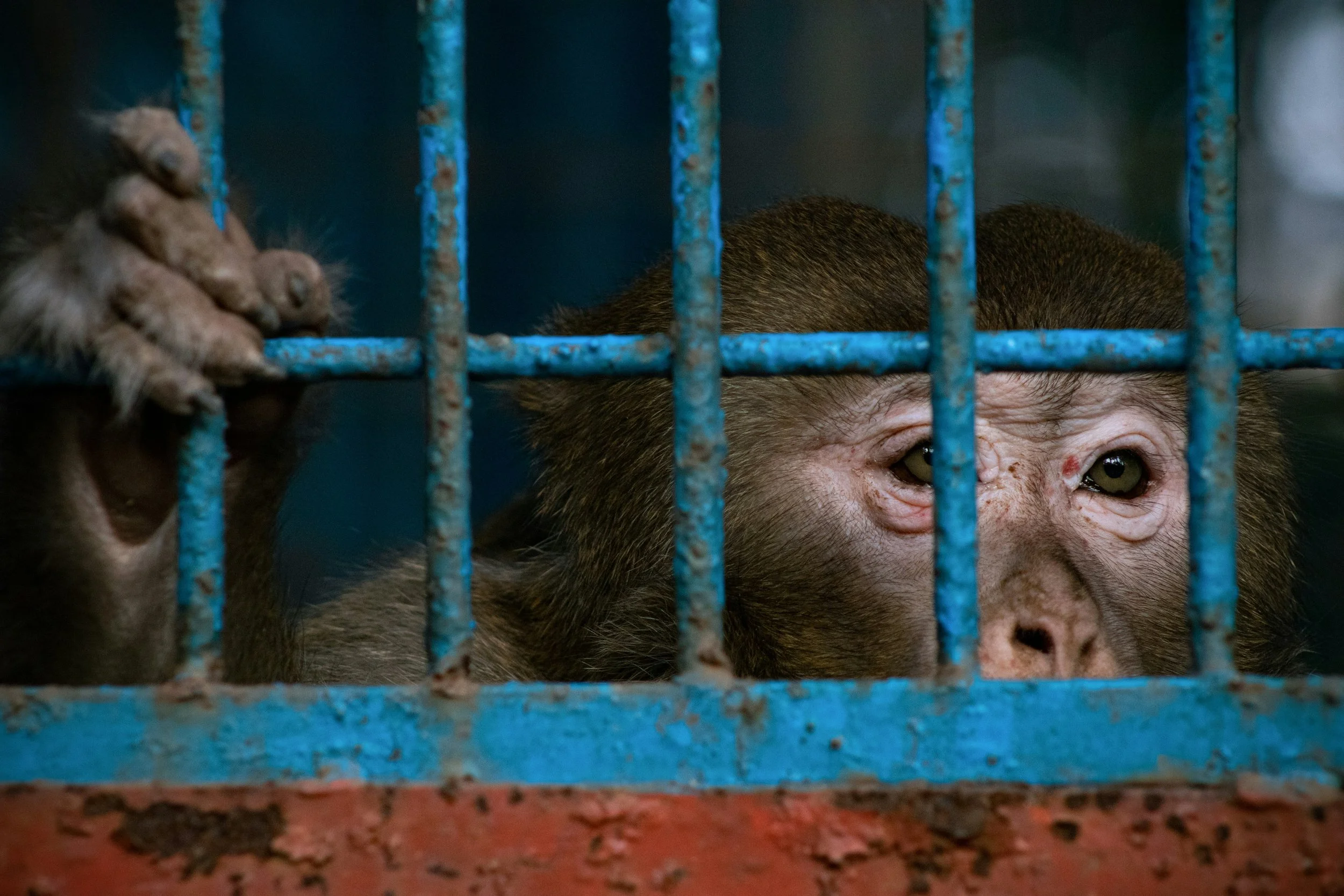
A captive macaque grips the rusted bars of a metal cage, its face pressed forward in confinement, an image reflecting the cruelty and systemic violence of illegal animal trafficking and the global wildlife trade.
The crime hidden in plain sight
A parrot, its wings tightly bound, lies suffocated within the narrow confines of a plastic bottle. A baby primate, sedated and trembling, waits silently in a cardboard crate. A reptile is sewn into the lining of a garment, destined for a distant market. These are not isolated incidents of cruelty—they are the hidden rhythms of a global enterprise, unfolding quietly at airports, ports, and online marketplaces, and even on the glowing screens of social media.
Yet we scarcely notice. The trafficking of wildlife has become normalized, disguised behind legal permits, conservation facades, or the gloss of luxury consumption. We scroll past, click away, or dismiss it as a distant problem, as if distance could shield us from consequence. But this is no fringe activity. Organized, transnational, and astonishingly sophisticated, the illegal wildlife trade rivals the global narcotics and arms markets in profit and impact.
According to the World Wildlife Fund (n. d.), wildlife crime is estimated to generate over $20 billion annually, sustaining criminal networks, fueling corruption, and sometimes even financing armed groups. Iconic species such as elephants, rhinos, and tigers, alongside lesser-known but equally vulnerable animals and plants, are driven toward extinction. The methods—tranquilization, mutilation, suffocation—are industrial in their efficiency, reflecting networks that exploit economic vulnerability, institutional weakness, and persistent consumer demand (Mozer & Prost, 2023; Saradhi, 2026).
Illegal animal trafficking survives not because it is invisible, but because we choose not to see it.
What illegal animal trafficking really is
(and why most people still misunderstand it)
Illegal animal trafficking is often reduced, in public imagination, to a single image: a lone poacher in a distant forest. This simplification is convenient—and dangerously wrong. What is commonly called “poaching” is only the first incision in a much larger body. Illegal wildlife trafficking encompasses the capture, transport, sale, and laundering of live animals, body parts, plants, fungi, and derivatives—skins, ivory, scales, bones, timber, medicinal ingredients—across national and continental borders (Mozer & Prost, 2023; Saradhi, 2026).
Crucially, it is distinct from the legal wildlife trade, which—at least in theory—is regulated, monitored, and limited by international frameworks such as CITES. Illegal trafficking thrives by mimicking legality: falsified permits, captive-breeding claims, and “rescued” animals that quietly enter commercial circuits (WWF, n. d.; Perinchery, 2025). This is not an underground anomaly but a parasitic system embedded within legitimate markets: fashion, pets, traditional medicine, luxury décor, and even scientific research (Mozer & Prost, 2023).
The myths persist. That it only affects charismatic megafauna. That it is a problem confined to the Global South. That it is marginal. In reality, mammals, birds, reptiles, amphibians, marine species, insects, plants, and fungi are all implicated, and no region is untouched. Europe, North America, and East Asia function simultaneously as consumers, transit hubs, and laundering points (Mozer & Prost, 2023; Kent & Cho, 2026).
Illegal wildlife trafficking is not a conservation issue alone. It is one of the world’s largest black markets, rivaling drug trafficking, arms smuggling, and human exploitation—interlinked with them through shared routes, actors, and financial systems (Zoological Society of London, n. d.; Interpol, 2025).
The scale of the trade: numbers that don’t fit in headlines
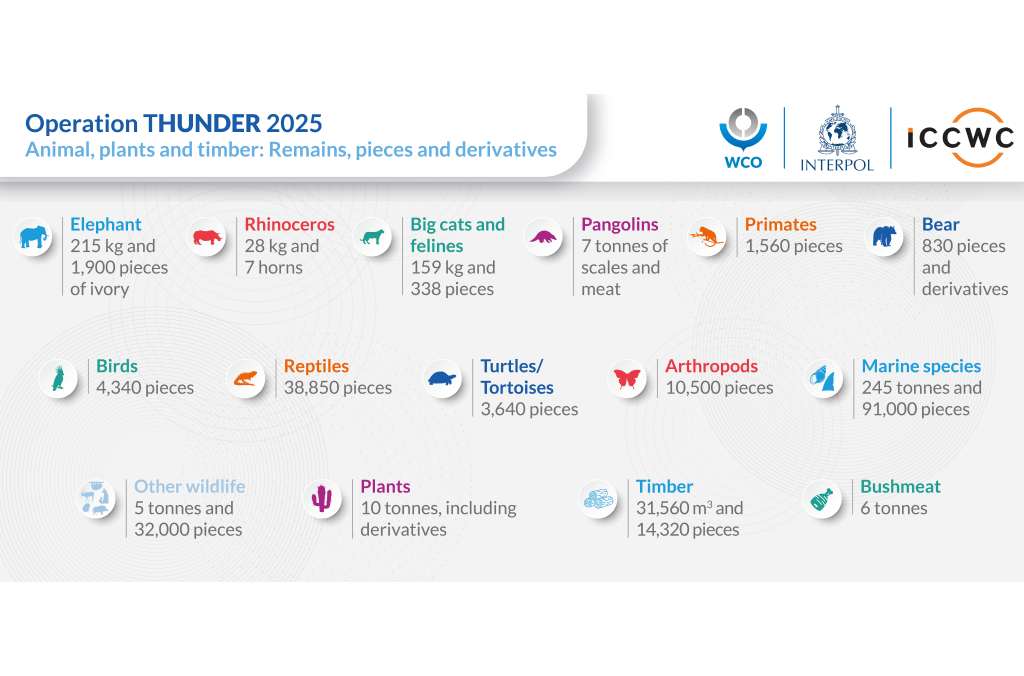
This infographic summarizes seizures from Operation Thunder 2025, a coordinated international law enforcement effort against illegal wildlife trafficking. It documents the scale of the trade across elephants, rhinos, pangolins, primates, reptiles, birds, marine species, plants, timber, and bushmeat, illustrating how wildlife crime operates as a global, multi-species illicit economy rather than isolated acts of poaching.
The scale of illegal wildlife trafficking resists easy comprehension. Estimates fluctuate not because the crime is small, but because it is deliberately hidden. According to TRAFFIC and the United Nations, the global value of the trade ranges between 7 and 23 billion dollars annually, placing it among the most lucrative illicit economies on Earth (TRAFFIC, n. d.; Saradhi, 2026). The Zoological Society of London places the figure closer to 23 billion, underscoring its parity with arms and narcotics trafficking (ZSL, n. d.).
But numbers alone fail to convey the damage. For every chimpanzee infant sold, approximately ten others die during capture (ZSL, n. d.). Nearly 100 million sharks are killed each year, destabilizing entire marine food webs (U.S. Immigration and Customs Enforcement, 2026). In just one decade, an estimated one million pangolins have been removed from the wild, making them the most trafficked mammals on the planet (TRAFFIC, n. d.; Animal Survival International, 2024). Elephants have lost up to 90% of their populations over the last century, largely driven by ivory demand (TRAFFIC, n. d.).
The trade’s geography is global. Biodiversity-rich regions in Africa, South America, and Southeast Asia function as source zones; countries such as Thailand, Nigeria, and Mexico act as transit hubs; and consumer demand concentrates in wealthier markets across Asia, Europe, and North America (Olivera, 2022; Olarn & Harvey, 2025; Kent & Cho, 2026). Digital platforms collapse distance entirely, allowing wildlife to be bought as easily as electronics (Kent & Cho, 2026).
Most animals never survive the journey. Sedation, dehydration, suffocation, and injury mean mortality rates can exceed survival long before a buyer is reached (Rosen & Smith, 2010). What is reported through seizures and arrests is only the visible fraction. The true scale remains larger, darker, and largely unmeasured—by design.
How trafficking works: from forest to living room
The process begins often far from cameras and courts, in forests, reefs, rivers, and savannas where biodiversity overlaps with economic vulnerability. Capture is rarely surgical. Mothers are shot or hacked apart so their offspring can be taken alive—chimpanzees, macaws, monkeys, big cats (ZSL, n. d.; WWF, n. d.). In marine systems, sharks are hauled up, their fins sliced off, and their bodies discarded while still alive (U.S. Immigration and Customs Enforcement, 2026). Each act removes not just an individual, but a functional node in an ecological network.
Transport follows. This is where cruelty becomes logistical. Animals are crammed into plastic bottles, mesh bags, suitcases, PVC pipes. Sedated, dehydrated, taped shut, sewn into clothing, hidden in false compartments or labeled as legal cargo (Rosen & Smith, 2010; Interpol, 2025). Many die en route. Those that survive arrive physiologically broken—stressed, immunocompromised, carrying pathogens that will move with them across borders (Rosen & Smith, 2010).
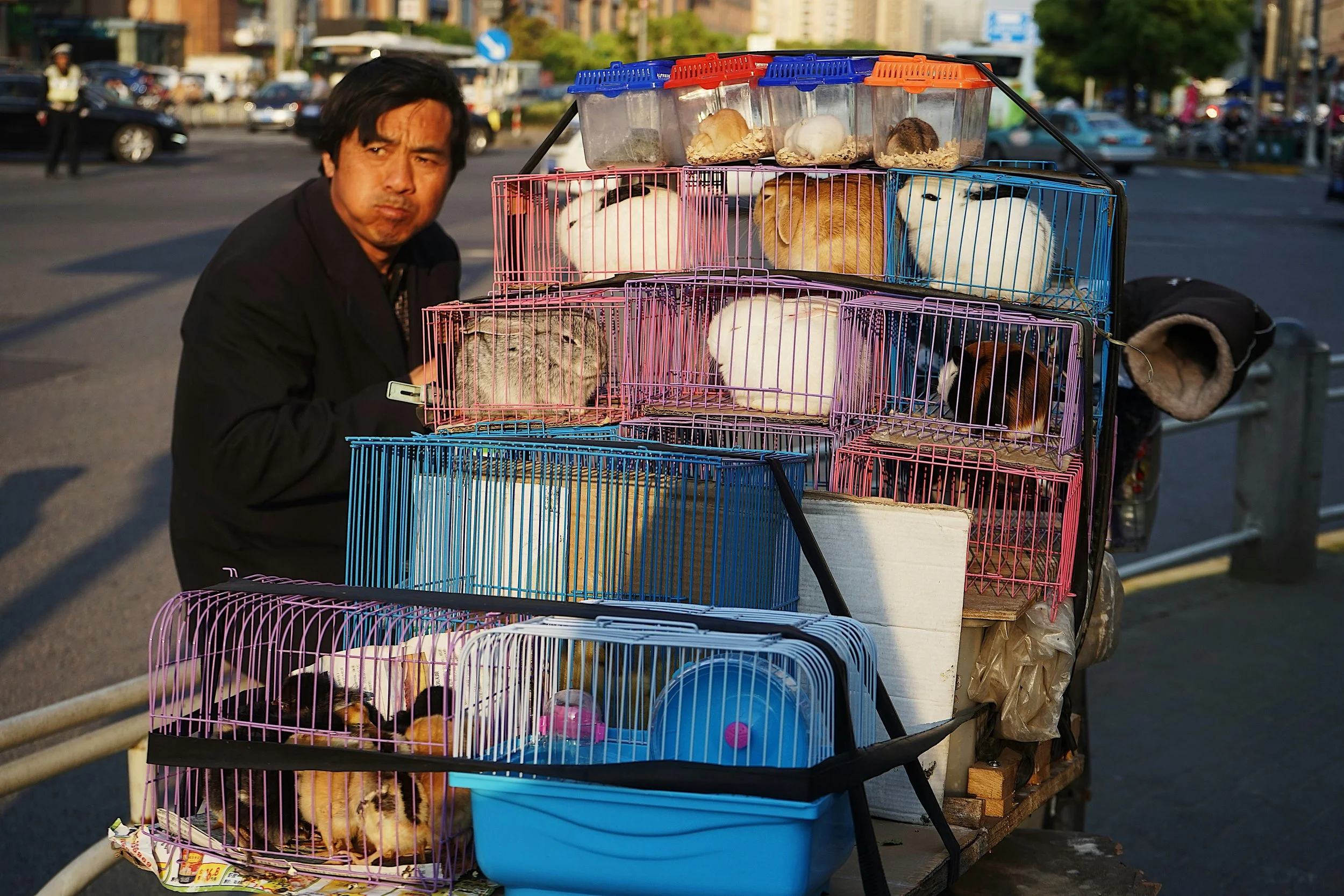
This image shows live animals packed into small cages and containers during transport through an urban setting, highlighting a key stage of illegal wildlife trafficking. It reflects how trafficked animals move from forests and rural capture zones into cities, where exploitation becomes normalized through markets, private sales, and informal trade networks.
The final stage is sale, and here the crime becomes most familiar. Open-air markets with lookouts. Private buyers contacted through encrypted messages. Social media groups where endangered species are traded with the casual language of collectibles (Olivera, 2022; Kent & Cho, 2026). Increasingly, animals and their parts are “laundered” into legality: false CITES permits, captive-breeding claims, or transfers through zoos, breeding facilities, or rescue centers that blur the line between conservation and commerce (WWF, n. d.; Perinchery, 2025).
This is not the work of isolated individuals. It is organized crime—adaptive, transnational, technologically fluent—interlinked with drug trafficking, arms smuggling, money laundering, and corruption (Mozer & Prost, 2023; Interpol, 2025). Often far from cameras and courts, in forests, reefs, rivers, and savannas where biodiversity overlaps with economic vulnerability. Capture is rarely surgical. Mothers are shot or hacked apart so their offspring can be taken alive—chimpanzees, macaws, monkeys, big cats (ZSL, n. d.; WWF, n. d.). In marine systems, sharks are hauled up, their fins sliced off, and their bodies discarded while still alive (U.S. Immigration and Customs Enforcement, 2026). Each act removes not just an individual, but a functional node in an ecological network.
Transport follows. This is where cruelty becomes logistical. Animals are crammed into plastic bottles, mesh bags, suitcases, PVC pipes. Sedated, dehydrated, taped shut, sewn into clothing, hidden in false compartments or labeled as legal cargo (Rosen & Smith, 2010; Interpol, 2025). Many die en route. Those that survive arrive physiologically broken—stressed, immunocompromised, carrying pathogens that will move with them across borders (Rosen & Smith, 2010).
The final stage is sale, and here the crime becomes most familiar. Open-air markets with lookouts. Private buyers contacted through encrypted messages. Social media groups where endangered species are traded with the casual language of collectibles (Olivera, 2022; Kent & Cho, 2026). Increasingly, animals and their parts are “laundered” into legality: false CITES permits, captive-breeding claims, or transfers through zoos, breeding facilities, or rescue centers that blur the line between conservation and commerce (WWF, n. d.; Perinchery, 2025).
This is not the work of isolated individuals. It is organized crime—adaptive, transnational, technologically fluent—interlinked with drug trafficking, arms smuggling, money laundering, and corruption (Mozer & Prost, 2023; Interpol, 2025).
The cost we don’t talk about
Animal suffering is only the most visible wound.
Ecologically, illegal trafficking accelerates collapse. Keystone species vanish, triggering trophic cascades that destabilize entire ecosystems. Sharks disappear, fish populations implode. Elephants fall, forests lose their architects. Pangolins are stripped away, and insect populations surge unchecked (U.S. Immigration and Customs Enforcement, 2026; TRAFFIC, n. d.). Biodiversity loss compounds climate vulnerability, eroding ecosystems’ capacity to recover from disturbance (Mozer & Prost, 2023).
The human cost is quieter, but no less severe. Wildlife crime destabilizes local economies, siphoning resources from communities already under strain. It fuels corruption, undermines governance, and finances armed groups and criminal syndicates (WWF, n. d.; Better World Campaign, 2025). Rangers and environmental officers pay with their lives—hundreds killed in the line of duty, many murdered by poaching networks (Mozer & Prost, 2023).
There is also a biological reckoning. Unregulated wildlife markets create ideal conditions for zoonotic spillover. SARS, avian influenza, and COVID-19 emerged from interfaces where stressed animals, humans, and pathogens converged without safeguards (WWF, n. d.; Rosen & Smith, 2010). Illegal trade does not just move animals—it moves disease.
Who is really responsible?
Illegal wildlife trade is often framed as a distant crime, carried out by poachers in remote landscapes or traders operating in shadowy markets. That framing is comforting — and misleading. Responsibility does not rest with a single actor; it is diffused across a system that turns living beings into commodities.
Demand sits at the center of that system. Every trafficked animal exists because someone wants it: for consumption, status, tradition, entertainment, or luxury. The normalization of the “exotic” relies on emotional distance — a willingness to see suffering as abstract, removed, or someone else’s problem.
Governments are implicated not only through corruption, but through inaction. Weak governance, poor oversight, and inconsistent prioritization allow wildlife crime to persist despite its well-documented ecological, social, and health consequences. When enforcement is underfunded or compromised, illegal trade is not simply tolerated — it is enabled.
The burden often falls on those with the least power. Local communities face economic pressure within destabilized systems, while rangers and environmental officers absorb the most immediate risks. Hundreds have paid with their lives confronting networks that profit from extraction and exploitation. Responsibility, in contrast, remains comfortably distant.
The mirror is unavoidable: wildlife crime is not sustained solely by criminals. It is sustained by consumers, institutions, and a global culture willing to look away.
What actually helps (and what doesn’t)
Real progress against illegal wildlife trade does not come from symbolic gestures or isolated victories. It comes from confronting the system as a whole — and acting accordingly.
What helps is coordination. Strong international cooperation is essential in a crime that crosses borders with ease. Trafficking networks exploit jurisdictional gaps; closing them requires shared intelligence, aligned enforcement, and sustained political will, not fragmented responses.
Reducing demand is equally critical. As long as animals are desired as products, status symbols, or curiosities, supply will regenerate. Education matters here — not as abstract awareness, but as a challenge to cultural norms that normalize ownership, consumption, or display of wild animals. Knowing is not enough. Behavior must change.
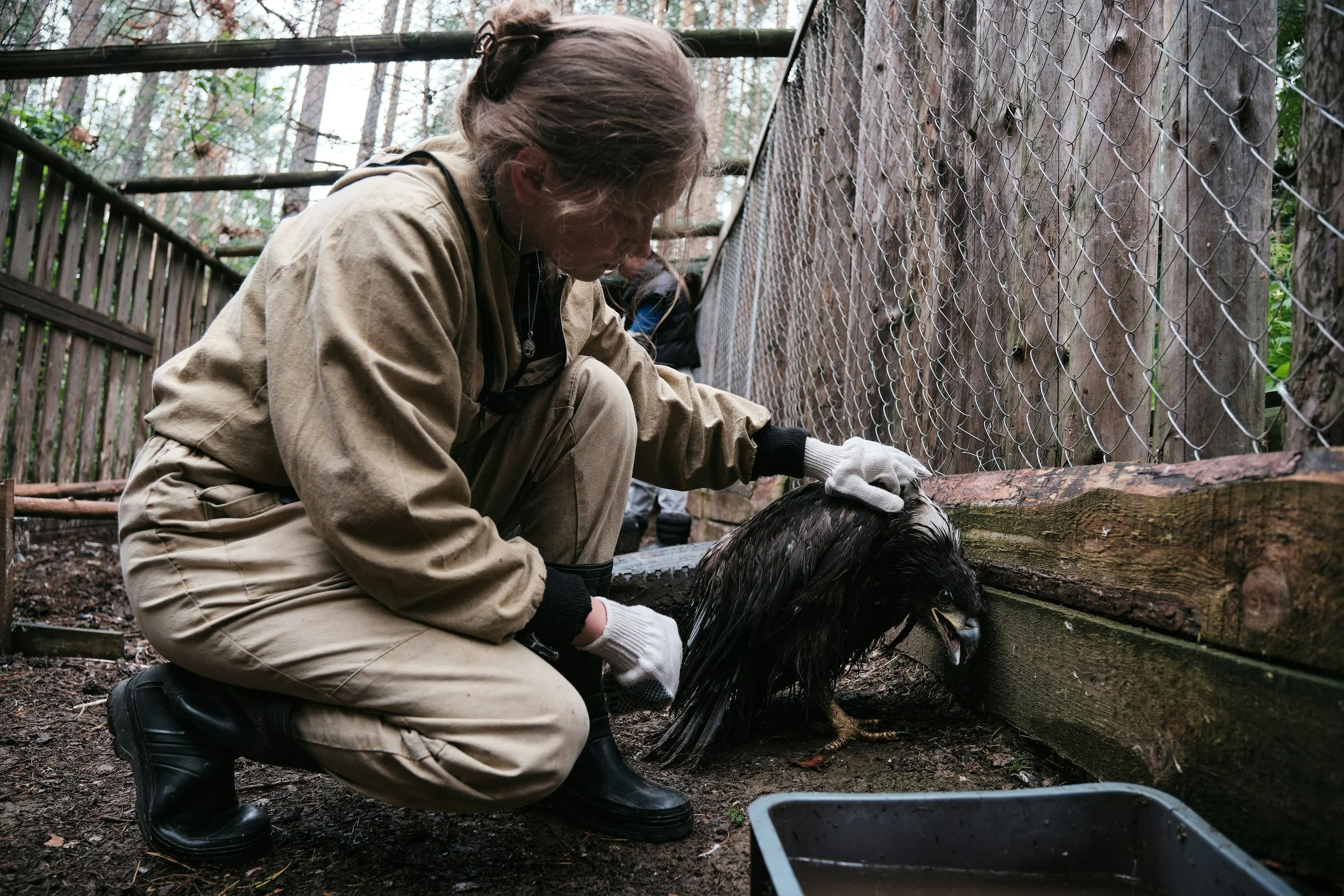
This image depicts a wildlife rehabilitator providing hands-on care to an injured bird within a conservation facility. It represents what genuinely helps in the fight against illegal wildlife trafficking: long-term rescue, rehabilitation, expertise, and accountability, rather than symbolic gestures or short-term interventions that fail to address systemic harm.
Support for conservation and local guardians makes a measurable difference. Communities and rangers on the front lines protect ecosystems at immense personal risk. When they are underfunded or unsupported, illegal trade fills the vacuum. Platform accountability also matters. Online spaces that facilitate sales or normalize exploitation are not neutral intermediaries; they shape demand and visibility.
What does not help is spectacle. One-off rescues may save individual animals, but they do not dismantle trafficking systems. Awareness campaigns that stop at emotion, without responsibility or action, offer comfort without consequence. And professed “love for animals” is meaningless if it coexists with consumption, ownership, or silence.
Protection requires responsibility — not sentiment.
Facing the truth means changing our role
Illegal wildlife trafficking persists for a simple reason: it is allowed to. Not only by criminals, but by societies that benefit from distance, distraction, and denial.
Animals are not resources. They are sentient beings — capable of suffering, stress, and trauma — reduced to commodities through a system that treats life as expendable. Humans do not own them. We never did. The belief that we do is the foundation on which this trade stands.
Every link in the chain relies on permission: permission to consume, to profit, to look away. Enforcement failures are not just technical; they are moral. When ecosystems collapse, communities destabilize, and diseases spill over, the cost is framed as inevitable rather than chosen.
There is a choice here, and it is not abstract. We can continue to outsource responsibility — blaming poachers, markets, or distant governments — or we can accept complicity and change our role within the system.
Looking away is not neutrality. Silence is not innocence.
Illegal animal trafficking is not an environmental issue.
It is a moral one — and silence is part of the trade.
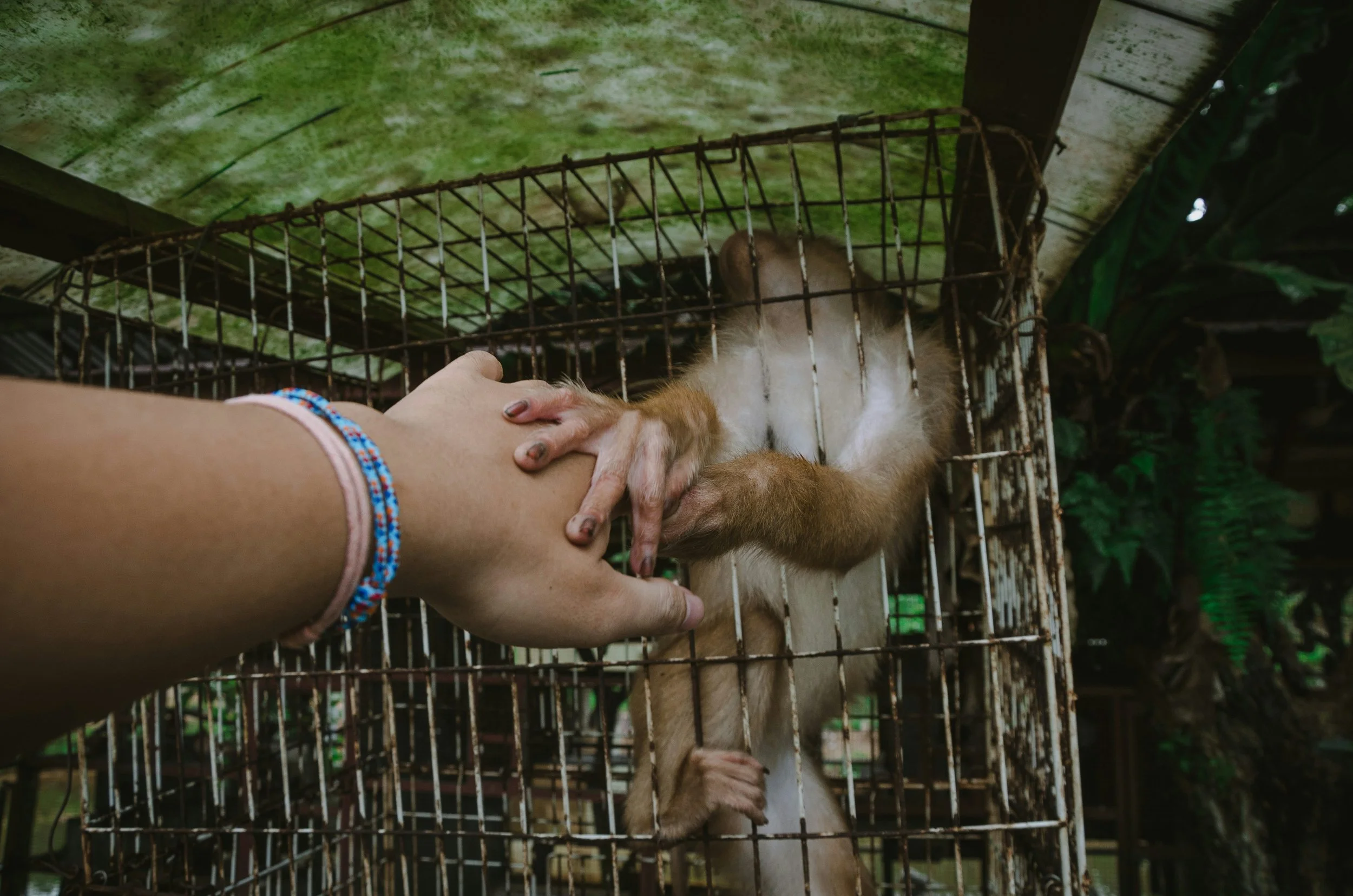
A frightened monkey trapped inside a rusted wire cage reaches out through the bars to cling to a human hand, a silent plea that exposes the cruelty of illegal wildlife trafficking. The image captures a moment of desperation and loss, revealing how wild animals are reduced to commodities and how human indifference sustains their suffering.
References
Animal Survival International. (2024). How China’s multi-billion-dollar wildlife trade is wiping out animals around across the globe. https://animalsurvival.org/chinas-illegal-trade-in-wildlife/
African Wildlife Foundation. (2014). Combating Wildlife Trafficking, Building Law Enforcement Capacity. https://www.awf.org/news/combating-wildlife-trafficking-building-law-enforcement-capacity?utm_campaign=fy26_news&supporter.appealCode=b26qa6e01w&utm_source=google&utm_term=cpc&gad_source=1&gad_campaignid=21898052300&gbraid=0AAAAAD_DPBQjALTkfbz_fDTp3E5Mk5tpo&gclid=Cj0KCQiA-YvMBhDtARIsAHZuUzI-h8k4RIAZiU0G3b5T83zBSK2MX_ofjqGDzQgMlEY-VEujJkheKRMaAp_CEALw_wcB
Better World Campaign. (2025). The Summer Blockbuster You May Have Missed: America and the UN Crack Down on Wildlife Trafficking. https://betterworldcampaign.org/blog/america-and-unodc-crack-down-on-wildlife-trafficking
Interpol. (2025). 30,000 live animals seized in global operation against wildlife and forestry crime. https://www.interpol.int/News-and-Events/News/2025/30-000-live-animals-seized-in-global-operation-against-wildlife-and-forestry-crime
Kent, W. & Cho, C. (2026). The latest trends in the illegal wildlife trade. World Wildlife Fund. https://www.worldwildlife.org/news/stories/the-latest-trends-in-the-illegal-wildlife-trade/
Mozer, A. & Prost, S. (2023). An introduction to illegal wildlife trade and its effects on biodiversity and society. Forensic Science International: Animals and Environments, Volume 3, 100064, ISSN 2666-9374, DOI: https://doi.org/10.1016/j.fsiae.2023.100064.
Olivera, A. (2022). Investigators Uncover Rampant Wildlife Trafficking in Mexico.Report Finds Imperiled Animals Widely Available in Markets, on Social Media. Center for Biological Diversity. https://biologicaldiversity.org/w/news/press-releases/investigators-uncover-rampant-wildlife-trafficking-in-mexico-2022-11-09/?gad_source=1&gad_campaignid=23238296567&gbraid=0AAAAAD3I-HNyvwSPCSPLi3tqjg5aKgt_H&gclid=Cj0KCQiA-YvMBhDtARIsAHZuUzJVcxZKwDJduQNSzM2MBvfaouSVmjtjBstioNvE1sE63X0pfXO4QlUaAmPCEALw_wcB
Olarn, K. & Harvey, L. (2025). Monkeys, meth and mesh bags: Thai police arrest two for alleged animal trafficking. CNN World. https://www.cnn.com/2025/11/18/asia/thailand-monkey-trafficking-cambodia-intl-hnk
Perinchery, A. (2025). On Report of it Fuelling Illegal Wildlife Trade Worldwide, Vantara Says All Animals 'Rescued'. The Wire. https://thewire.in/environment/vantaras-demand-for-wildlife-may-have-fuelled-illegal-wildlife-trade-worldwide-report
Rosen, G. E. & Smith, K. F. (2010). Summarizing the evidence on the international trade in illegal wildlife. Ecohealth. 2010 Aug;7(1):24-32. DOI: 10.1007/s10393-010-0317-y. Epub. PMID: 20524140; PMCID: PMC7087942.
Saradhi, T. (2026). Vanishing Wild: The Battle Against Illegal Wildlife Trade. Earth Org. https://earth.org/vanishing-wild-the-battle-against-illegal-wildlife-trade/
Traffic. (n. d.). illegal wildlife trade. Enhancing responses to wildlife crime and illegal trade. Traffic. https://www.traffic.org/about-us/illegal-wildlife-trade/
U.S. Immigration and Customs Enforcement. (2026). Wildlife Trafficking: Why battling this illicit trade is crucial. https://www.ice.gov/features/wildlife
World Wildlife Fund. (n. d.). Draining the Amazon of wildlife. https://wwf.panda.org/discover/knowledge_hub/where_we_work/amazon/amazon_threats/other_threats/illegal_wildlife_trade_amazon/
World Wildlife Fund. (n. d.). Wildlife crime. Poaching, trafficking, and demand explained. https://www.worldwildlife.org/our-work/wildlife/wildlife-crime/
Zoological Society of London. (n. d.) Illegal wildlife trade crisis. https://www.zsl.org/what-we-do/conservation/protecting-species/illegal-wildlife-trade-crisis